









Toyota is using this weekend’s Fuji 24 Hours race to test a very unusual bit of hydrogen hardware.
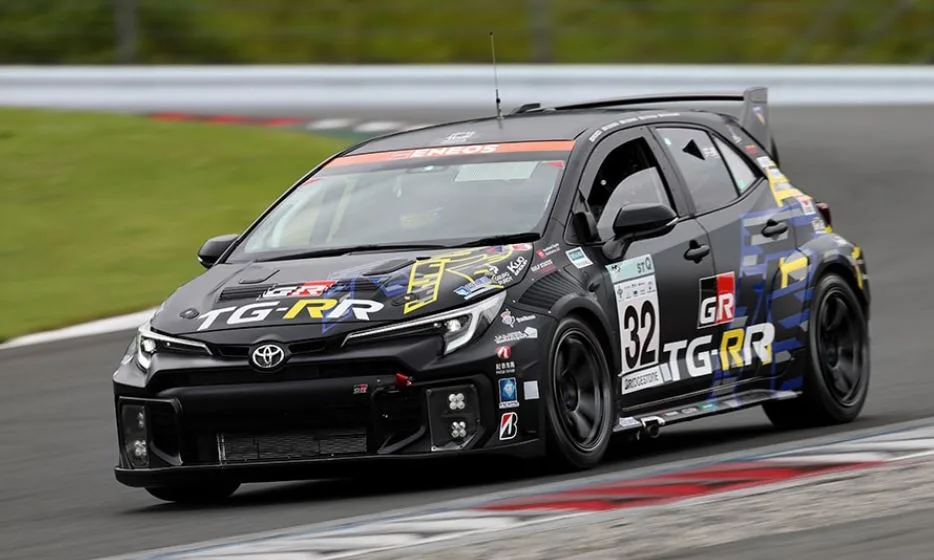
The #32 TGRR GR Corolla H2 Concept is competing in Round 3 of the 2026 Eneos Super Taikyu Series at Fuji Speedway on June 5 and 6.
Toyota said the liquid hydrogen-powered race car is the world’s first race car to compete with a superconducting liquid hydrogen pump.
The GR Corolla H2 has been Toyota’s rolling laboratory for hydrogen combustion. Earlier work covered the switch from gaseous hydrogen to liquid hydrogen, combustion tuning for power and efficiency, pump durability, and faster, safer refuelling. The new pump takes that work into more technical territory.
Liquid hydrogen is stored at about -253°C. The pump compresses that hydrogen and sends it from the tank to the engine.
For Fuji, Toyota has replaced the pump’s conventional electric motor with a superconducting motor, making use of the extremely low temperature already present inside the hydrogen tank.
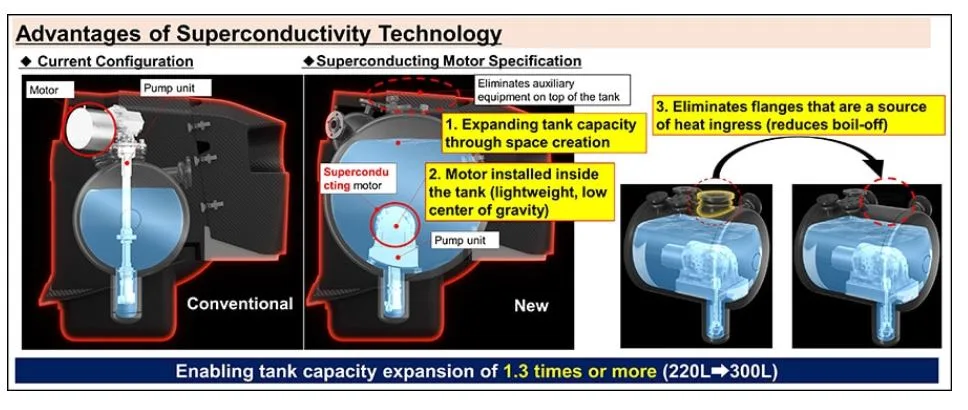
That has packaging benefits. On earlier versions, the motor unit sat on top of the tank. Toyota has now moved the whole unit inside the tank, freeing up space and increasing tank capacity from 220 litres at the final race of the 2025 Super Taikyu season to a maximum of 300 litres. That is more than 1.3 times the previous capacity.
The lower position of the motor unit also drops a heavy component closer to the ground, which Toyota expects to help the car’s handling.
The other change is the gearbox. Toyota has paired its Direct Automatic Transmission (DAT) with a hydrogen engine for the first time. DAT is being developed to offer fast shift speeds while allowing the driver to concentrate more on driving than gear changes.
Toyota presents the project as part of its multi-pathway approach to carbon neutrality. This is still a racing experiment, not a showroom-ready hydrogen Corolla. But endurance racing is a brutal place to find out whether the idea can survive more than a few demonstration laps.