






Chinese car exporters are testing cross-border leasing as tariffs, local-content rules and weak consumer financing make some overseas markets harder to crack.
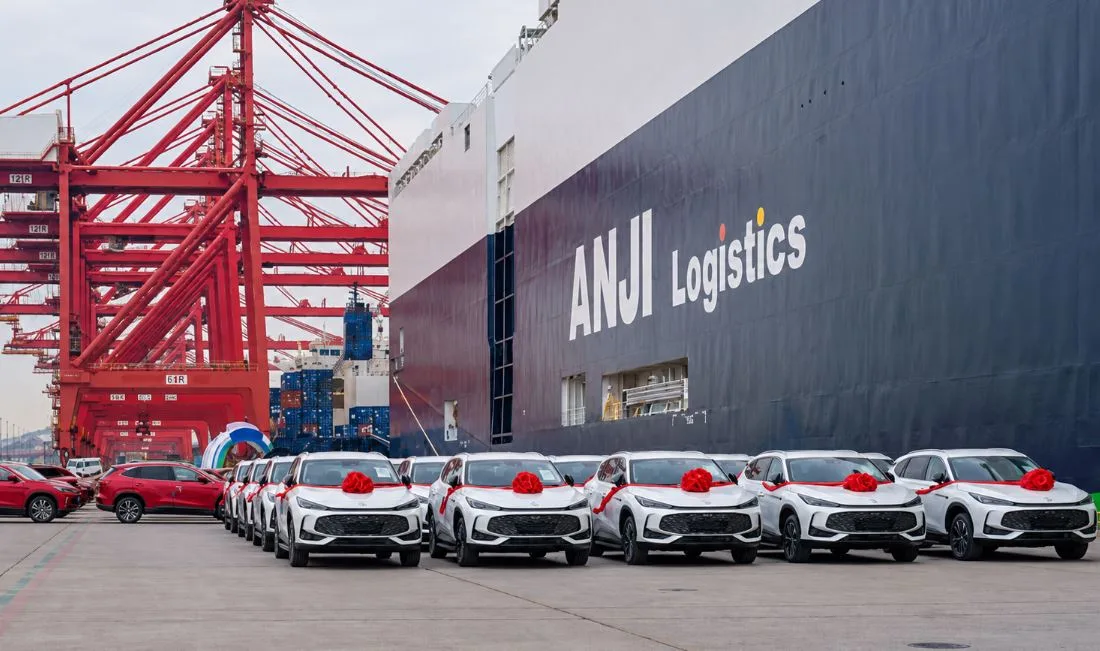
Chinese financial newspaper National Business Daily (NBD) reported today that China exported 901,000 vehicles in April, up 74.4% year-on-year, while exports for the first four months of 2026 reached 3.127 million units, up 61.5%.
New energy vehicles (NEVs), covering battery-electric vehicles, plug-in hybrids and related electrified models, accounted for nearly half of that total.
Under the model, the exporter keeps ownership of the vehicle in China and leases it to an overseas lessee or operator, which pays in foreign currency.
At the end of the lease, ownership can be transferred to the user.
NBD said the approach turns a single vehicle sale into a longer lease-and-service business.
Leasing can cut the upfront cost for overseas users, especially in markets where car loans are limited.
Exporters may also benefit from China’s value-added tax rebates during the export stage, while generating recurring income from leasing, maintenance and insurance.
The hard part comes after the car is exported: credit checks, servicing, vehicle recovery and used-car values.
That is why many early projects are aimed at business customers, such as ride-hailing fleets, rather than private buyers. Fleet operators are easier to assess and manage than scattered individual users.
Huasheng, also known as Huasheng Haoche, has already tested the model in Uzbekistan and South Africa. Its next focus is Pakistan, where it plans to target the ride-hailing market and offer asset-management and finance services.
NBD cited an internal source as saying more than 30 Chinese carmakers and brands had shown interest in working with Huasheng, including Dongfeng, Chery, GAC and BAIC.
CarNewsChina said Huasheng had worked with State Power Investment Corporation and Dongfeng in South Africa, using the Dongfeng Nammi Box as part of the programme.
For Chinese brands, leasing keeps the relationship going after the car leaves China. The challenge is whether they can build the service network needed to support those vehicles overseas.