









A new steel industry feasibility study suggests carmakers could cut the number of parts in a front body structure by up to 34% by making modest assembly line changes and using more advanced high-strength steel.
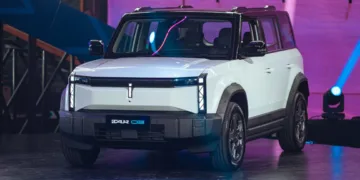
The study was commissioned by WorldAutoSteel, the automotive group of the World Steel Association, and carried out by Ricardo. It used the Steel E-Motive vehicle concept as the baseline for a virtual redesign of a front body structure.
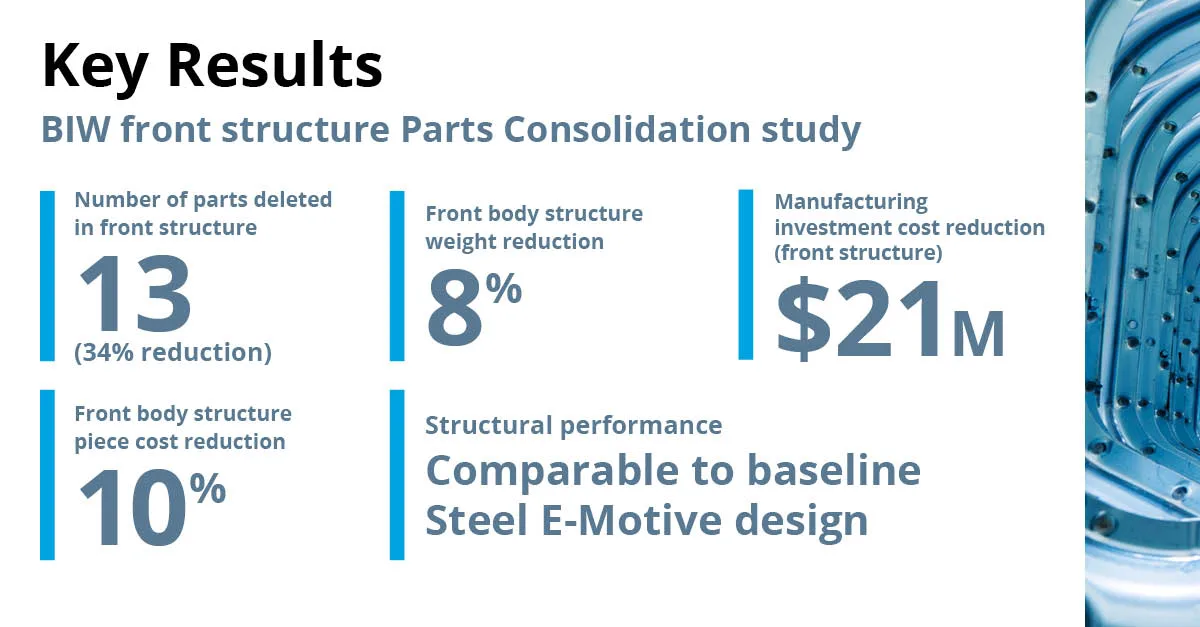
The result was a simpler structure with 25 parts instead of 38. That means 13 fewer components, mainly by combining separate pieces into larger hot- and cold-stamped steel parts. Some of these parts used more complex geometry, but the study said structural performance was retained.
WorldAutoSteel said the redesign could also bring an 8% weight saving and a 10% reduction in piece cost. Ricardo estimated that manufacturing investment for the front body structure could fall by US$21 million (RM82.5 million), mainly through simpler tooling and assembly fixtures.
If the same approach is applied across the full body-in-white and closures, the saving could rise to about US$112 million (RM440.2 million), including buildings, assembly equipment and tooling.
The study also argued that repairability need not suffer. It said high strength and formability could be achieved with press-hardened steel, while tailor-welded blanks may offer further gains in cost and weight.
WorldAutoSteel director Ingo Olschewski said the study showed how advanced high-strength steels could help carmakers address part consolidation and assembly-line efficiency while keeping steel relevant for future vehicle structures.