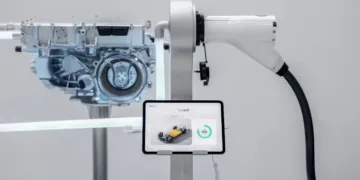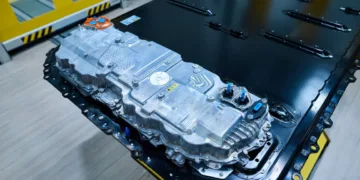





EV owners in China are pushing back against a practice known locally as “battery locking”, after some claimed their cars lost range and charging speed following over-the-air software updates.
According to a China Media Group report carried by CCTV, some owners said their vehicles were originally advertised with about 500km of range, but could manage less than 300km in actual use after an OTA update.
Fast-charging time was also said to have increased from about 40 minutes to 70 minutes in some cases.
The term refers to carmakers changing battery management system parameters through OTA updates or dealer software work, often without clearly telling owners what would change.
The result can be a lower charging ceiling, reduced discharge depth, slower charging or less available power.
In short, the car may still have battery capacity, but the software lets the driver use less of it.
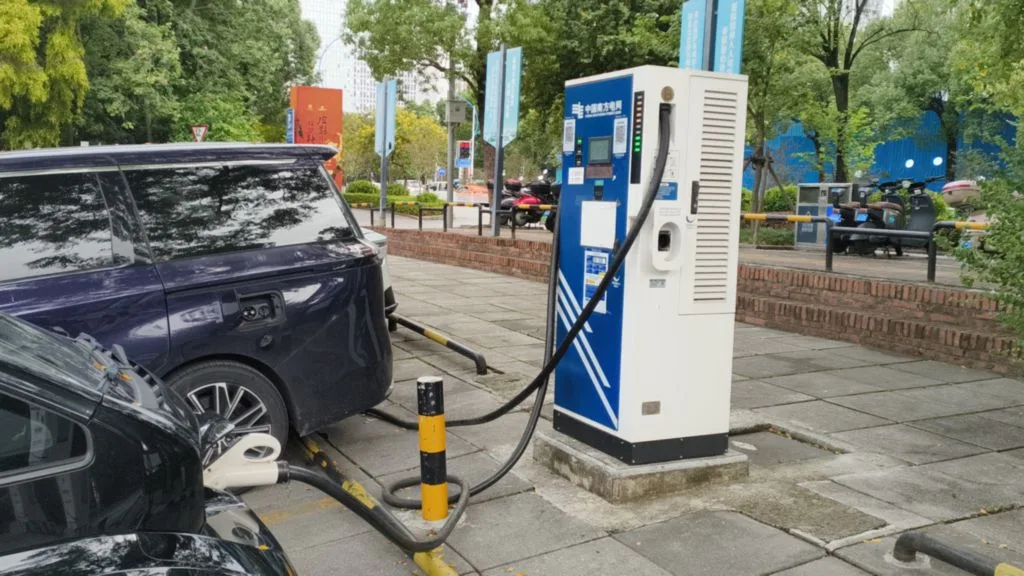
There is a technical reason for doing it, although owners may not like the outcome. Industry researcher Zhang Xiang told the broadcaster that limiting charging current and the usable part of the battery can lower the risk of thermal runaway and reduce battery wear. That helps the battery lasts longer. It could also spare carmakers from expensive warranty claims if older packs start to fail.
The problem is what owners lose in return: range, charging speed, performance, and trust.
One owner told CCTV that his car previously accepted more than 100 kWh during charging, but took only about 80 kWh after an update, despite the battery health display still showing 95%. He also said real-world range dropped from roughly 450km to 480km to below 400km.
The issue has already drawn regulatory attention.
China’s Ministry of Industry and Information Technology (MIIT) and the State Administration for Market Regulation issued updated OTA rules in March, including bans on undisclosed “battery locking”, forced silent updates and using software updates to avoid recalls.
CarNewsChina noted that online claims about eight automakers being summoned and three being formally investigated were denied by the China Association of Automobile Manufacturers, which said the reports had no official source and were inconsistent with the facts.
BYD, Tesla and Zeekr were among the brands that rejected related online claims.
Owners worried about this should keep a simple record before any OTA update: software version, displayed range, charging speed and battery readings.
If the car clearly loses range or charges more slowly after an update, an independent check would help before filing a complaint through China’s 12315 consumer platform or MIIT.