
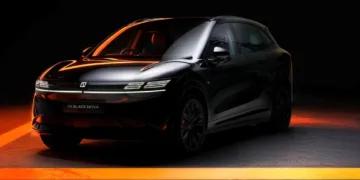




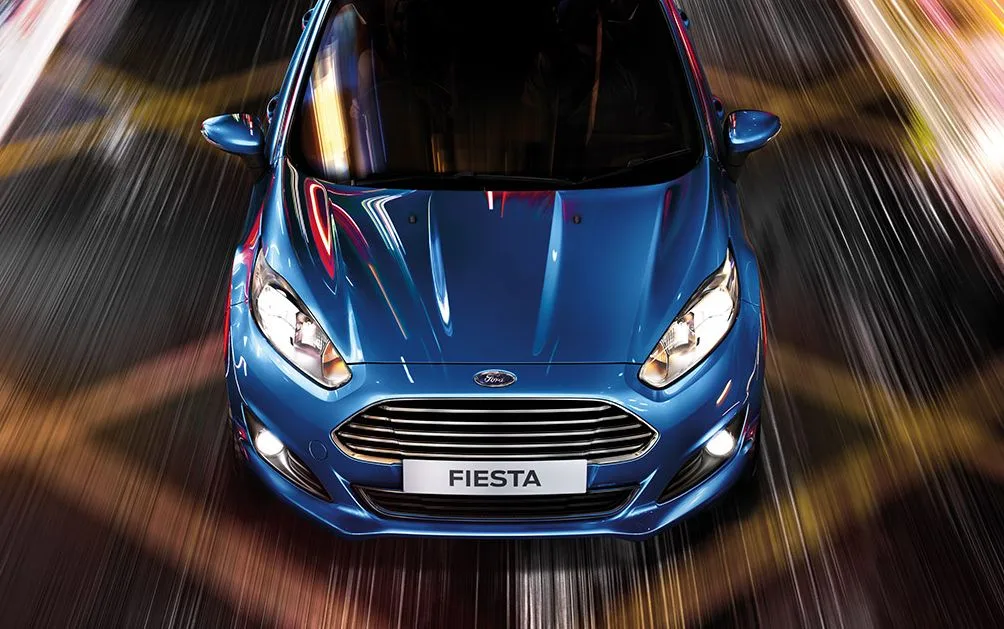
The Ford Fiesta name could return as a fully electric hatchback after Ford signed a major platform deal with Renault, setting up two new compact EVs for Europe from 2028.
Announced simultaneously in Cologne and Paris today, the partnership will see two Ford-designed electric passenger cars built on Renault’s Ampere small-car architecture.
Both models would roll out of Renault’s ElectriCity manufacturing hub in northern France, with the first due to reach European showrooms in early 2028.
The deal comes as Chinese makes make serious inroads into Europe and cost pressures continue to build, forcing traditional carmakers to share more hardware and investment just to stay competitive on price.
For Ford, tapping into Renault’s existing small EV know-how is a quicker and cheaper route into the cut-throat compact segment than developing an all-new platform alone.
Ford said styling and engineering would be handled in-house, promising “distinct Ford-branded electric vehicles” rather than simple rebadges.
The two firms have also signed a letter of intent to explore joint development of electric light commercial vehicles for Europe, an area where both see tightening emissions rules and rising demand.
What the announcement did not contain is any mention of specific model names. That gap has left room for educated guesswork.

UK motoring outlet AutoExpress is among those tipping the first car as a spiritual successor to the Fiesta, retired in July 2023 after decades as one of Europe’s best-selling small cars.
The logic is straightforward: Ampere already underpins the Renault 5, a hatchback that sits in the same size and price bracket the Fiesta once owned, and the Ford–Renault tie-up is aimed at the affordable compact EV segment.
Ford has also said the new EVs would retain familiar brand character, with its own steering and suspension tuning. That gives further weight to the idea of a “proper” Ford subcompact rather than a Renault 5 clone, even if both cars share the same basic hardware.
Because the Renault 5 E-Tech is the reference point for Ampere, its technical menu hints at what a future Fiesta EV could offer.
Today the 5 is available with 40kWh and 52kWh batteries and motors of up to 148bhp (110kW), delivering about 400km of WLTP range and 0–100kph in roughly eight seconds in its higher-spec form.
Ford could mirror those figures or choose different combinations using the same building blocks.
The second Ford model is even more of a mystery.
Industry talk ranged from a baby SUV to sit below the Puma Gen-E, to a reborn city car in the mould of the Ka, or simply another body style on a Fiesta-sized base.
Ford has confirmed none of these scenarios and the Puma Gen-E would remain its own line.
Key questions remain over naming, pricing and final specs.
What is clear is that Ford now has a faster, cheaper route into Europe’s small EV market, with or without a Fiesta badge on the boot.