




Hyundai Motor is teaming up with Michelin-star chef Corey Lee to open a new restaurant, Na Oh, at the Hyundai Motor Group Innovation Center Singapore (HMGICS).
Scheduled to open in June, Na Oh will serve as a cultural hub for Korean cuisine, craft, and design, enriching Singapore’s culinary scene.
Corey Lee, a three-star Michelin chef from San Francisco, will lead Na Oh, marking his first project in Southeast Asia. The restaurant aims to reinterpret traditional Korean cuisine with a modern twist.
HMGICS’s two-story vertical smart farm, the world’s first robotics smart farm open to visitors, will play a central role in Na Oh’s operations. Producing over 30kg of fresh produce daily, the smart farm will supply ingredients for a farm-to-table dining experience. This initiative transforms HMGICS from a conventional automotive facility into a unique hospitality destination.
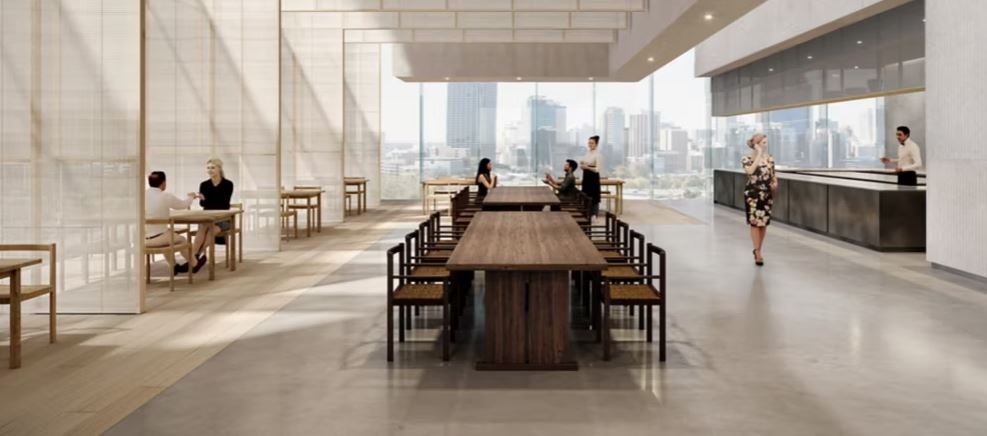
Na Oh, meaning “moving from inside out” in Korean, will focus on “hansik” cuisine, blending Korean culinary traditions with contemporary techniques. Lee’s team will collaborate with artisans to infuse cultural elements into the dining experience.
The launch of Na Oh at HMGICS reflects Hyundai’s innovative approach, merging automotive and culinary arts to create a distinctive cultural landmark in Singapore.
HMGICS, opened last November, was set up to drive Hyundai’s future mobility vision.
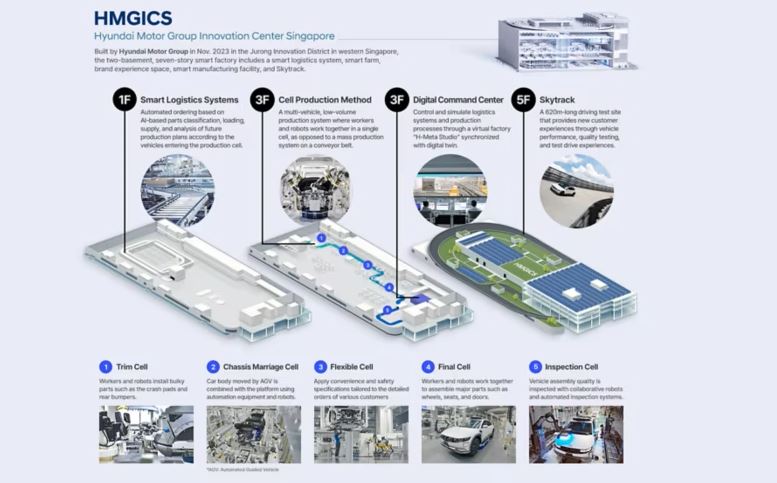
The facility, a “smart urban mobility hub,” features an automated, flexible production system allowing unprecedented interaction between electric vehicle (EV) buyers and the Hyundai brand.
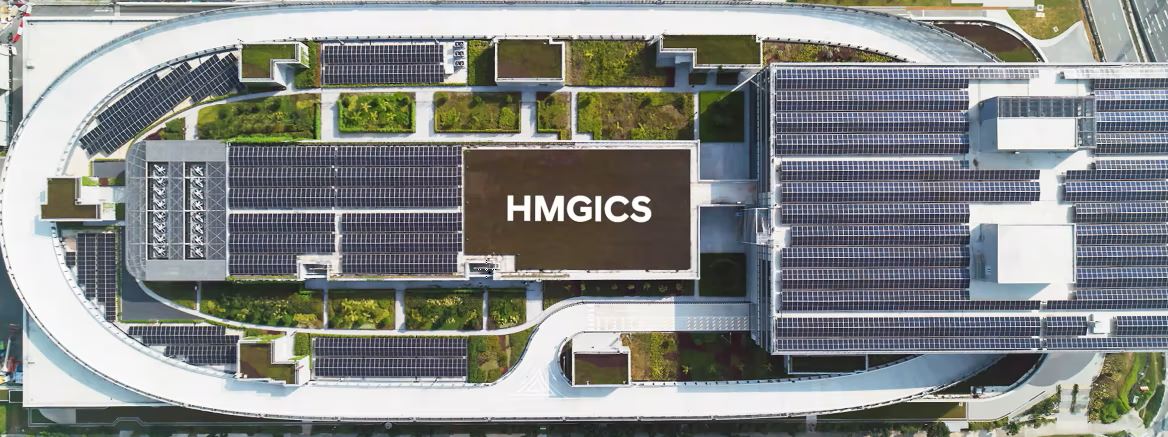
The centre integrates into Singapore’s Jurong Innovation District and smart city ecosystem. It has an annual production capacity of 30,000 EVs. HMGICS currently manufactures the Ioniq 5 and Ioniq 5 robotaxi, with the IONIQ 6 to be added next year.
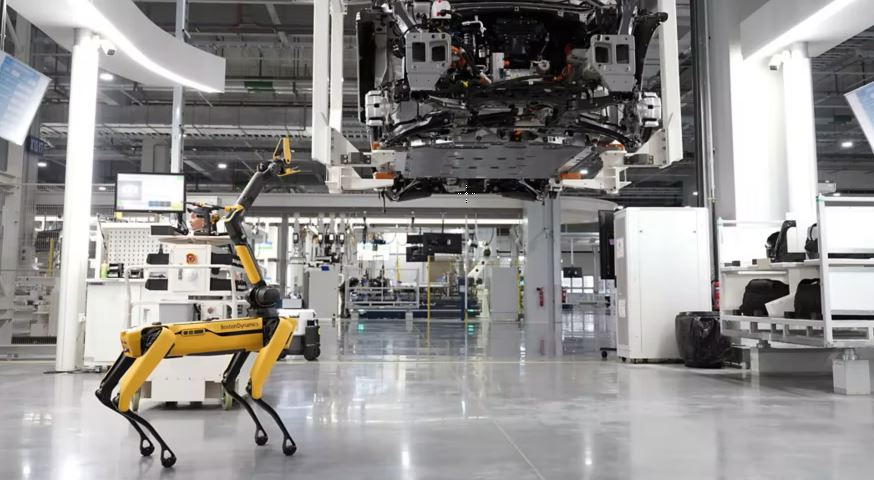
HMGICS employs a cell-based production system, replacing traditional conveyor belts for enhanced flexibility and automation.
About 50% of tasks are managed by 200 robots, with humans and AI systems collaborating via a digital twin Meta-Factory platform. This allows real-time synchronisation of virtual and physical worlds, enabling close human-robot cooperation.