











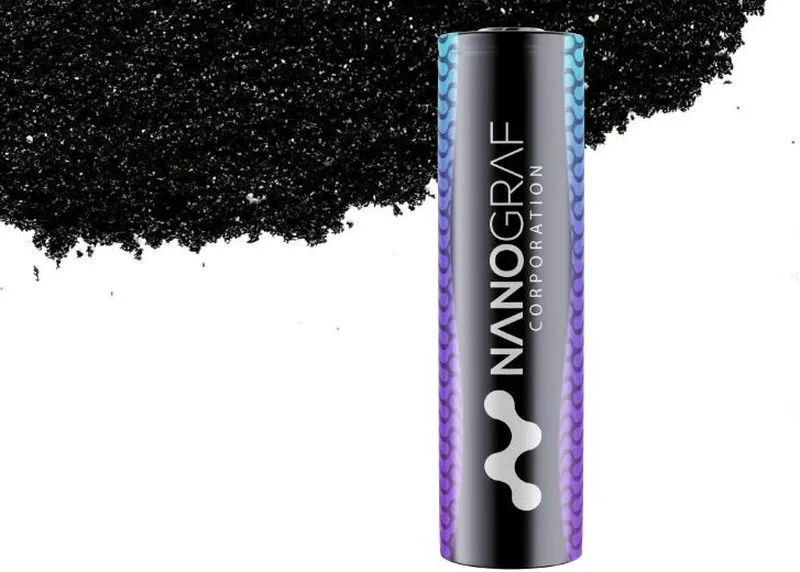
US battery materials firm NanoGraf is pitching a new silicon-based anode as ready for mainstream electric vehicles, promising more range without a higher cell bill.
The Chicago-based company, which calls itself the country’s largest producer of silicon oxide anode material, has launched Onyx, a silicon anode designed to slot into existing lithium-ion cell production in place of synthetic graphite.
Commercial output has begun in Chicago, with a larger plant planned in Flint, Michigan.
NanoGraf says Onyx can match synthetic graphite on a dollar-per-kWh basis, but with noticeably stronger performance. Energy density is claimed to be about 30% higher, which, in EV terms, could translate into roughly 30% more driving range for a battery pack of the same size. Portable gear such as drones, medical devices and consumer electronics are also in the company’s sights.
The material uses a metal-doped silicon oxide core that, according to NanoGraf, cuts electrode swelling by up to 75% compared with conventional silicon approaches.
That should, at least on paper, help batteries maintain capacity for longer and ease some of the durability worries that have dogged earlier silicon anode chemistries.
Chief executive Francis Wang says the company has been trying to tackle the usual silicon headaches of cost, stability and supply risk, and now sees Onyx as production-ready for high-volume EV use.
NanoGraf also points out that its process avoids silane gas, a volatile and expensive input used by some rivals, arguing this makes large-scale manufacturing safer and more predictable.
The company said more than 50 customers are already using its technology across military, consumer and EV projects.