



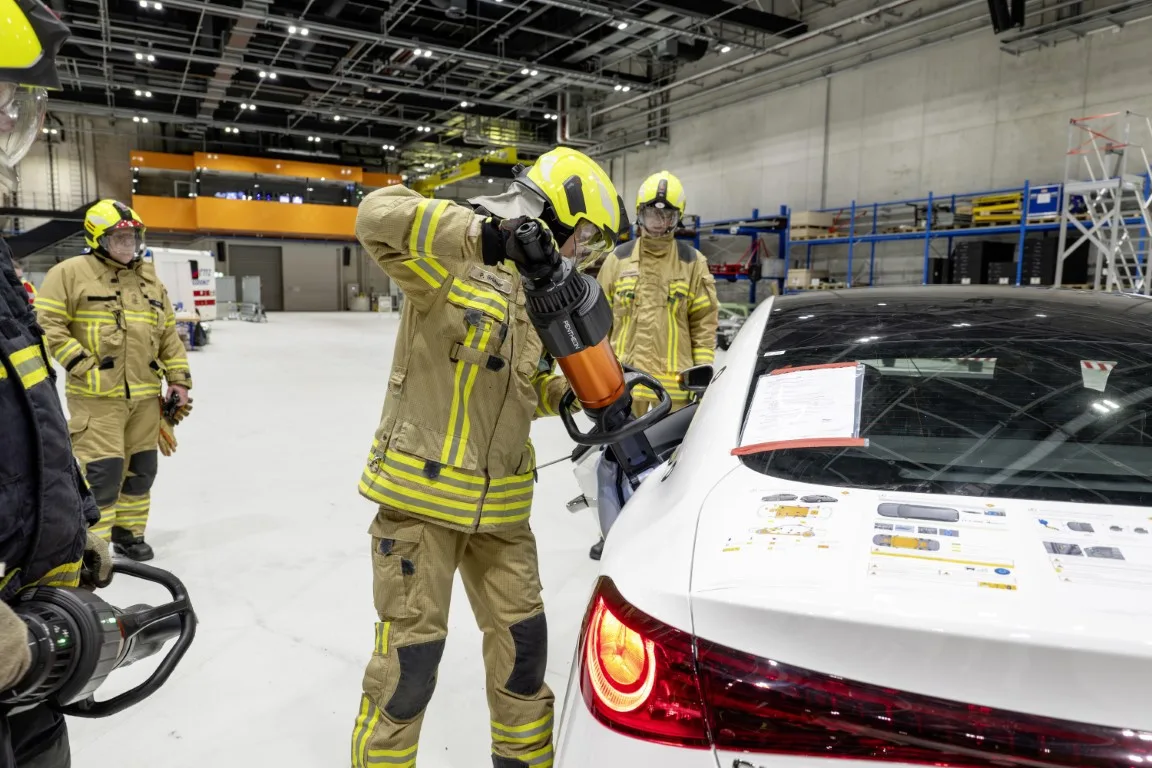
Mercedes-Benz has launched a new rescue training initiative with European fire services, giving frontline crews the chance to cut into and dismantle its latest models so they can work faster and more safely at real crash scenes.
The first “MB4Rescue” pilot session was held at the company’s Technology Centre for Vehicle Safety in Sindelfingen, where instructors from Germany, Austria, Switzerland and the Netherlands joined fire brigade teams from almost all German Mercedes-Benz plants.
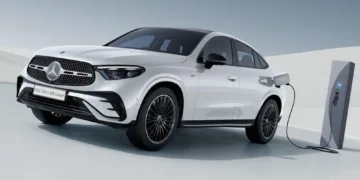
Training was carried out on current models including the CLA, EQE, EQS, GLE and CLE.
The programme is a joint effort between Mercedes-Benz AG and the Association for the Promotion of German Fire Protection (vfdb).
Its aim is to let firefighters practise rescue procedures on modern vehicles packed with high-voltage systems, batteries and complex body structures, instead of relying on ageing cars destined for the scrapyard.

According to the World Health Organisation, around 1.3 million people die in road accidents globally every year.
Mercedes-Benz, long a promoter of vehicle safety, said its long-term goal is “Vision Zero”, eliminating traffic deaths by 2050.
The focus this year is on “rescue after an accident”, recognising that what happens in the minutes after a crash can be as crucial as the crash itself.
“With our new ‘MB4Rescue’ initiative, we support those who save lives every day: the emergency response personnel. We share our expertise, technology and experience so that rescue workers can act faster, safer and more effectively. Our goal is clear: zero traffic deaths by 2050,” said Prof. Paul Dick, Director Vehicle Safety and Accident Research, Mercedes-Benz.

Firefighters said access to the latest cars is vital as vehicles become more complex.
“Our fire services usually do their training with undeformed 10 to 15-year-old cars that are destined for the scrapyard. The increasing speed of innovation in automotive and drive technology, however, continuously leads to new challenges for the firefighters,” said professional firefighter Tanja Hellmann from the vfdb’s Vehicle Technology and Technical Assistance Division.
“It is immensely important to practise on the latest vehicle models so that we are prepared to work on these high-tech cars at accident scenes.”
Mercedes-Benz describes its safety philosophy as “Real-Life Safety”, a holistic approach that seeks both to prevent accidents and to lessen their impact, protecting not only people inside its vehicles but everyone sharing the road.