






Hyundai is betting that “software-defined factories” able to build up to 10 different models on the same line, and retool in a matter of weeks, will be its edge in a world of shifting demand and geopolitical shocks.
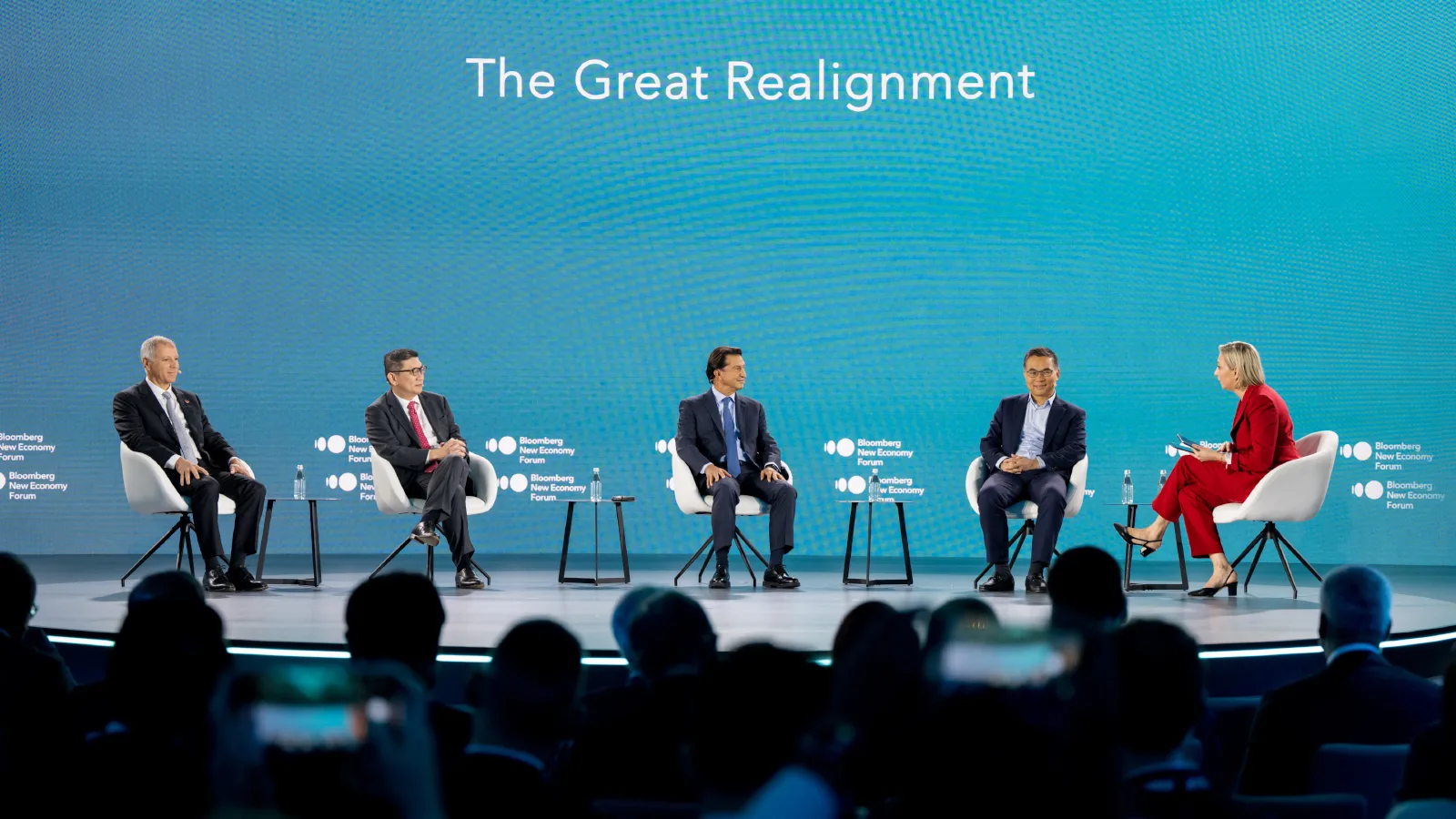
That was the message from Hyundai Motor Company president and chief executive José Muñoz, speaking at the Bloomberg New Economy Forum in Singapore during a session on “The Great Realignment”.
Muñoz said the company’s manufacturing blueprint now runs through two flagship sites: the Hyundai Motor Group Innovation Center Singapore (HMGICS) and the Hyundai Motor Group Metaplant America (HMGMA) near Savannah, Georgia.
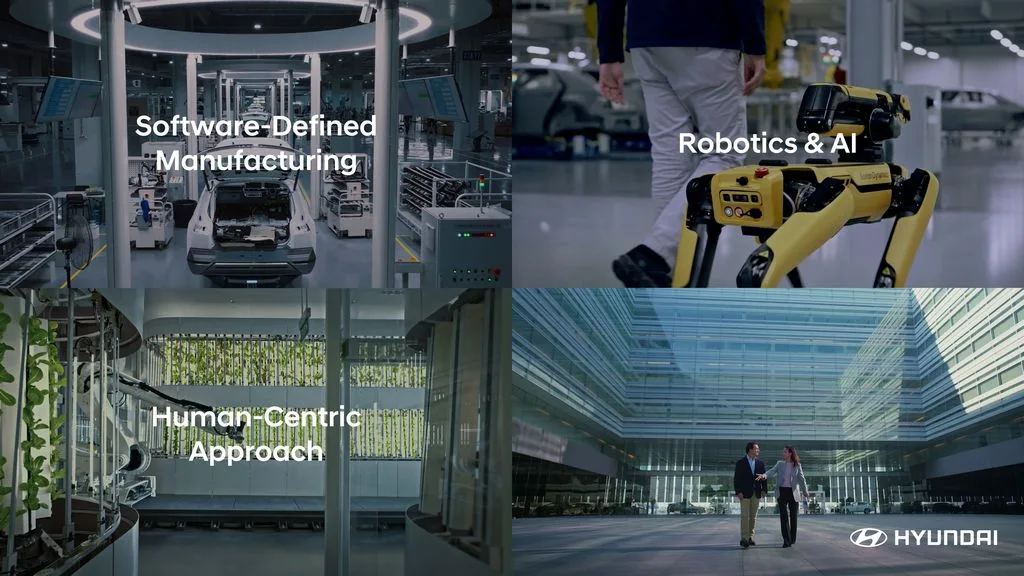
HMGICS acts as a laboratory for next-generation production, where engineers trial digital twins, AI-driven planning and high levels of automation on a much smaller footprint before anything reaches mass scale.
According to Hyundai, around 60% of the technologies proven in Singapore have already been carried over to the Georgia complex.
The Metaplant, which began production in late 2024, sits on roughly 3,000 acres and is designed to build electric and hybrid vehicles for Hyundai, Genesis and Kia.
It forms the core of a US$12.6 billion package of EV and battery investments in Georgia, with the assembly campus itself costed at about US$7.6 billion. Hyundai expects the plant to reach up to 500,000 vehicles a year after a second-phase expansion.
Inside, bodies move on autonomous carriers rather than traditional conveyor belts, with vehicles passing through dozens of AI-assisted or robotic stations.
A central digital-twin hub mirrors the factory in real time, allowing engineers to tweak layout, robot choreography and even production mix in software before making physical changes on the floor.
The Ioniq 9, a three-row electric SUV and Hyundai’s largest passenger EV so far, is one of the showcase products for this system. It is now being built at the Metaplant for North America and sits within Hyundai’s wider target of 3.3 million electrified vehicle sales by 2030, out of 5.55 million vehicles in total.
Muñoz stressed that the shift to robotics is intended to change jobs rather than remove them.
Hyundai is rolling out robots from group company Boston Dynamics for inspection and logistics, while hiring thousands of staff into higher-skilled roles to supervise automation, analyse data and improve processes.
He linked the production revamp to Hyundai’s longer-term push on clean energy, saying the group ultimately wants factories that generate their own zero-emission power and can swing quickly between models and powertrains.
In his view, that mix of localised capacity and AI-driven flexibility is what will decide which carmakers stay ahead as the industry realigns.