


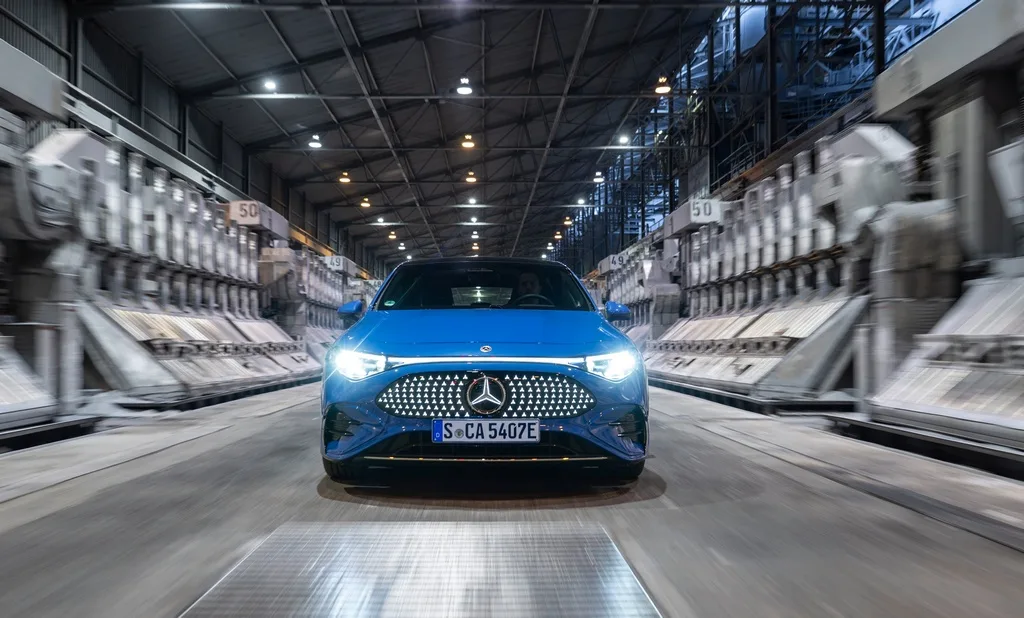
Mercedes-Benz plans to use aluminium made with at least 75% post-consumer scrap in future large EVs under an expanded agreement with Norwegian supplier Hydro.
The German carmaker said it will be Europe’s first vehicle manufacturer to use Hydro Circal recycled aluminium in series production.
Hydro material currently supplied to Mercedes-Benz contains about 25% post-consumer scrap, so the incoming grade will triple that proportion.
The feedstock comes from scrapped vehicles, buildings and infrastructure before being processed for automotive use. Mercedes-Benz has not identified the first models, factories or components involved. It has also given no date for the production change.
The agreement includes additional volumes of Hydro Reduxa, a primary aluminium made using renewable electricity. Mercedes-Benz said its carbon footprint is over 70% lower than the worldwide average. That figure applies to Reduxa, not the recycled Circal product.
Higher recycled content cuts the need for newly extracted raw materials. Keeping collection and processing closer to vehicle plants can also shorten supply routes. Mercedes-Benz said Hydro provides batch-level supply-chain records for the aluminium it delivers. Hydro says the recycled content is documented for each production batch and independently verified by assurance specialist DNV. The release gives no projected annual supply volume for Mercedes-Benz.
The two companies began their current low-carbon aluminium programme in December 2022, with a technology plan covering 2023 to 2030. In 2024, they widened the work to include the full chain from raw material to finished product.
Mercedes-Benz already uses Hydro Reduxa in selected production components. Circal adds aluminium recovered from products that have reached the end of their service life.
Mercedes-Benz treats aluminium as a core material in vehicle production. Increasing the recycled share should cut manufacturing emissions while meeting the company’s requirements for performance, quality and safety. Mercedes-Benz has not disclosed the expected carbon saving per vehicle.