








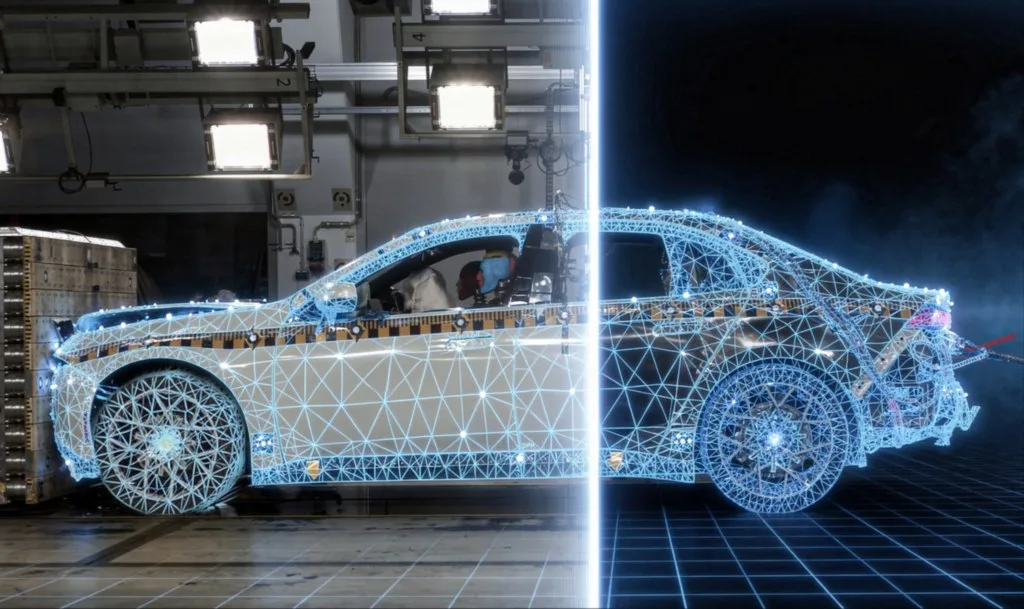
BMW Group is working with French artificial intelligence company Mistral AI to speed up one of the hardest jobs in car development: crash simulation.
The partnership would use BMW’s own engineering data to train specialised AI models for vehicle safety work. BMW said the aim is to improve the quality, accuracy and speed of complex engineering tasks, rather than replace the usual development process with a generic AI tool.
That distinction is important. BMW runs thousands of virtual crash simulations every week, generating a huge volume of engineering data. Over the years, this has built up into more than one petabyte of historical crash-simulation data, covering vehicle structures and material behaviour.
BMW Group CIO and senior vice-president Dr Franz Decker said the company’s industrial data is a key part of turning AI into value creation.
“By combining our engineering datasets with Mistral AI’s model training capabilities, we are building specialized AI which supports complex development tasks,” he said.
BMW is calling the technical base a Large Industry Model (LIM). In simple terms, this is an AI system trained on industry-specific engineering and simulation data, not broad internet material. For crash testing, that means the model learns from BMW’s development environment and safety data.
Mistral AI chief revenue officer Marjorie Janiewicz said the collaboration showed how industry-specific AI models could help solve engineering problems such as crash simulation.
For BMW, this is also a test bed. If it works, the same approach could spread into other parts of vehicle development.