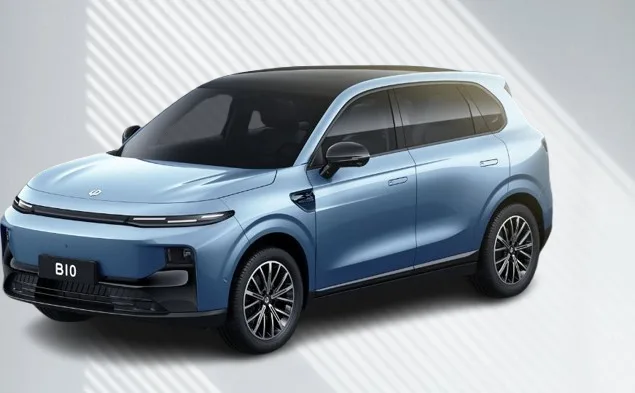




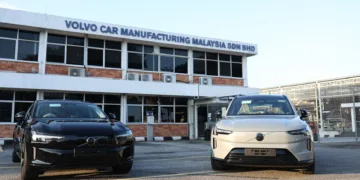



Stellantis Malaysia has launched the Leapmotor B10, a fully electric C-segment SUV pitched at Malaysians who want EV tech without a luxury badge price.
Two variants are on offer: the B10 LIFE at RM107,800 and the B10 DESIGN at RM118,800, both on-the-road without insurance.
For the first 200 customers, launch rebates bring those figures down to RM99,800 and RM109,800 respectively.
The B10 is the second Leapmotor model for our market after the larger C10 SUV (the carmaker also has a third model in other markets called T03).
Both sit under Leapmotor International, a 51:49 joint venture between Stellantis and China’s Leapmotor that has been tasked with turning the brand into a global “new energy vehicle” player across more than 20 markets by end-2025.

Globally, Leapmotor has just rolled out its one-millionth vehicle and recently posted record monthly sales, so Malaysia is not an isolated experiment.
Built on the new LEAP3.5 architecture with a Cell-to-Chassis (CTC) 2.0+ platform, the B10 is pitched as a mass-market EV with serious engineering under the skin.
The highly integrated battery-and-chassis structure helps deliver a near 50:50 front-rear weight balance and torsional rigidity of 36,360Nm/deg. In simple terms, it is meant to feel tighter, quieter and more composed than you might expect at this price point.

Power for the rear-wheel drive car comes from a front-mounted electric drive assembly weighing just 60kg.
Output is rated at 160kW (218hp) and 240Nm, giving a claimed 0–100kph time of 8 seconds. Efficiency is a big part of the sales pitch: Leapmotor quotes a maximum drivetrain efficiency of 94% and power density of 2.67kW/kg.
Two battery sizes are offered. The LIFE variant gets a 56.2kWh LFP pack, good for 361km WLTP (442km NEDC). The DESIGN steps up to 67.1kWh, with WLTP range quoted at 434km (516km NEDC).

Both use a 400V electrical system with 11kW AC charging, but DC fast charging differs: the LIFE tops out at 140kW, while the DESIGN takes up to 168kW. Either way, Leapmotor claims a 30–80% DC charge in under 20 minutes.
Thermal management is handled by a liquid-cooled battery and an oil-cooled electric motor, with sensors tracking ambient temperature, operating conditions and state of charge.
Smart AI monitoring oversees the system to protect performance and extend component life, which will matter to buyers planning to keep the car beyond the warranty window.

Size-wise, the B10 sits in the C-segment SUV class. It measures 4,515mm long, 1,885mm wide and 1,655mm tall, with a 2,735mm wheelbase and 170mm ground clearance. It is similar in size to the Proton e.MAS 7 and BYD Atto 3.
The body has been shaped for aero efficiency, with a quoted drag coefficient of 0.265. Flush door handles, rounded edges, a sculpted bumper treatment and 18-inch “Star Sports” alloys all play their part.
Styling is clean and a touch futuristic. Full-LED headlights are split from chequered-flag style daytime running lights, while the rear is dominated by a full-width “Wing Star” LED light bar.
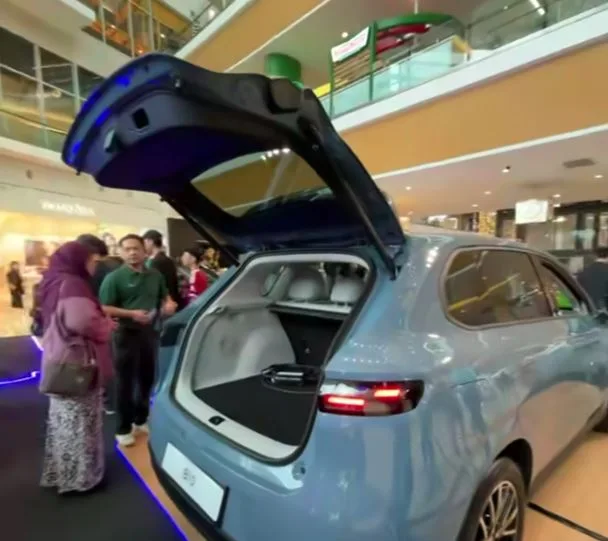
Leapmotor talks about “cloudtrail” side surfacing and “Star Ring” fender forms, but the upshot is a fairly minimalist, tech-forward look that should age better than something over-styled.
Inside, the B10 leans heavily on screen real estate and digital convenience. A 14.6-inch central touchscreen running Leap OS 4.0 Plus handles infotainment and vehicle functions, backed by a Qualcomm Snapdragon 8155 chip with up to 16GB of memory and an Adreno 640 GPU.
An 8.8-inch display sits ahead of the driver for key driving data. Over-the-air updates are supported, with Apple CarPlay and Android Auto promised from January 2026.
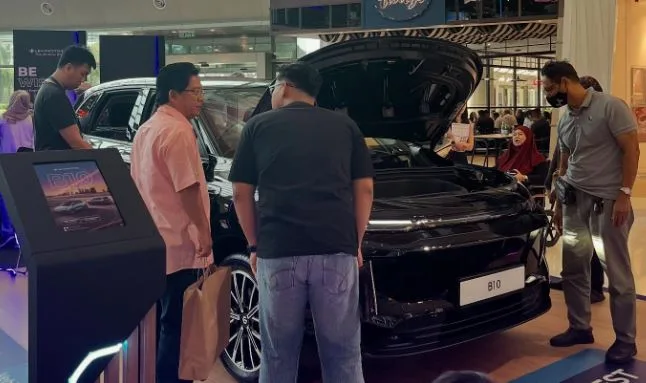
A companion mobile app allows owners to check vehicle status, pre-condition the cabin, and lock or unlock the car remotely. A 360° panoramic camera system is standard to help in tight car parks.
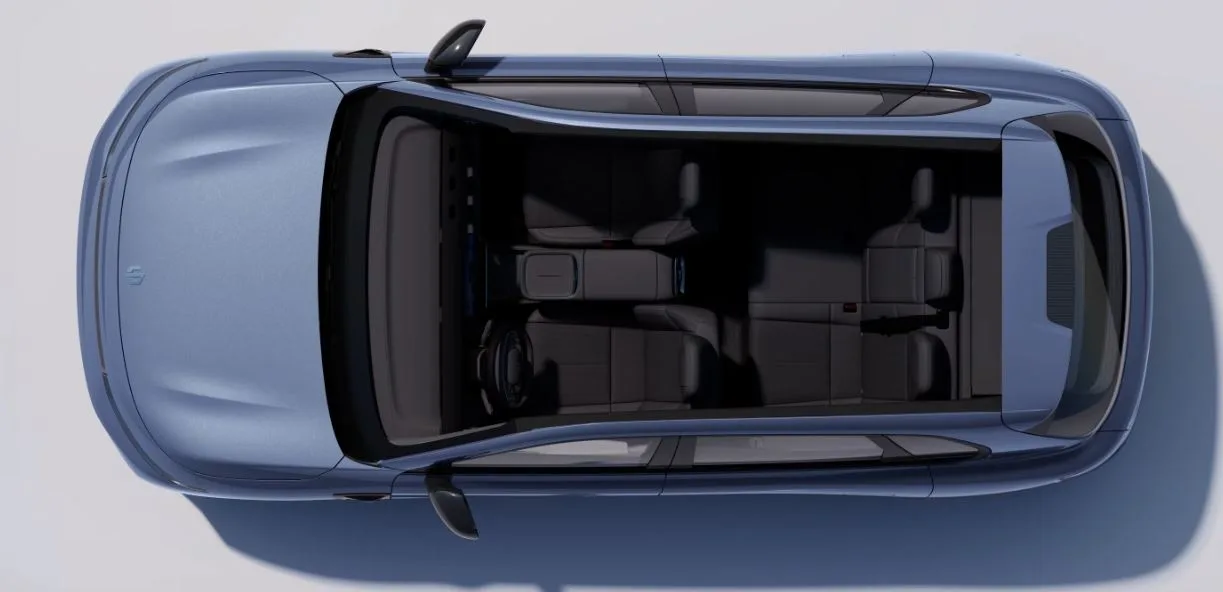
Cabin space is another selling point. Leapmotor quotes 2,390mm of interior passenger length, plus headroom of 1,027mm in front and 1,005mm at the rear.
The boot holds 430 litres with the rear seats up, expanding to 1,700 litres when they are folded flat, and there is a 25-litre frunk for smaller items. In total, the cabin hides 22 different storage spaces.
Seats in the LIFE variant are trimmed in dark grey fabric, while the DESIGN offers a choice of dark grey or Shadow Grey ECO leather with OEKO-Tex Standard 100-certified silicone textile.

Both front seats are ventilated; the driver’s seat has 6-way powered adjustment with memory, while the front passenger gets 4-way powered adjustment.
A floating centre console integrates an armrest, a dual-phone holder and a 15W wireless charging pad.
Above, a large panoramic glass roof with powered sunshade helps keep the cabin airy. Drivers can choose from Comfort, Standard and Sport modes to tailor steering, throttle and power delivery to taste.
On safety, the B10 comes with a 5-star Euro NCAP rating and a strong set of numbers: 93% scores for both adult and child occupant protection. Seven airbags are standard, and the body structure has been engineered to manage crash energy around the battery pack.
Active safety and driver assistance are equally comprehensive. The car bundles 17 Advanced Driver Assistance Systems, including adaptive cruise control, lane centring, lane-keeping assist, emergency lane keeping, autonomous emergency braking, blind spot monitoring, rear cross-traffic alert and braking, traffic jam assist and driver monitoring for drowsiness or distraction.
Together they deliver Level 2 assisted driving capability on paper, though how natural it feels on Malaysian roads will only be clear after road tests.
The B10 is sold with a 6-year/150,000km vehicle warranty and an 8-year/160,000km battery warranty, whichever comes first. Service intervals are set at 1-year or 20,000km.

Five exterior colours are offered: Metallic Black, Light White, Tundra Grey, Dawn Purple and Starry Night Blue, the last said to draw from more than 300 shades in Van Gogh’s “Starry Night over the Rhone”.
Marketing flourish aside, Stellantis is clearly betting that attractive pricing, solid range numbers and a full safety and tech package will be enough to make Malaysians consider a Chinese EV badge most have only just heard of.