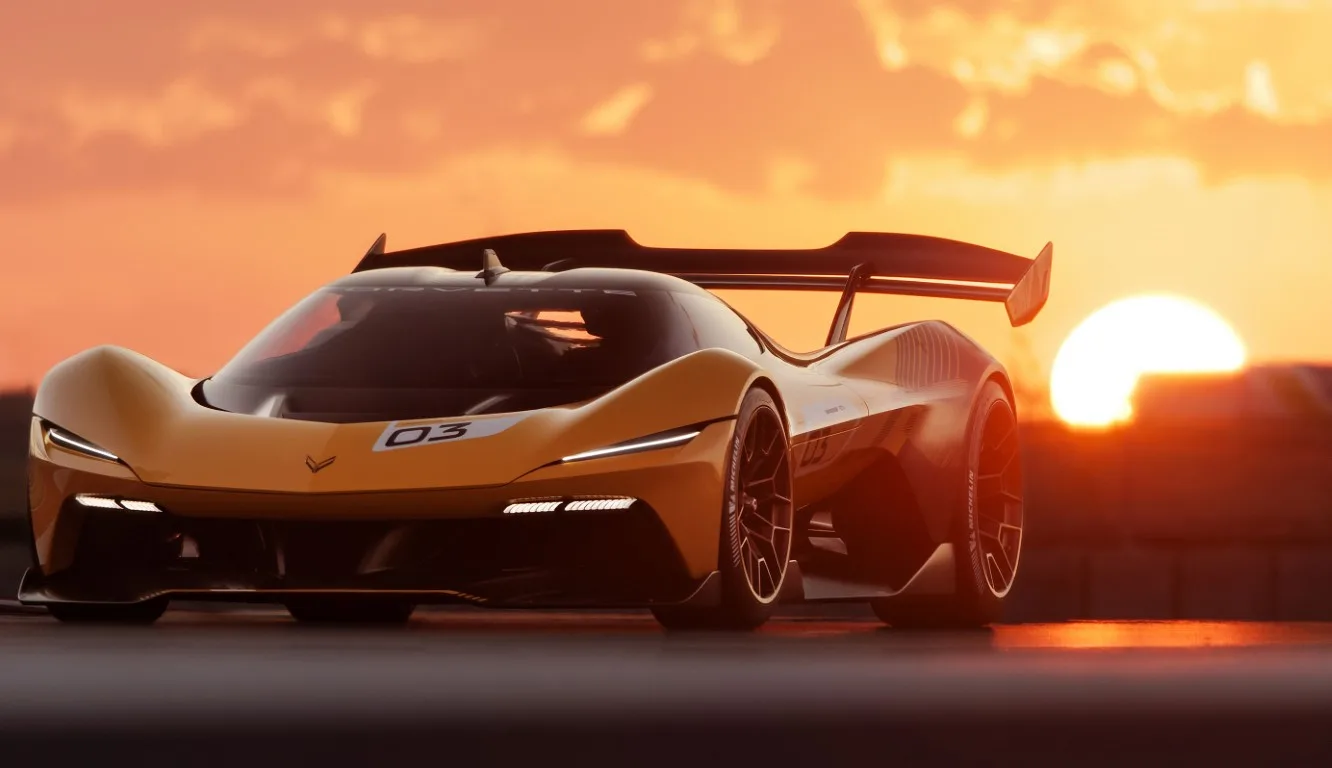






Chevrolet used Monterey Car Week 2025 to unveil two Corvette design studies that chart the nameplate’s high-performance future: the road-focused CX and the track-bred CX.R Vision Gran Turismo.
Neither is slated for production, but both are intended to steer Corvette styling and aero thinking for years to come, capping a year-long internal exploration that drew on multiple global design studios.
The pair were created and built at the Chevrolet Performance Studio in Warren, Michigan.
Executives say the exercise allowed designers to step clear of production constraints and distil seven decades of Corvette heritage into bolder forms.
The brief: evolve the silhouette without losing the cues that make a Corvette instantly recognisable.
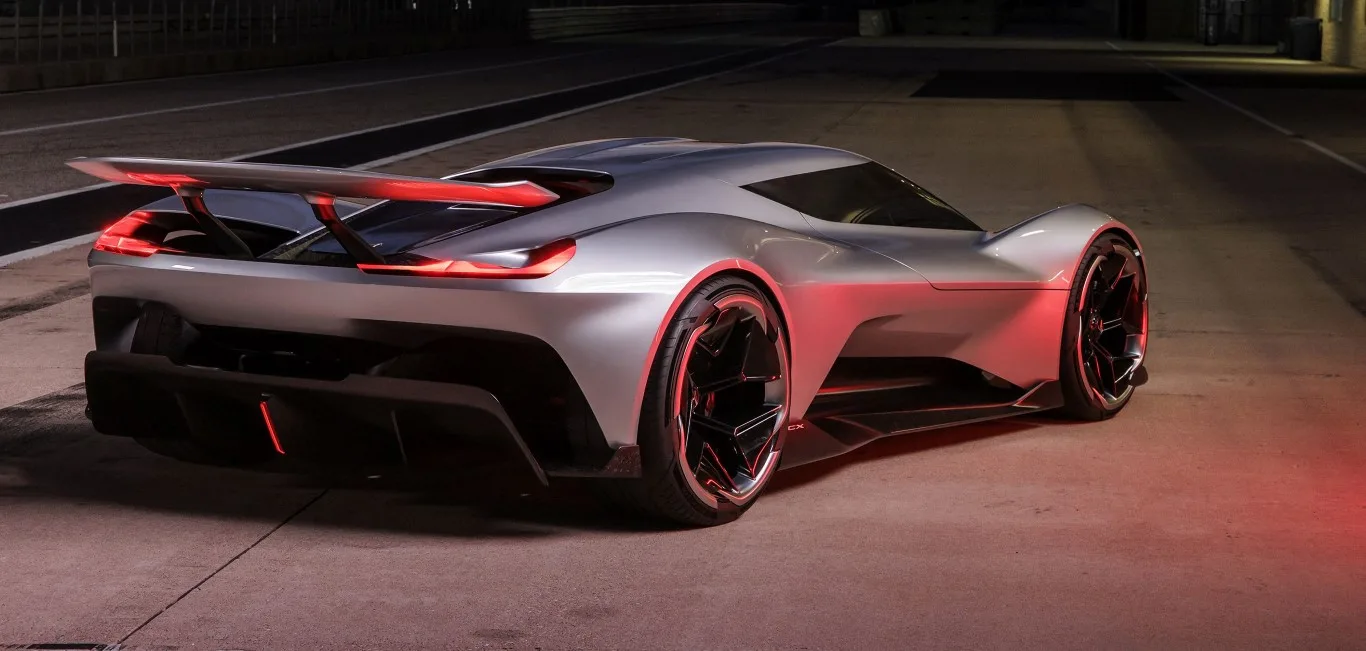
The CX is imagined as a street-and-circuit supercar with long, low proportions (roofline under 104cm), a forward-thrusting nose and a pronounced horizontal “chine” dividing upper and lower bodywork.
A jet-canopy cockpit and dual-element taillamps nod to past generations, while aero work was developed with the motorsport aero group.
Under skin, a Vacuum Fan System draws air through open channels to create substantial downforce, actively balancing the car with a front diffuser and rear wing that adjust to driver inputs. Exposed structures in the aero tunnels and wing-profile suspension arms underline the airflow-first philosophy.
Propulsion is fully electric: four motors — one per wheel — deliver more than 2,000hp with torque vectoring for traction and rotation, fed by a 90 kWh lithium-ion battery mounted low in the chassis to optimise weight distribution and centre of gravity.
The cabin pursues a premium feel.
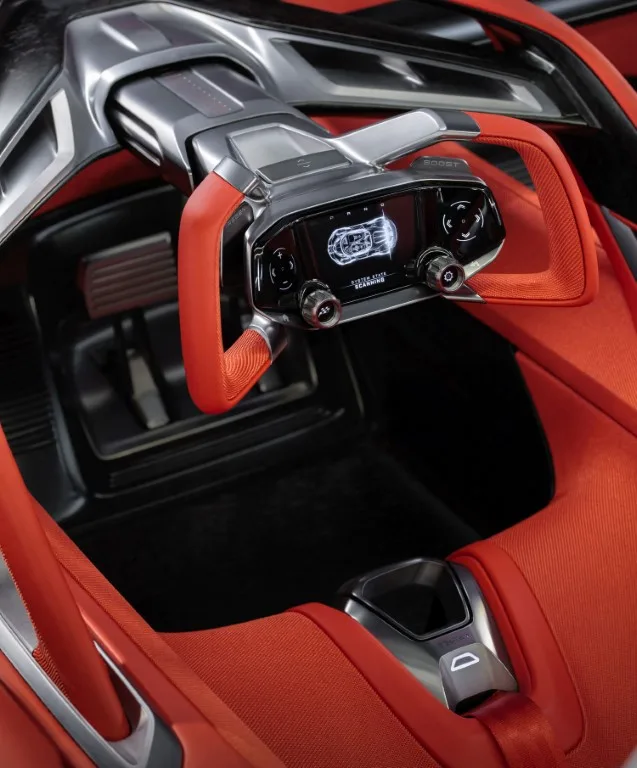
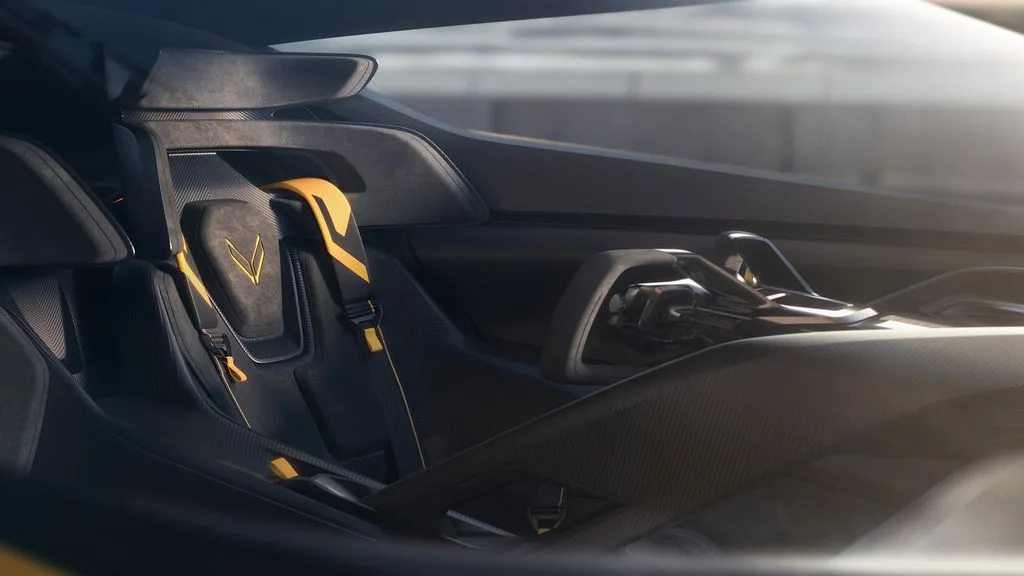
A forward-hinged canopy rises on approach; deeply bolstered seats in Inferno Red ballistic textile keep occupants planted under high lateral loads.
Silicone leather, milled aluminium and low-gloss forged carbon fibre set the tone, while a “digital windscreen” turns the windshield into a wraparound data display. Primary controls are integrated into the steering wheel to minimise distraction.
The CX.R Vision Gran Turismo translates the theme into a pure competition tool and will appear in Gran Turismo 7 for players to sample.
Visuals lean into Corvette’s endurance-racing lineage with a yellow-and-black livery, a lower ride height, enlarged active aero and wider openings for cooling.
Weight is pared back, and the interior swaps tourer finishes for raw functionality: exposed carbon weave across the dash, suede-wrapped foam inserts for grip, and larger shoulder and head restraints to manage the loads a high-downforce car can generate.
Powertrain strategy diverges from the CX to reflect a racing-led brief.
The CX.R VGT pairs electrification with a mid-mounted 2.0-litre, DOHC, twin-turbo V8 that revs to 15,000 rpm and produces up to 900 hp on renewable e-fuel.
It drives the rear wheels through an eight-speed dual-clutch transmission.
Three electric motors — one at each front wheel and a third integrated with the gearbox — supply instant torque and lift combined output to a targeted 2,000 hp.
Chevrolet emphasises that these are not mere show shells.
Working with performance engineers and the Gran Turismo development team, designers produced detailed chassis, drivetrain and aero blueprints so the virtual cars reflect plausible dynamics.
Both the CX and CX.R VGT will be downloadable in the game later this month.
Positioned as the final instalments in a series of 2025 Corvette design studies, the CX duo consolidate heritage cues with unconstrained aerodynamics and mixed-propulsion thinking.
They are less a preview of a single model than a manifesto for the brand’s next design chapter — one that blends track learning, electrification and digital experiences into the Corvette story.