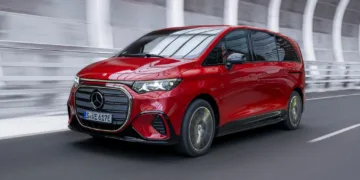


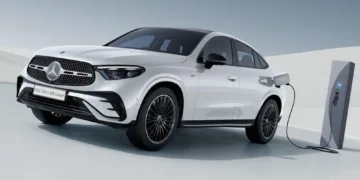



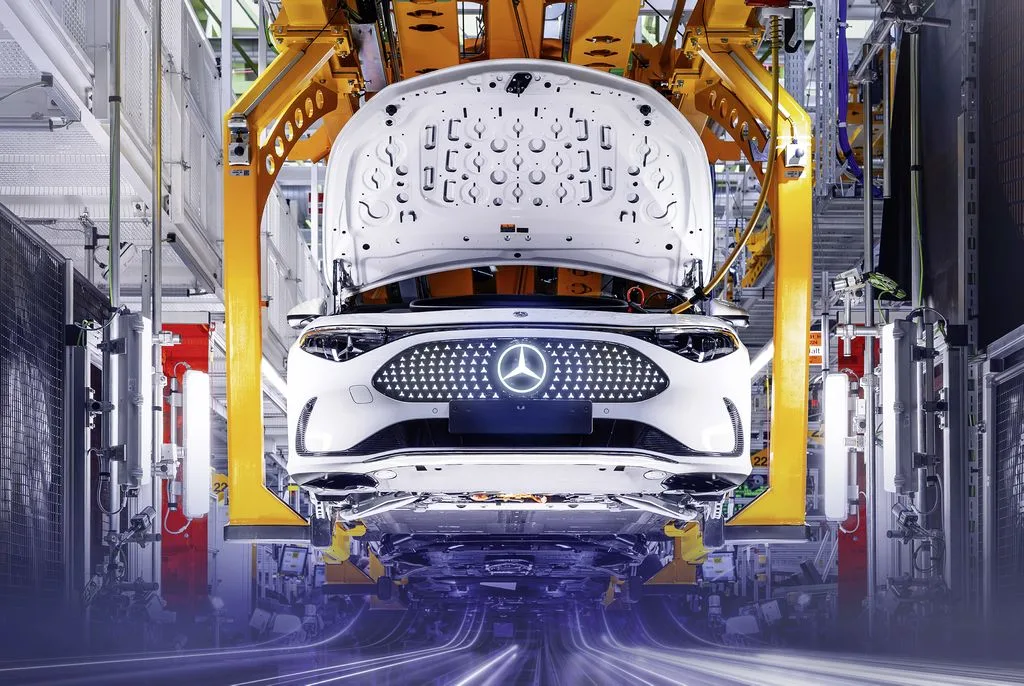
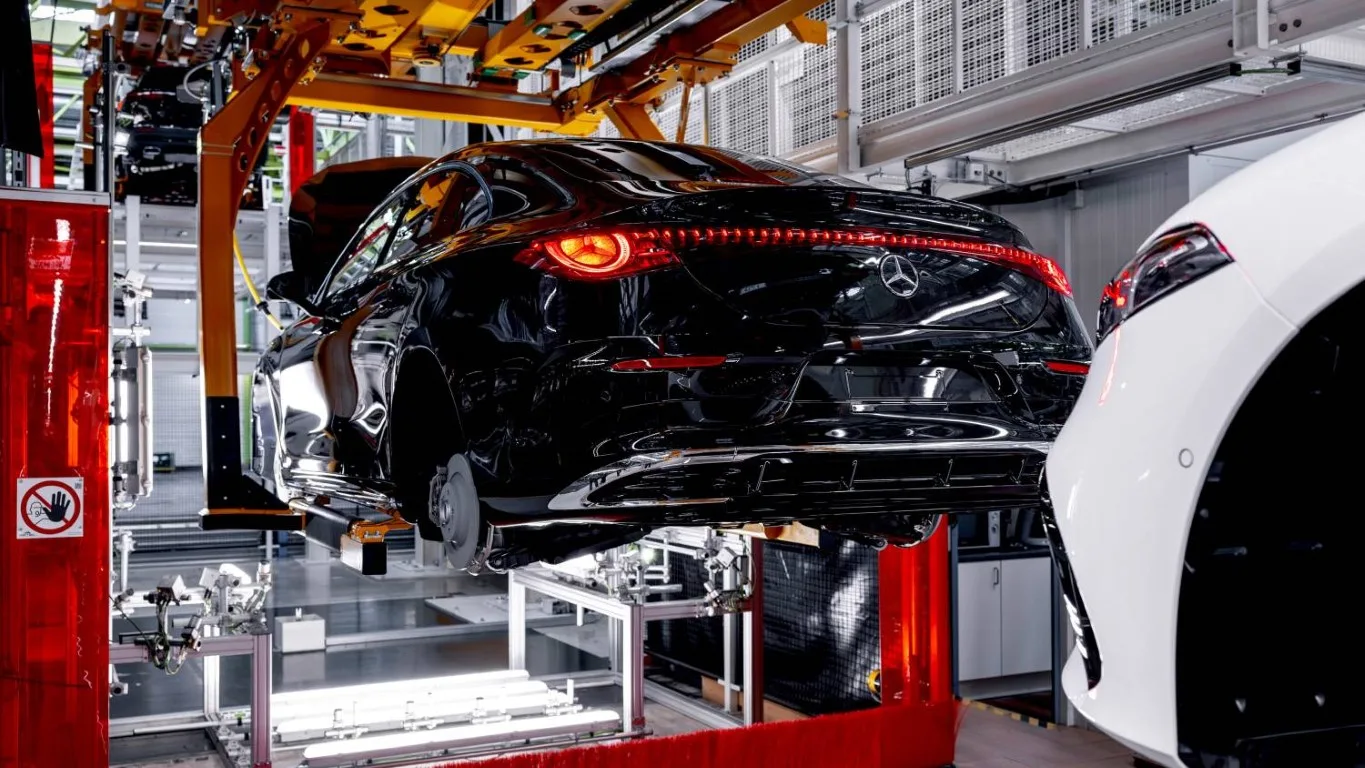
Mercedes-Benz has begun production of the new electric CLA at its Rastatt plant, marking a significant step in the company’s “Digital First” strategy.
The production line now integrates artificial intelligence, a digital twin system and, for the first time, the Mercedes-Benz Operating System (MB.OS) into the MO360 digital production ecosystem. These technologies aim to enhance efficiency, precision and flexibility throughout the manufacturing process.
The Rastatt facility, 90km west of Stuttgart, will receive electric drive units and axles from the Stuttgart-Untertürkheim site, while bodyshell components, structural elements and body parts will be supplied by the Kuppenheim plant.
High-voltage batteries for the new model are produced in Kamenz, Saxony, by Mercedes-Benz’s Accumotive subsidiary.
Under the Mercedes-Benz business plan, a mid triple-digit million euro investment has been directed towards the development and modification of the Rastatt plant to accommodate the new CLA.
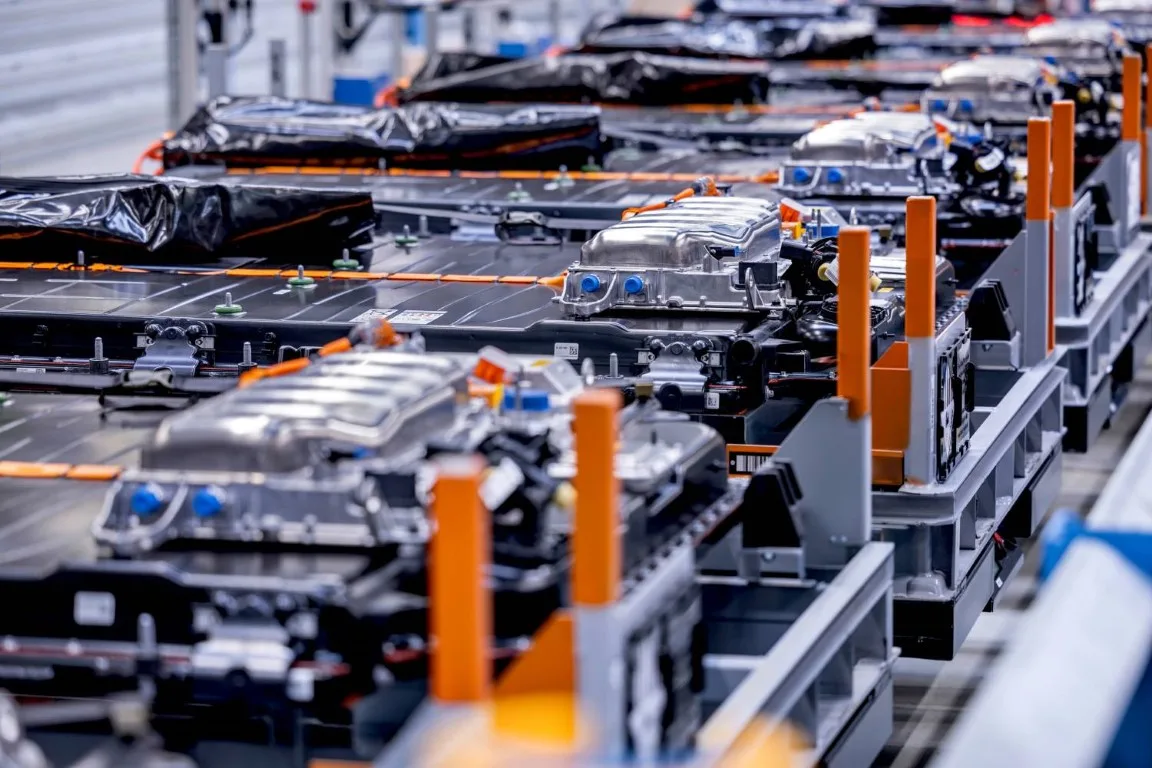
Following a staged production ramp-up in Germany, Beijing Benz Automotive Co., Ltd (BBAC) will assemble the CLA — including batteries and electric drive units — for the Chinese market. Meanwhile, further models within the same vehicle family will join production at Mercedes-Benz’s Kecskemét plant in Hungary.
The batteries for Kecskemét production will come from Mercedes-Benz’s own battery factory, while electric drive units will be supplied by the subsidiary plant in Sebes, Romania.
“With the CLA, Mercedes-Benz is ushering in a new era,” stated Ola Källenius, Chairman of the Board of Management of Mercedes-Benz Group AG. “The best guarantee for the long-term success of electromobility is top-of-the-range products like the CLA. We as a company are investing to ensure that these can be ‘made in Germany.’ A key prerequisite to make this possible is that framework conditions remain competitive.”
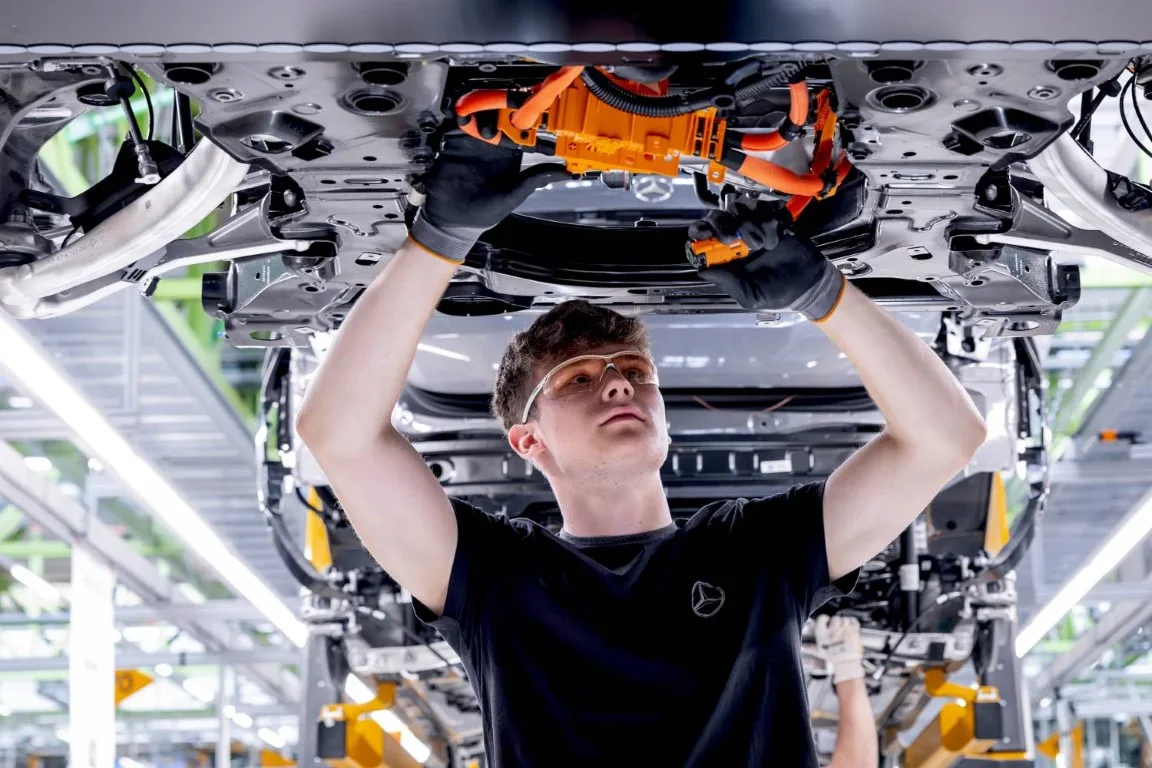
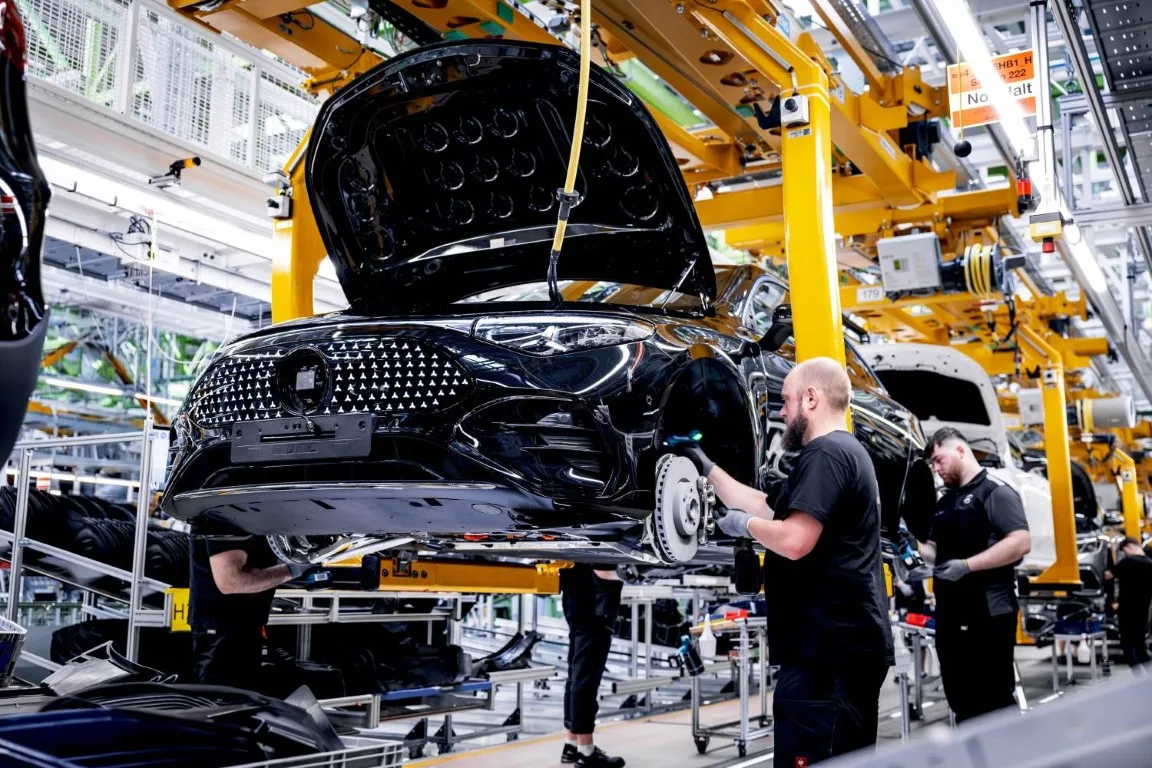
Rastatt’s production line is drive-flexible, capable of assembling hybrid, fully electric and conventional models on the same line.
The plant underwent extensive remodelling of an existing hall using virtual simulations to replicate conversions — an early example of the “Digital First” approach. Within weeks, a new production line in Hall 4.0 was configured using high-precision digital modelling, yielding considerable efficiency gains in construction time and cost.
The MB.OS chip-to-cloud architecture is employed for the first time in series production of the CLA, allowing vehicle software to be transferred via a central Mercedes-Benz Intelligent Cloud server rather than through disparate hardware modules. Rastatt is intended as a blueprint for rolling out MB.OS across all Mercedes-Benz production sites.
Further digitalisation includes AI-controlled process engineering in the top coat booths. By monitoring key sub-processes via artificial intelligence rather than conventional control systems, energy consumption has been reduced by 20 per cent and ramp-up times for new processes have been substantially shortened.
Since starting production in 1992, the Rastatt plant has grown to become the largest employer in the region with around 6,000 workers.
The facility currently assembles the A-Class, B-Class, GLA and the all-electric EQA, encompassing combustion engines, plug-in hybrids and electric drivetrains.
Production at Rastatt is carbon-neutral, using 100 per cent green electricity sourced from on-site solar systems and external green energy supplies.
Up to eight megawatts peak of solar power are generated through installed modules.
Integration of the new CLA model also involved numerous energy-reduction measures.
The plant has adopted a new generation of energy-saving robots in bodywork construction, implemented heat recovery systems within ventilation infrastructure and introduced modern intelligent lighting controls. These innovations have reduced energy consumption by more than 15 gigawatt-hours annually compared to previous production levels.
Plans are underway to install an organic solid-flow battery storage system, in partnership with German cleantech firm CMBlu Energy AG.
The approximately 11 MWh installation will bolster energy resilience and scalability.
Circular economy principles are also applied: the nearby Kuppenheim plant recycles steel and aluminium scrap for bodywork components.
To minimise logistics emissions, finished vehicles are transported 600 kilometres from Rastatt to Zeebrugge in electric lorries operated by partner Galliker.
At the end of May, a new International Consolidation Centre in Bischweier began operations, serving as a state-of-the-art logistics hub for the Rastatt and Kuppenheim plants.
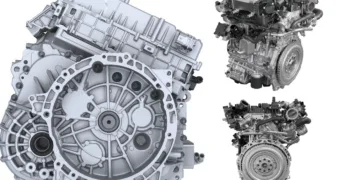
The Stuttgart-Untertürkheim site—celebrating its 120th anniversary in 2024—produces the electric drive units and axles for the new CLA. A drive unit comprises three subsystems: an electric motor, power electronics and a transmission gear unit.
Components such as the power-transmitting wheelset and control units are manufactured at Untertürkheim, Mettingen and Hedelfingen before final assembly in Untertürkheim. Mettingen is tasked with assembling the electric axles, which are then delivered as complete systems to Rastatt, approximately 70 kilometres away.
The Untertürkheim complex supplies more than two million engines, transmissions, axles, components and batteries annually to global production sites across three continents.
At Kamenz, Accumotive’s battery factories span roughly 80,000 m² and have produced over two million battery systems since 2012. This facility’s thirteen years of experience in high-voltage lithium-ion battery production form a cornerstone of Mercedes-Benz’s global battery production network. The company regards local battery manufacturing as a critical success factor in its electrification strategy.
The Kuppenheim plant, situated approximately ten kilometres from Rastatt, has supplied bodyshell components, structural parts and body panels since 2009, including those for the new electric CLA.
In 2024, Kuppenheim opened Europe’s first mechanical-hydrometallurgical battery recycling factory, enabling on-site recovery of valuable materials.