








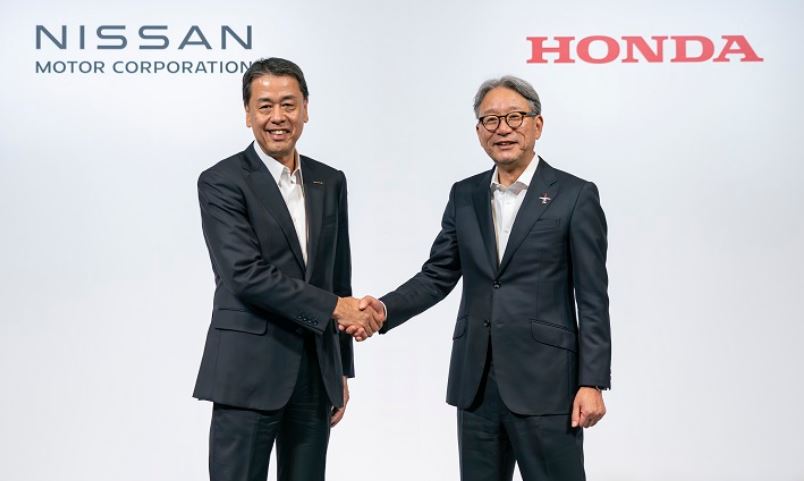
Honda Motor Co. and Nissan Motor Co. are set to begin formal talks on a potential merger, as Japan’s two major automakers face mounting pressure to compete in the global electric vehicle (EV) market, according to a report by Nikkei.
The discussions are prompted by the increasing dominance of EV giants like Tesla and growing competition from Chinese manufacturers.
The talks, reportedly in the early stages, aim to explore a deeper partnership that could include joint development of EV technologies, shared production facilities, and cost reductions in research and supply chains.
The move reflects Japan’s struggle to keep pace with rapid advancements in the EV sector amid soaring development costs and tightening regulations.
Both companies are grappling with challenges in the global transition to EVs. Honda, which has set a target to make all its sales electric or fuel cell-based by 2040, has lagged behind its global rivals. Meanwhile, Nissan, once an early leader with its LEAF model, has struggled to maintain momentum and scale up EV production.
Industry analysts suggest that a Honda-Nissan alliance could leverage combined resources to streamline operations and accelerate innovation. Neither company has publicly confirmed the talks.
According to Nikkei, the Japanese government has also expressed support for greater consolidation among domestic automakers to enhance their global competitiveness.
The report comes as automakers worldwide face increased costs for battery development and tighter emissions regulations. Tesla’s dominance and the rapid rise of Chinese EV manufacturers, such as BYD, have intensified pressure on traditional automakers to innovate or risk falling behind.
Honda and Nissan have previously partnered on smaller-scale projects, such as fuel cell technology, but a merger would mark a significant shift for both companies. If successful, the deal could create one of the world’s largest automotive alliances, with potential to rival major competitors like Volkswagen and Toyota.
As the EV landscape evolves, partnerships and mergers are becoming increasingly common strategies for survival and growth. The talks signal a recognition among Japan’s automakers of the urgent need to adapt to the changing automotive market.
However, significant hurdles remain, including aligning corporate cultures, business strategies, and leadership roles.
The discussions come at a critical juncture for Honda and Nissan, both of which have seen their market share erode in recent years.
The Nikkei report also indicated Mitsubishi Motors might join the merger. Nissan has a 24% stake in Mitsubishi, making it the top shareholder.
Further details on the negotiations are expected to emerge in the coming months.