











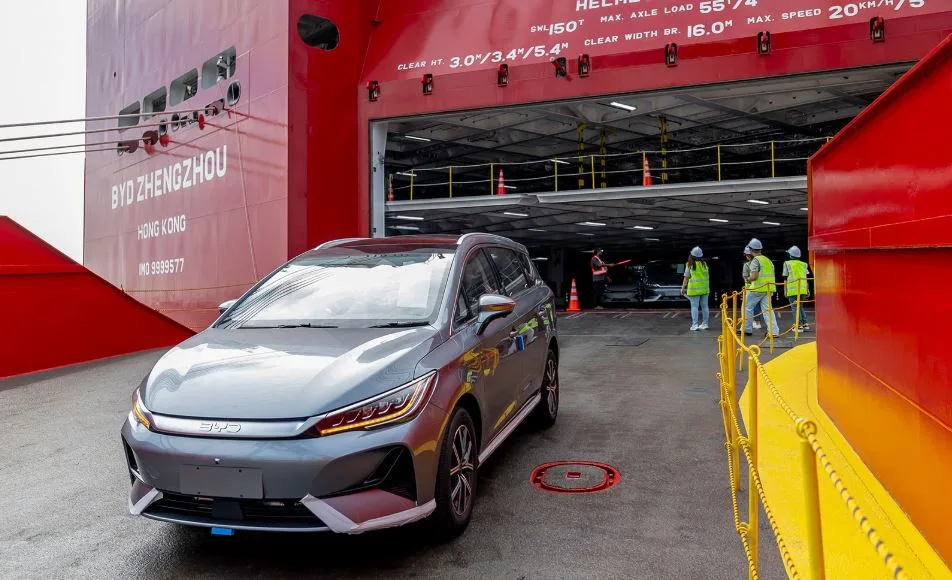
The Malaysian Automotive Association (MAA) supports the government’s tougher rules for fully imported EVs, but with a clear condition: do it properly, and do not force the market to turn too sharply, too quickly.
MAA president Mohd Shamsor Mohd Zain said at a KLIMS 2026 media update that MAA broadly supported the government’s aim of reducing trade imbalances in the automotive sector.
However, he said the revised CBU EV policy set by the Ministry of Investment, Trade and Industry (Miti) should be introduced in phases so car companies have time to adjust their product and assembly plans.
What gets lost in all this is the buyer. If imported EVs become too restricted, Malaysia could end up with fewer models just as the government is trying to raise EV adoption and move towards net-zero emissions by 2050.
MAA also linked this to Malaysia’s target of having EVs account for 20% of new vehicle sales by 2030.
Miti’s revised rules take effect from July 1. Under the new conditions, CBU EVs brought into Malaysia must have a minimum CIF value of RM200,000 and a minimum output of 180 kW (245 PS). CIF refers to the cost, insurance and freight value before local duties, taxes, distributor margin and dealer margin are added.
Here’s where it gets complicated. A RM200,000 CIF floor does not mean a RM200,000 showroom price. Once taxes and margins are included, the effective retail floor would be much higher, especially for brands without local assembly.
The message from Putrajaya is plain — build it here, or don’t bring it in. iCaur, the Chery sub-brand, just answered that call, moving its 03 SUV into local assembly in Shah Alam.
What’s less clear is whether Malaysian car buyers get left with a shrinking shortlist in the meantime.