




Toyota has opened the first section of Woven City at the foot of Mount Fuji, more than five years after the project was unveiled, moving its living-lab concept from blueprint to limited operations.
Developed by software unit Woven by Toyota on the site of a former car plant, the campus is designed to mimic a functioning town so new mobility and urban technologies can be trialled with residents in situ.
About 300 people, largely Toyota employees and families, are expected in the initial phase, rising to roughly 2,000 when the site is fully built.
The launch comes as global carmakers push deeper into electrification, automation and software.
Competitors and tech firms are already running on-road autonomous pilots overseas, and Toyota says Woven City will generate the real-world data needed to validate safety and reliability before wider deployment in Japan.
Toyota positions two participant groups at the core of the programme. “Inventors” include 12 Toyota Group companies, seven external firms and a musician, all granted space to run long-term trials.
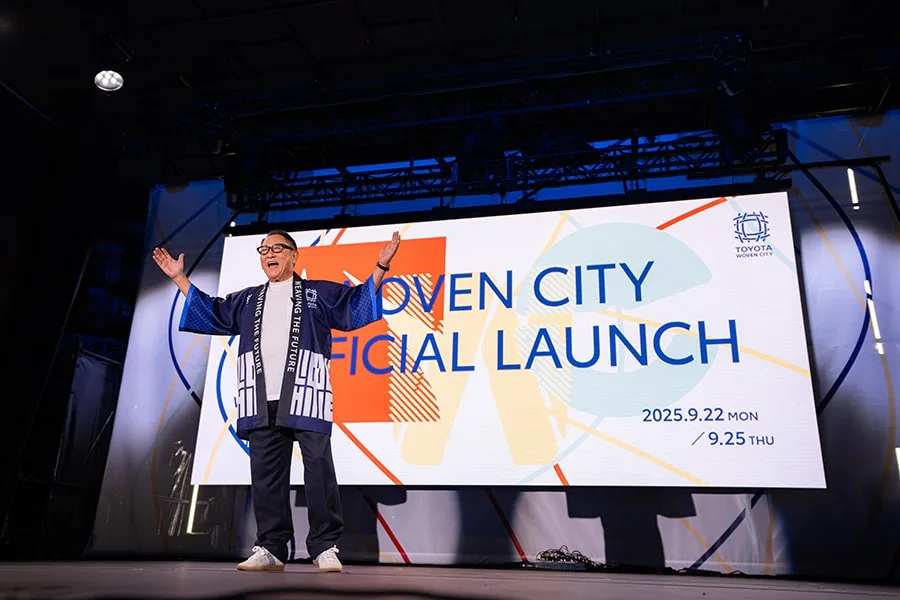
“Weavers” are residents and visitors who will use early-stage services and provide feedback. The cohort includes projects such as Daikin’s effort to strip indoor air of cedar pollen, a major hay fever trigger domestically.
Toyota also demonstrated a self-driving yard robot, fitted with multiple lidar units and cameras, capable of moving vehicles to set locations like car-sharing bays. The system adapts technology already used to shuttle cars around Toyota plants, including Motomachi in Aichi.
While the company continues to develop autonomous systems and robotics, the near-term focus is controlled testing inside Woven City’s street grid, utilities and digital infrastructure, with the aim of proving safety, refining software and establishing evidence for regulators.
Toyota ultimately intends to expand to live urban settings once it has sufficient data.
Alongside the site opening, Woven by Toyota has started an accelerator and open calls for additional “Inventors,” but the emphasis remains on measurable outcomes rather than showcase concepts.
The first phase targets around 300 residents; public access is planned later, subject to progress and approvals.