












Bridgestone has been named sole tyre partner for Lamborghini’s new Fenomeno, a limited-run supercar of just 29 units.
Built to mark 20 years since the first car fully designed at Sant’Agata Bolognese, the Fenomeno becomes Lamborghini’s quickest model yet, claimed at 0–100kph in 2.4 seconds and 0–200kph in 6.7 seconds.
Its 1,065hp powertrain makes it the most powerful V12 the brand has produced.
The car will use bespoke Bridgestone Potenza Sport ultra-high-performance tyres, engineered specifically to handle the Fenomeno’s speed, grip and braking demands.
Standard fitment is 265/30 ZRF21 at the front and 355/25 ZRF22 at the rear.
The tyres are offered with Bridgestone’s run-flat technology, allowing the car to keep moving after a puncture for up to 80km at speeds of up to 80kph, even with zero pressure — useful for getting safely off a highway or to a service centre.
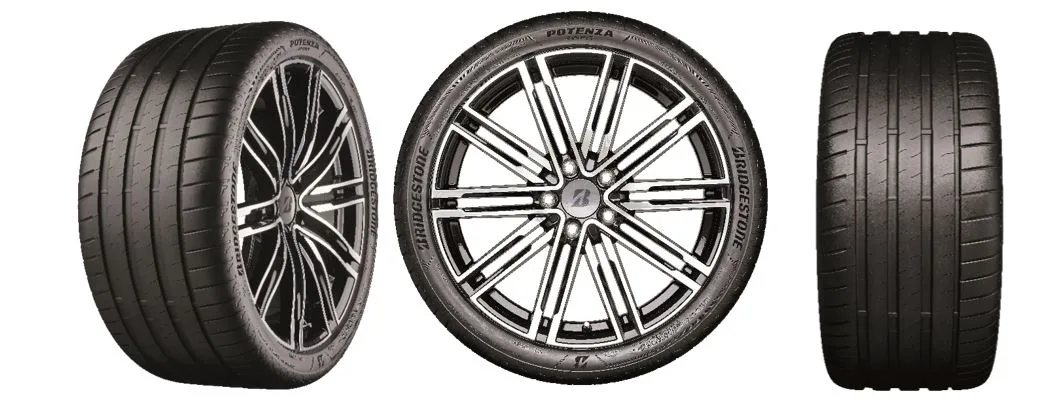
For drivers heading to the circuit, Lamborghini will also offer road-legal, semi-slick Bridgestone options in 20- and 21-inch sizes. These aim to deliver higher grip and faster lap times while remaining homologated for public roads.
Bridgestone vice president OE sales EMEA Radoslaw Bolkowski said the tyres were developed to unlock the full potential of Lamborghini’s most powerful V12 to date, focusing on control, precision and consistency on road and track.
Lamborghini marketing director Christian Mastro said tyre technology is now responsible for the majority of performance gains outside mechanical updates, and the bespoke Potenza line-up is tuned to match the Fenomeno’s extreme capability.
The Fenomeno extends a five-year technical partnership in which Bridgestone has been exclusive tyre supplier across Lamborghini’s supercar range, including Huracán STO, STJ, Tecnica, EVO and Sterrato, the Revuelto and the Temerario.
Developed and produced in Italy, the Fenomeno’s tyres were created using Bridgestone’s Virtual Tyre Development process, which reduces physical prototypes and testing, shortens development time by up to half, and cuts raw material use and CO2 emissions during development by as much as 60%.