







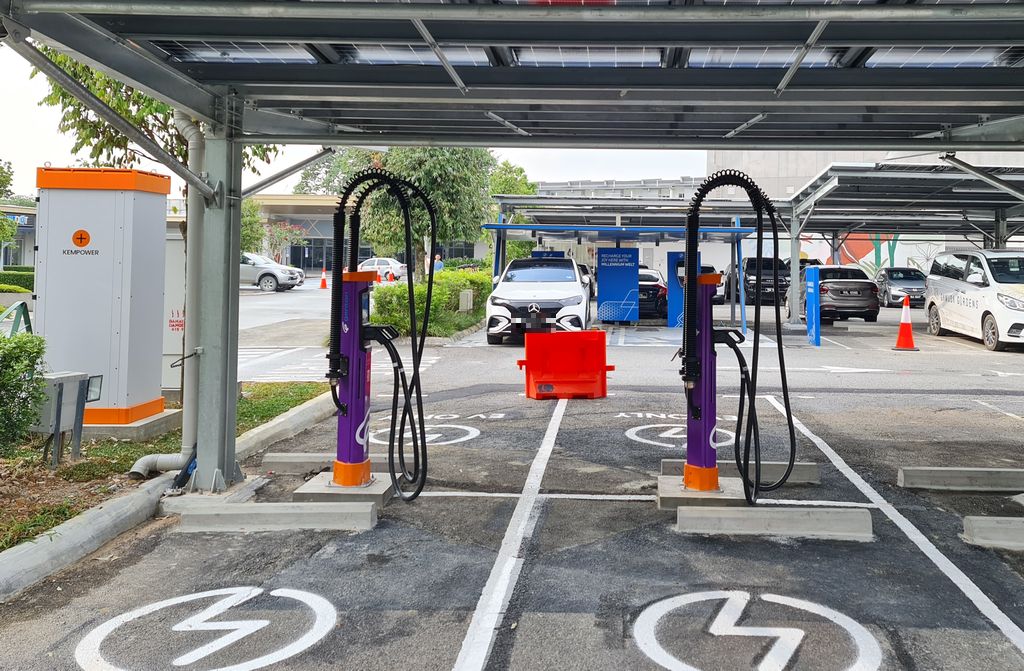
At some point, every EV owner will wonder if they could just have one app to handle charging from different charge point operators.
One app to rule ’em all, to paraphrase an immortal line from a fantasy film.
The convenience is there and would help boost adoption of EVs in the long term. But getting to one app from multiple apps is easier said than done.
It can be achieved though. In fact, the Malaysian government is working on it. But it will take some time as there are technical and commercial hurdles to overcome.
The Star today reported that the government is moving to streamline electric vehicle (EV) charging by developing a unified mobile application that will allow users to locate, activate, and pay for charging sessions through one consolidated platform.
At present, EV drivers must navigate at least six different payment systems provided by various charge point operators (CPOs), resulting in inconvenience and service fragmentation.
Charging costs for EVs vary depending on the particular CPO and range between 60 sen per kilowatt-hour (kWh) up to RM1.80/kWh.
The new app, which is under development by the Town and Country Planning Department (PLANMalaysia) within the Housing and Local Government Ministry (KPKT), seeks to integrate these disparate systems into a single interface.

It would bring together real-time data from partner platforms, allowing users to access all available charging stations regardless of network affiliation.
PLANMalaysia officials, however, acknowledged that merging the interfaces and ensuring seamless communication between them pose significant technical challenges. The department stressed that discrepancies in data could frustrate users and erode confidence in the system if not addressed adequately.
Discussions are under way with other entities, including the Malaysian Green Technology and Climate Change Corp (MGTC) and the Malaysia Digital Department, to ensure that the app meets necessary standards for efficiency and reliability.
The department noted that there were 3,611 Electric Vehicle Charging Bays (EVCB) across the country as of Dec 31, with government plans to increase that number to 10,000 by year’s end.
Meanwhile, the Investment, Trade and Industry Ministry (Miti) is managing incentives to boost EV usage, as evidenced by the 42,452 EV registrations recorded from 2018 through February this year and a significant 58.5% rise in registrations during January and February compared with the previous year.
However, industry stakeholders have raised concerns over the consolidation initiative.
The Star spoke to the Electric Vehicle Association of Malaysia and Malaysian EV Owners Club to get their take on the government plan.
The association president, Datuk Dennis Chuah, warned that while a unified platform may simplify payments, it should not lead to increased charging costs or distract from the pressing need to expand the underlying EV infrastructure.
The head of the EV club, Datuk Shahrol Azral Ibrahim Halmi, cautioned that forcing a consolidated payment system could create a single point of failure, resulting in potential reliability issues and hidden costs from additional hardware and software requirements.
He told The Star that existing roaming arrangements and card payment terminals already serve EV users’ needs by offering broader accessibility without compromising competition or innovation.
The government, however, has reassured that charging rates will be maintained at reasonable levels even if electricity tariffs rise later in the year.