







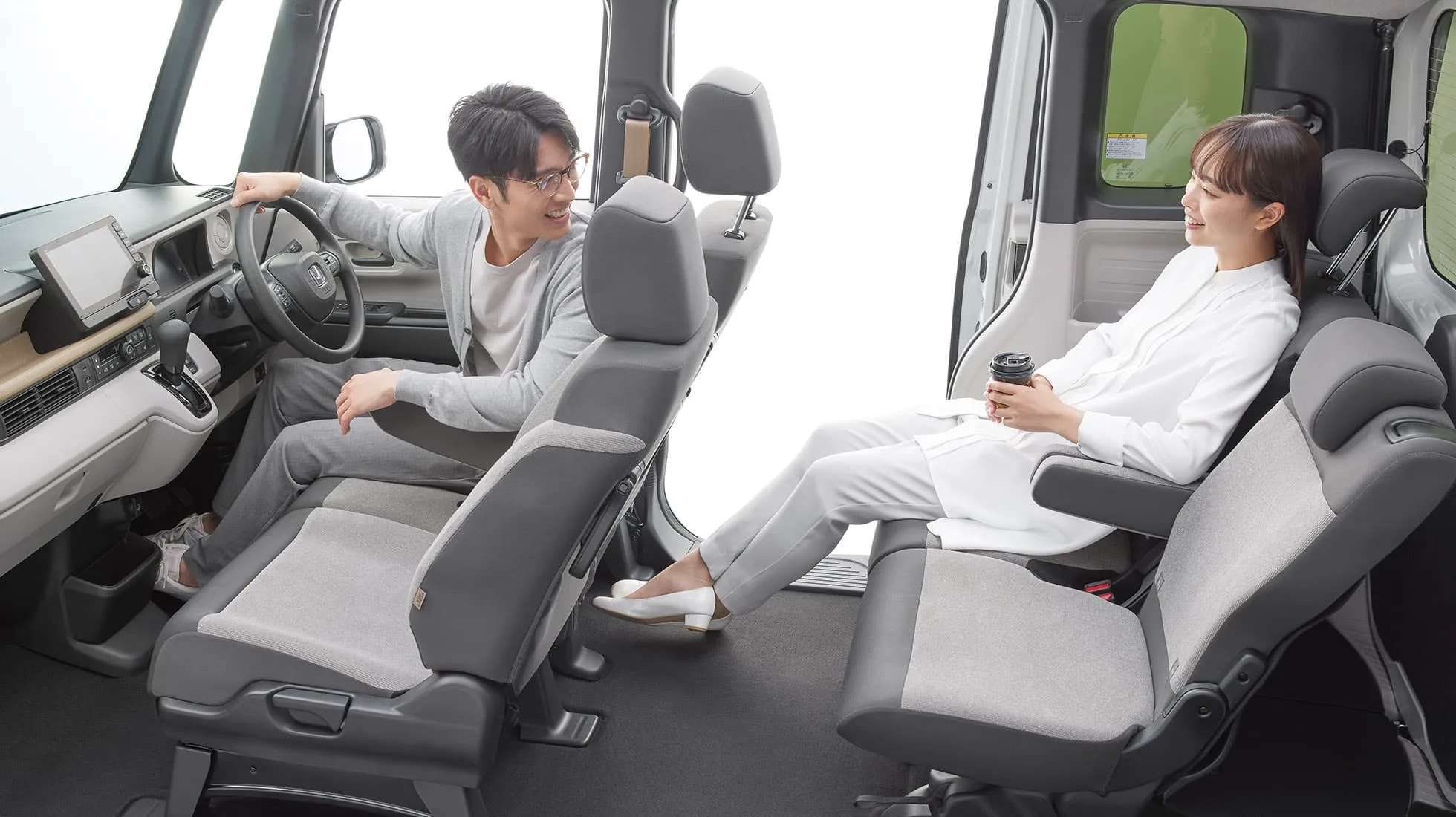
Honda will expand its EV model line-up mainly in Japan’s mini-vehicle, or kei car, category, with an electric N-BOX scheduled for 2028.
That is the small but telling EV point inside a much broader Honda business reset. Instead of pushing EVs hard across all major markets at once, Honda is now moving more cautiously, putting more resources into hybrids while keeping EV development alive for areas where the business case is clearer.
The announcement was made by Honda Motor global CEO Toshihiro Mibe during a business briefing on the company’s plan to rebuild its automobile business.
Honda said it would focus on improving costs, speeding up development and concentrating investment in priority regions over the next three years. Its target is to achieve consolidated operating profit of more than 1.4 trillion yen by the financial year ending March 31, 2029.
For Japan, the EV push will be narrow and practical. The N-BOX EV makes sense because kei cars are deeply embedded in the Japanese market, where size, tax treatment, running cost and daily usability count heavily.
Honda also plans to introduce next-generation hybrid models in Japan from 2028, starting with the all-new Vezel. These models will get Honda’s next-generation ADAS, which is also planned for wider rollout across more than 15 models over five years.
The wider direction, however, is clear: hybrids are back at the centre of Honda’s near-term plan.

From 2027, Honda will start launching next-generation hybrid models using a new hybrid system and platform.
The company plans to introduce 15 next-generation hybrid models globally by the end of the financial year ending March 31, 2030, with North America as a key market. In 2029, Honda will add large hybrid models in the D-segment and above for North America.
Honda also showed two prototypes during the briefing: the Honda Hybrid Sedan Prototype and Acura Hybrid SUV Prototype. Both are due to go on sale within the next two years.
The company is aiming for a major cost cut. Honda said it wants to reduce the cost of its next-generation hybrid system by more than 30% compared with the hybrid system introduced in 2023.
Paired with a new platform and newly developed electric AWD unit, Honda said fuel economy should improve by more than 10%.
Manufacturing is also being redirected. Honda will reallocate excess capacity at its Ohio plants to petrol and hybrid vehicles, while making all of its North American car plants capable of producing hybrid models.
Honda and LG Energy Solution will also convert part of their L-H Battery joint venture’s EV battery lines to hybrid battery production.
That shift reflects tougher market realities. Reuters reported that Honda has booked heavy EV-related charges and is suspending its large EV and battery production project in Canada.
Honda’s own briefing said the Canada EV value-chain project would be suspended indefinitely while the company reassesses its procurement strategy.
India is another priority region. Honda plans to introduce India-focused models in 2028, covering vehicles under four metres long and the mid-size category. The company wants to tap customers moving up from motorcycles to cars, helped by its strong motorcycle business in India.
China gets a different treatment. Honda said it would use more locally sourced standard components, local next-generation technologies and new energy vehicle platforms from local partners. That is a frank admission that speed and cost competitiveness in China now require a more localised approach.
Honda will still make EVs. It said it would continue developing future EV hardware platforms, all-solid-state batteries and software systems such as ASIMO OS. But the tone has changed.
Honda is now pushing a multi-path route to carbon neutrality, using EVs, hybrids, carbon-neutral fuels and carbon-offset technologies.
The bottom line is this: Honda still wants EVs, but not at any cost. Kei EVs in Japan, hybrids in North America, market-specific products in India and local partnerships in China form the new playbook.