







Hyundai Motor Europe has unveiled the Ioniq 3, a new fully electric compact hatchback aimed at everyday European buyers who want an EV that is easy to live with rather than merely clever on a spec sheet.
It is a smaller, more accessible addition to the Ioniq line-up, but Hyundai is still loading it with some fairly serious claims on space, range, charging and in-car tech.
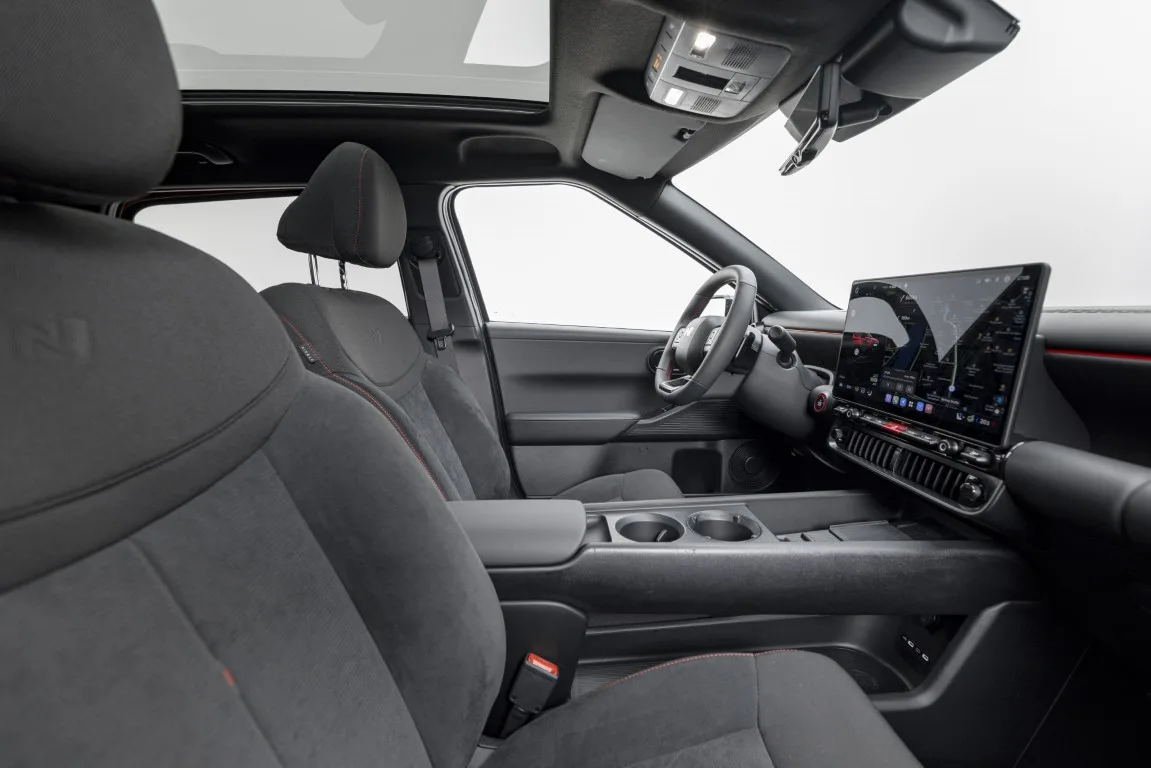
At the centre of the pitch is what Hyundai calls a new “Aero Hatch” shape.
The company said the silhouette is designed to balance aerodynamic efficiency with useful interior room, helped by a roofline that stays straighter over passengers before dropping into the rear spoiler.
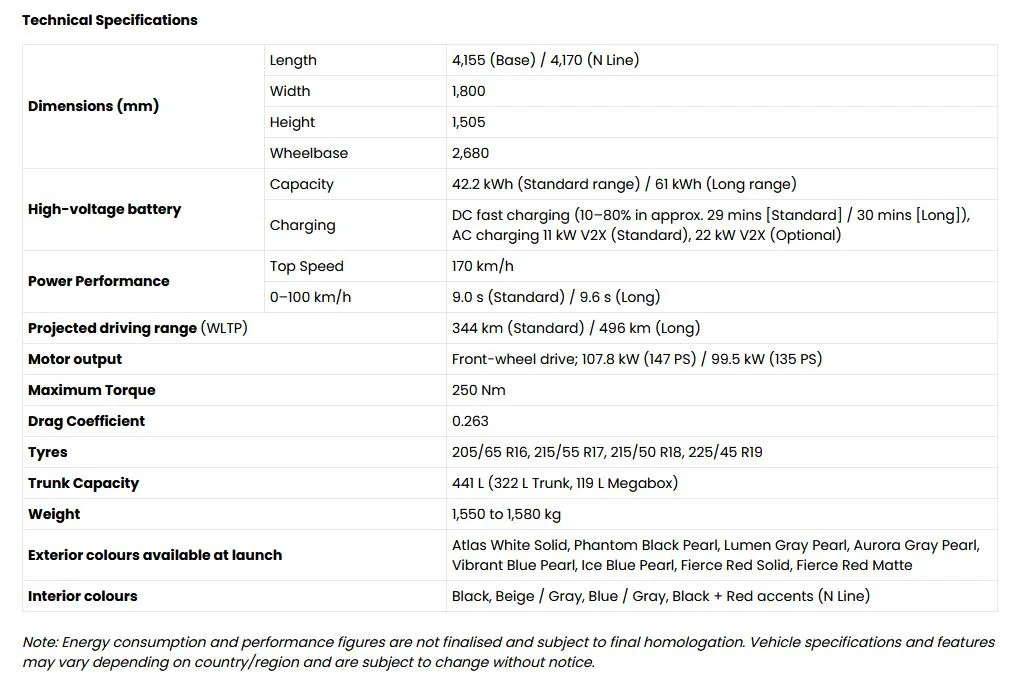
The target drag coefficient is 0.263, which Hyundai expects to be class-leading for the segment.
That’s important because cars like this live or die not just by styling, but by how much range they can squeeze from a battery without growing too large or too expensive.
Two battery options will be offered. Hyundai said the Standard Range version is projected to deliver 344km WLTP, while the Long Range model is targeting 496km WLTP.
The car uses Hyundai Motor Group’s E-GMP platform with a 400-volt electrical architecture, rather than the 800-volt setup seen in some larger Hyundai-Kia EVs.
Even so, Hyundai said DC charging from 10 to 80 per cent takes about 29 minutes under optimal conditions, while AC charging supports up to 22kW.
The company is also trying to make a point about cabin packaging.
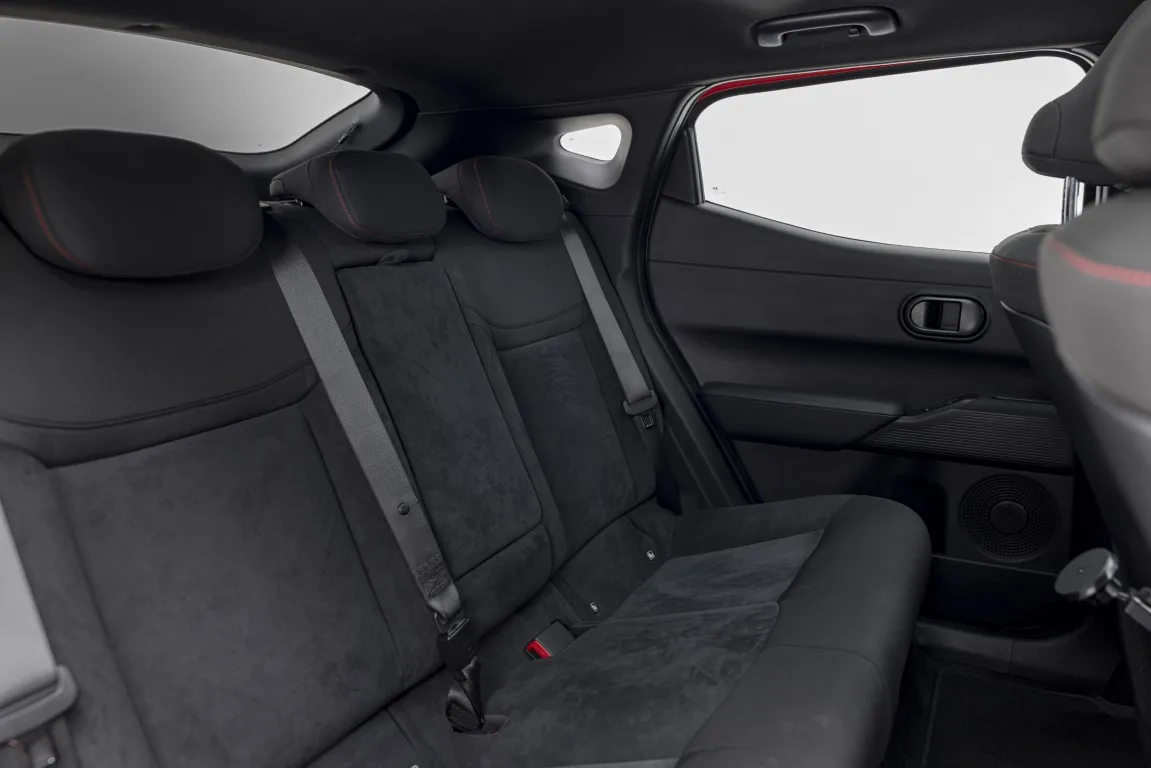
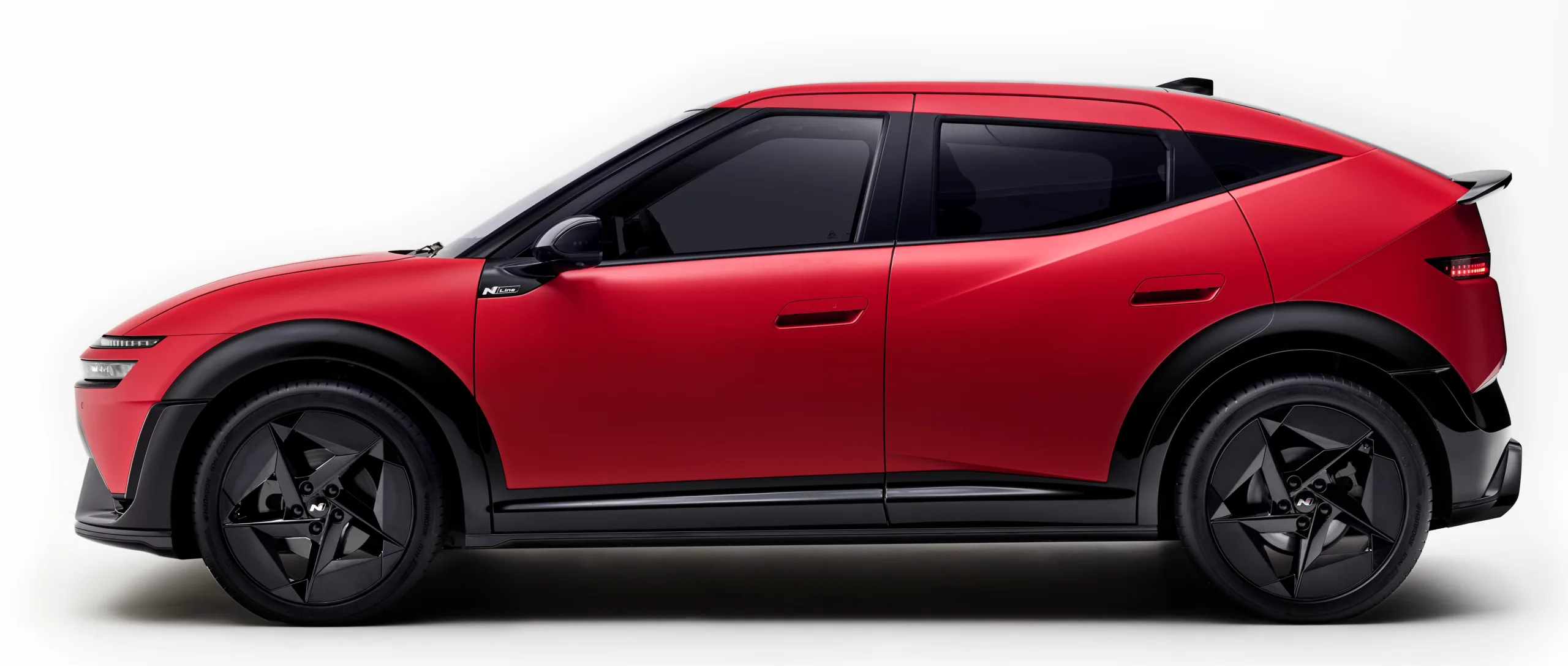
Hyundai said the Ioniq 3 offers upper-segment roominess despite its compact footprint, thanks to a flat floor, long wheelbase and what it calls a “Furnished Space” layout.
In plain terms, it is trying to make the cabin feel more like a genuinely useful family hatch than a tight small EV.
Hyundai claims it can seat three adults in the rear in comfort, while boot capacity stands at 441 litres. There is also an integrated Megabox beneath the boot floor for extra hidden storage.
Inside, the new model will debut Hyundai’s Pleos Connect infotainment system in Europe.
It is based on Android Automotive OS and comes with either a 12.9-inch or 14.6-inch display, depending on specification.
Hyundai said the focus is on making the car’s digital features easier to use rather than more complicated. Functions mentioned in the release include Digital Key 2, Plug & Charge, an EV route planner, plus interior and exterior Vehicle-to-Load capability.
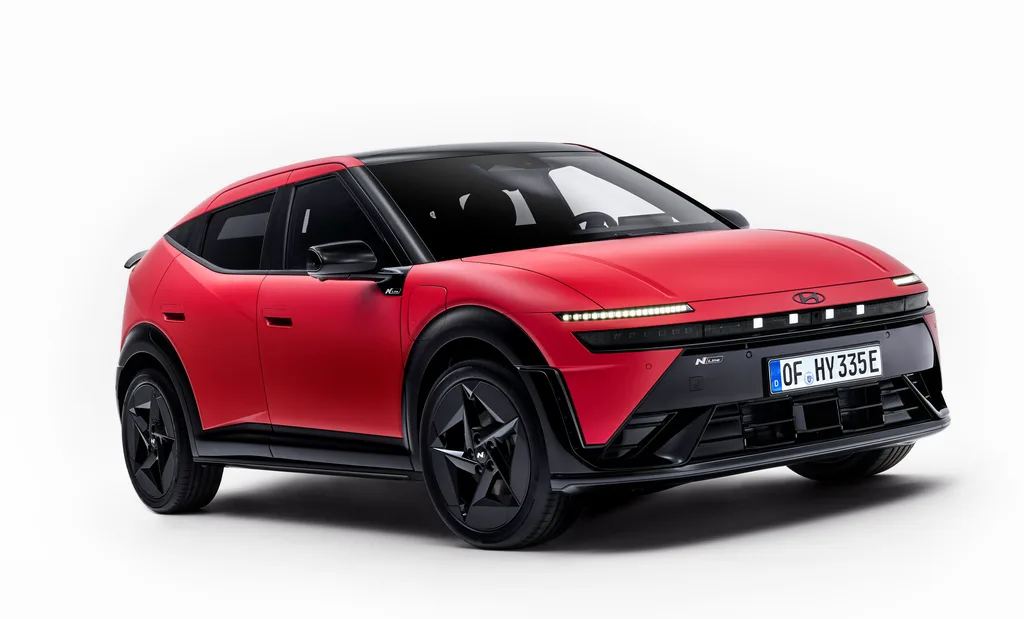
Design-wise, Hyundai is leaning on its “Art of Steel” theme, with crisp surfaces, pixel lighting and four central dots said to reference the letter H in Morse code. Buyers will be able to choose from 11 exterior colours, several interior themes, and 16- to 19-inch wheels, with an N Line variant adding a sportier look.
The interior itself mixes recycled and bio-based materials with touches inspired by natural landscapes and 1970s Italian furniture. That could go either way in the real world, but Hyundai is clearly trying to give the cabin some personality instead of settling for generic minimalist EV design.
On safety and driver assistance, Hyundai said the Ioniq 3 gets the latest SmartSense suite, including Highway Driving Assist 2, Remote Smart Parking Assist, Blind-Spot View Monitor, Surround View Monitor and Memory Reverse Assist.
It also gets seven airbags as standard. Power outputs of up to 107.8kW (147 PS) and 250 Nm, plus a top speed of 170kph, suggest Hyundai is pitching the car more as a sensible all-rounder than a hot hatch.
The Ioniq 3 has been designed in Europe and will be built at Hyundai Motor Türkiye’s Izmit plant, a detail Hyundai is clearly using to underline local development and production.
With the Ioniq 3, it looks like Hyundai is trying to meet European buyers where they actually live: urban traffic, family duties, charging anxiety, tight parking spaces and all.
If the real-world pricing is sensible, the Ioniq 3 could end up being one of the more important mainstream EV launches in this part of the market.