





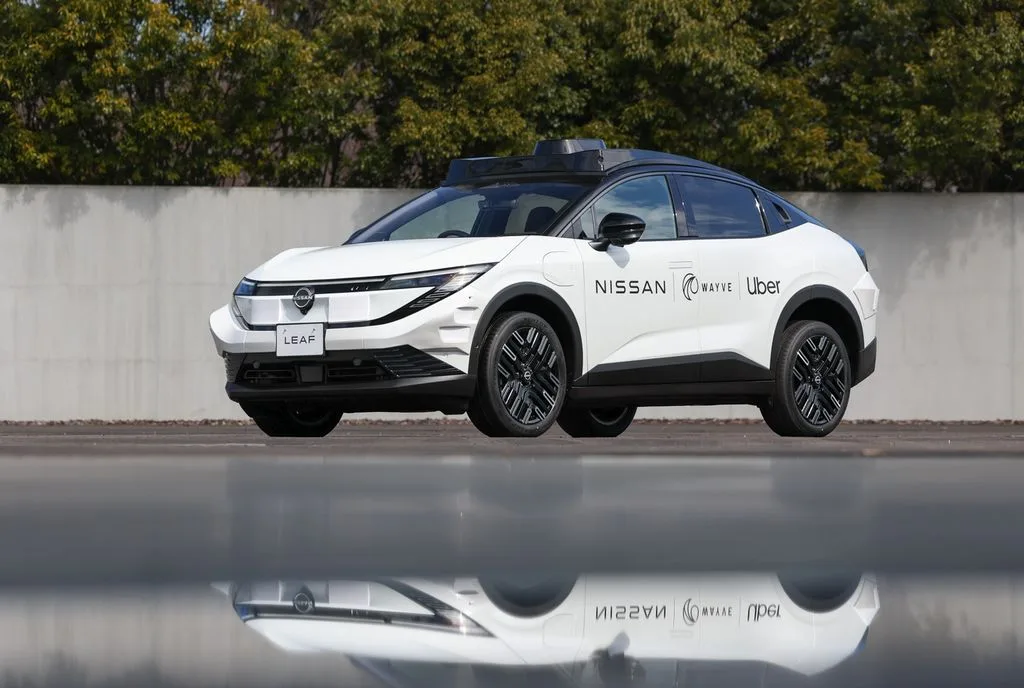
Wayve, Uber and Nissan have signed an agreement to work on a robotaxi pilot in Tokyo by late 2026, using Nissan LEAFs fitted with Wayve’s autonomous driving system and offered through the Uber app.
It is Uber’s first autonomous vehicle tie-up in Japan, and on paper at least, it gives all three companies something useful: Wayve gets a high-profile proving ground, Uber adds another market to its robotaxi push, and Nissan finds a fresh job for the new LEAF.
The plan, however, is still a pilot, not a commercial driverless launch. During the first phase, the cars will run with a trained safety operator on board.
Put simply, this is not a no-driver service from day one. The first phase still includes a trained safety operator in the car.
Tokyo is not a soft target either. Dense traffic, narrow streets, layered road layouts and high safety expectations make it a serious test bed.

Wayve said it has been testing in Japan since early 2025, and it is leaning hard on its pitch that its AI driver can adapt to new roads and cities without relying on HD maps.
That is an ambitious claim, and Tokyo is about as good a place as any to test whether it holds up.
Uber said the service would be launched through a licensed taxi partner in Japan, with partner selection still under way.
It is an important announcement, but it is still only a start. Turning it into something that works day in, day out in Tokyo is the harder part.