







A wisp of smoke from under the dashboard can turn into a serious fire surprisingly quickly.
Damaged wiring, leaking fuel, an overheated component or smouldering cabin material can all be starting points.
If the fire is still small and there is a clear escape route, an extinguisher kept within reach may stop it spreading. It could also be useful if you come across another motorist whose car has just caught fire.
The choice is not as simple as size alone.
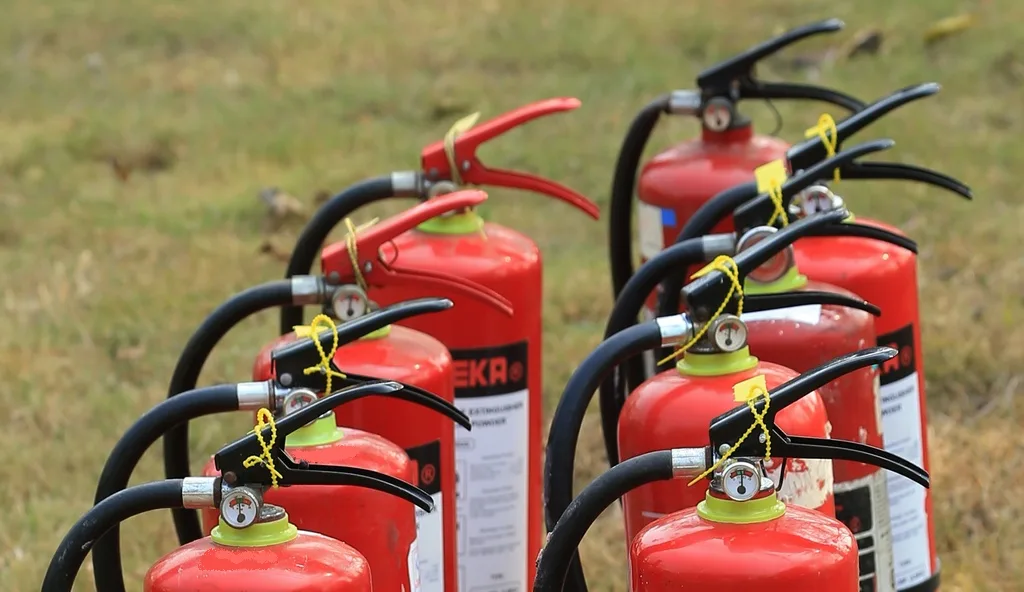
Malaysian accessory shops sell everything from compact aerosol-style extinguishers to 1kg and 2kg cylinders. ABC dry powder is common in conventional portable units, while CO2 and small spray-type products are also available.
What is less obvious is which type makes sense in a passenger car, how large it should be, where it can be mounted safely, and what changes if an EV is being charged or its high-voltage battery becomes involved.
Battery fires bring an additional problem. Once thermal runaway starts, cells can continue producing heat and may reignite even after visible flames have been suppressed.
This guide looks at what a portable extinguisher can realistically handle, the differences between ABC powder and CO2, suitable sizes and mounting positions, and when the safest response is simply to get away from the vehicle.

What can a car extinguisher put out?
A car contains more combustible material than its fuel or traction battery.
Seats, carpets, dashboard plastics, wiring insulation, luggage and engine-bay components can all burn. A fire might begin at a 12-volt electrical connection, an aftermarket accessory, a fuel hose, an overheated brake or a power bank left in the cabin.
An extinguisher can help when the fire remains confined to a small area. Once flames spread through the engine compartment or cabin, retreat is the safer option.
In an EV, an extinguisher could deal with a small fire involving the cabin, tyres, luggage or 12-volt electrical system. It does not make a high-voltage battery fire safe to approach.
Portable extinguishers also lack the prolonged cooling capacity needed to control a large traction-battery fire. That job should be left to trained firefighters.
ABC powder or carbon dioxide?
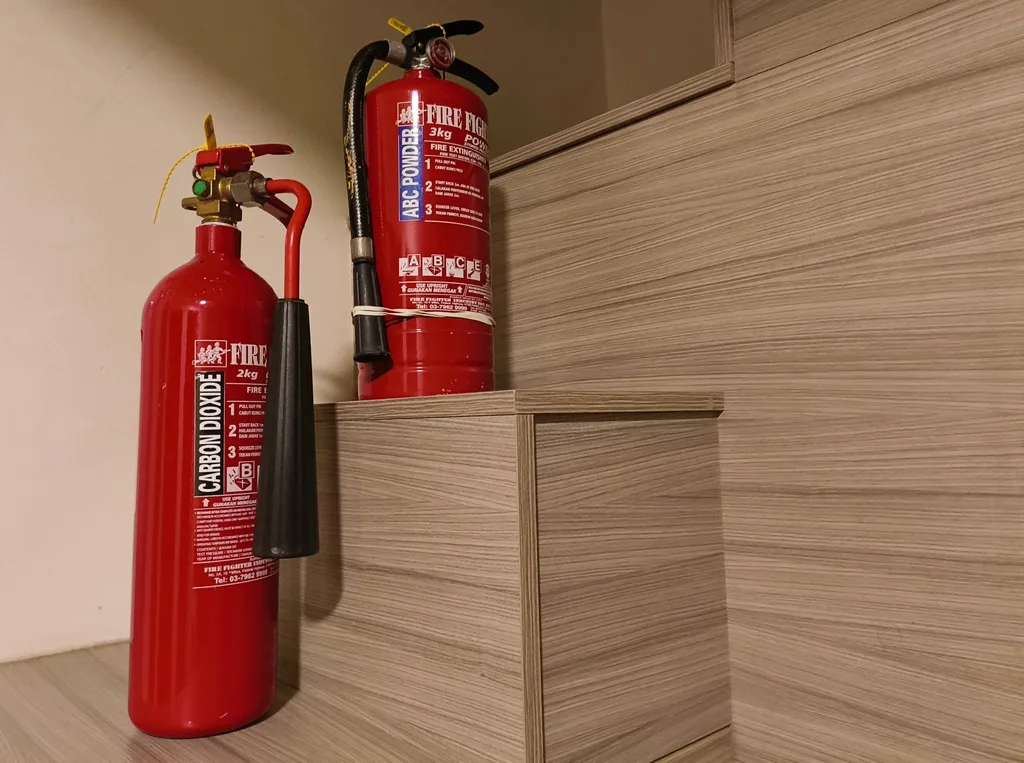
Malaysian fire-safety suppliers commonly offer both ABC dry-powder and CO2 extinguishers.
For most motorists, ABC dry powder is the more versatile choice.
It can be used on several materials found in and around a car, including burning upholstery, plastics and flammable liquids. Appropriately rated units can also be used where live electrical equipment is involved.
ABC powder has strong flame-knockdown ability, but it is messy. The powder can enter electrical connectors, air-conditioning ducts and electronic modules. It may obstruct vision when discharged inside the cabin and can irritate the eyes and respiratory system.
CO2 extinguishers leave no powder or liquid residue, making them useful around electrical equipment.
However, they provide little cooling, are less effective on deeply burning seats and trim, and can be affected by wind beside the road. A fire may reignite after the gas disperses.
A CO2 cylinder can also be relatively heavy for the amount of extinguishing agent it carries. It is therefore a weaker all-purpose choice for a passenger car.
What about small extinguisher cans?
Accessory shops and online marketplaces sell aerosol-sized extinguishers that fit in a door pocket or cupholder.
A reputable small canister may stop a very small flame, particularly when it is reached immediately. Its compact size also makes it easier to store than a conventional cylinder.
Its short discharge time leaves little room for poor aim, wind or a fire that has spread behind a panel. Some products also carry vague claims without a recognisable fire rating, operating-temperature range or certification.
Treat a properly certified aerosol unit as a minimum emergency device or backup. It should not automatically be considered equal to a conventional 1kg or 2kg extinguisher.
Buy according to certification and fire rating rather than cylinder colour or advertising claims. Check the label for the types of fire covered, temperature limits, servicing instructions and replacement date.
Is 1kg, 2kg or 3kg better?
Malaysian private cars are not subject to a mandatory extinguisher-size requirement.
A 1kg ABC extinguisher is compact and relatively easy to mount.
A 1kg unit suits a small hatchback or a car with little mounting space, but its discharge time is short. The user has only a short window to control the fire.
For most private hatchbacks, saloons, crossovers and sport utility vehicles, a 2kg ABC extinguisher offers a better balance between capacity, weight and ease of handling.
That is an editorial recommendation rather than a Fire and Rescue Department, Road Transport Department or Puspakom rule for privately owned cars.
Two kilograms refers to the mass of extinguishing agent, not the complete weight of the extinguisher. The cylinder, valve assembly and other hardware add to the weight you actually have to lift.
A 3kg or 4kg extinguisher may suit a large multi-purpose vehicle, pick-up truck, camper, van or vehicle carrying tools and flammable equipment. It may also be worth considering for vehicles used in remote areas where emergency assistance could take longer to arrive.
Powertrain alone does not determine the right extinguisher size. A larger extinguisher will not make an EV traction-battery fire manageable.
Vehicle size, cargo, mounting space and whether the driver can comfortably lift and control the extinguisher are more important.
Commercial vehicles carrying petroleum, liquefied petroleum gas or other hazardous materials may be subject to more specific equipment requirements.
Cabin, boot or frunk?
The cabin is usually the fastest place from which to retrieve an extinguisher.
A common location is beneath or just ahead of the front passenger seat, provided the extinguisher is securely mounted and does not interfere with seat adjustment, wiring, airbags or an occupant’s legs.
Do not drill through the floor without knowing what lies underneath. Modern cars may have wiring, fuel or brake lines and structural components beneath the carpet.
EVs typically carry a large high-voltage battery beneath the cabin floor, while plug-in hybrids use a variety of battery locations.
If there is no safe cabin mounting point, particularly for a larger unit, the boot is the next option. Secure it near the tailgate or another easily reached position rather than burying it beneath luggage or a loaded false floor.
Bear in mind that a rear impact or fire near the tailgate could make an extinguisher stored there inaccessible.
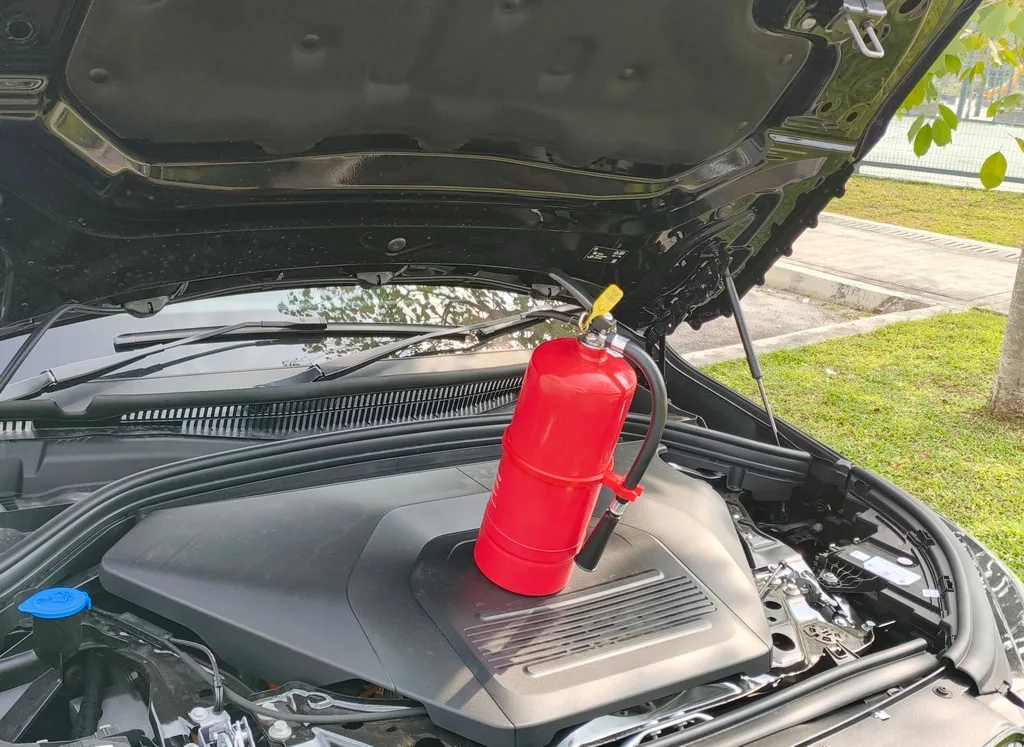
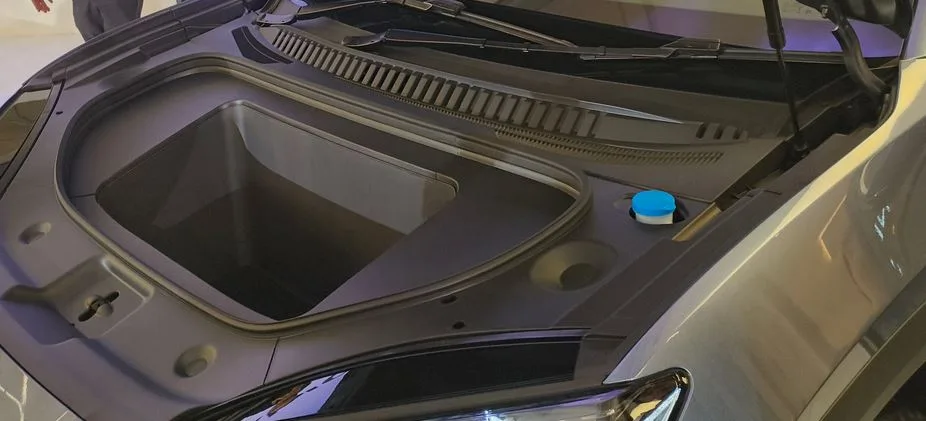
A frunk is generally a poor primary location. It is smaller than the boot and may not accommodate a 2kg or 3kg extinguisher without obstructing other items or the compartment lid.
It may also be jammed in a frontal collision, while opening it could place the driver closer to the fire. High-voltage equipment or other components involved in the incident may be located nearby.

Never leave it loose
A loose extinguisher can be more dangerous than having none at all.
In a collision or rollover, a pressurised steel cylinder weighing several kilograms can become a projectile. It should not be left on the floor, parcel shelf or rear seat, or allowed to roll around the boot.
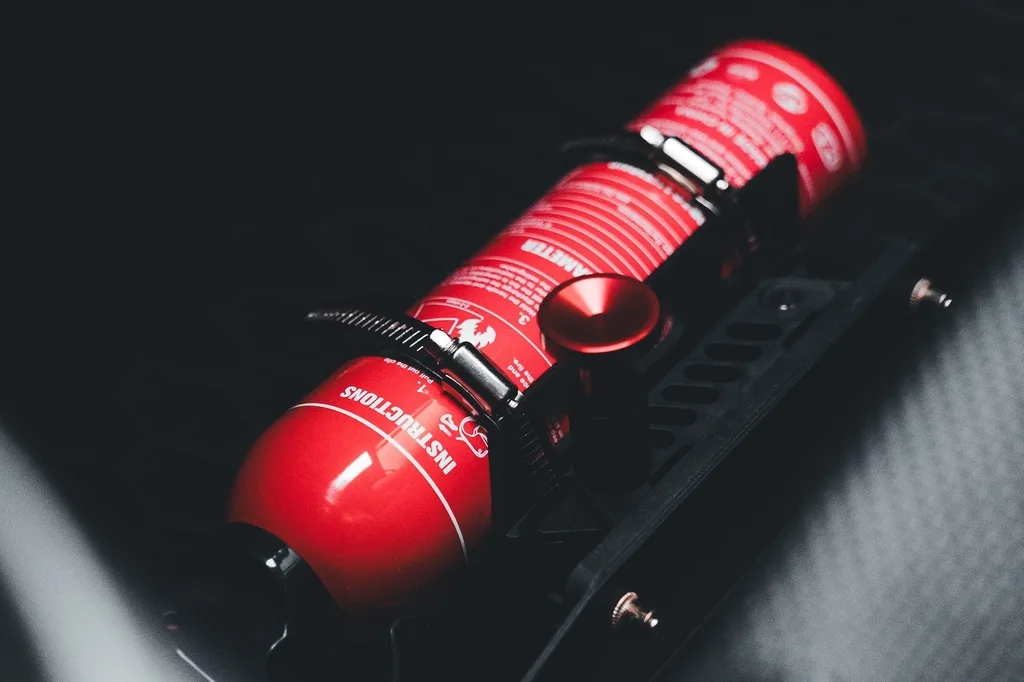
A fabric strap is suitable only when it forms part of a strong, vehicle-mounted holder. Use a bracket with a secure locking catch or strap so the extinguisher cannot come loose during sudden braking or a collision.
The manufacturer’s instructions should determine whether the unit may be stored horizontally.
Some dry-powder extinguishers and vehicle brackets permit horizontal installation. Others specify an upright position. Do not assume every cylinder can be mounted in any direction.
Portable extinguishers should generally be operated upright unless the manufacturer specifies otherwise.

Will it be safe in a hot car?
A closed car parked in direct sunlight can become far hotter than the outside air, so check the extinguisher’s specified operating and storage temperature range.
Temperature ratings vary between extinguishers, so make sure the unit is suitable for long-term storage in a vehicle under local conditions.
Keep the extinguisher low in the cabin or boot and out of direct sunlight. The dashboard and rear parcel shelf are poor locations even before their projectile risk is considered.
Inspect it regularly. The pressure gauge, where fitted, should remain within its operating zone.
Check that the safety pin and seal are intact, the hose is clear, the cylinder has not corroded and the bracket still holds it firmly.
Follow the manufacturer’s servicing or replacement schedule. Replace a disposable unit after any discharge, even when some of its contents remain.
A compliant and undamaged extinguisher should remain safe within its specified temperature range. Problems are more likely to arise from corrosion, impact damage, excessive heat, poor-quality cylinders or overdue servicing.
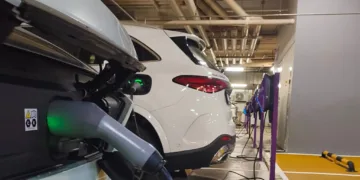
What if an EV catches fire while charging?
A fire that starts while an EV is plugged in does not automatically mean its traction battery is burning. Fire investigators may have to distinguish between the vehicle, charger and associated wiring.
If the battery itself shows signs of thermal runaway — including heavy smoke, hissing, popping or repeated flare-ups — move away and call 999 rather than attempting to control it with a portable extinguisher.
What should you do if the car catches fire?
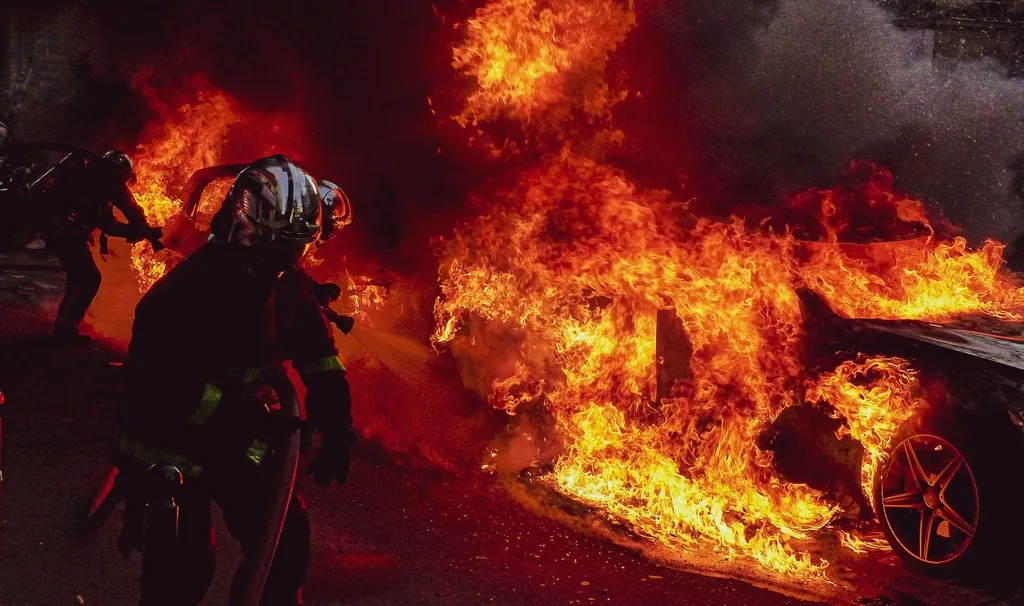
Get everyone out of the vehicle and call 999. Use an extinguisher only if the fire is still small, the extinguisher is suitable for what is burning and you have a clear escape route.
For a conventional portable extinguisher, pull the safety pin, aim the nozzle at the base of the fire, squeeze the lever and sweep from side to side. Follow the instructions printed on the extinguisher itself.
Do not put yourself between the fire and your escape route.
If the fire is beneath the bonnet, do not throw it fully open. The sudden supply of air can intensify the flames and opening the bonnet may put you directly in their path.
If the fire spreads, smoke increases rapidly or the extinguisher fails to control it, retreat. Do not keep fighting the fire simply because extinguishing agent remains.
Are extinguishers compulsory in Malaysia?
Private cars are not generally required by Malaysian law to carry a fire extinguisher.
Certain public-service and specialised vehicles are required to carry one.
JPJ identifies failure to carry a fire extinguisher as an offence under Rule 80 of the Motor Vehicles (Construction and Use) Rules 1959 for a public-service vehicle.
That does not mean every company-owned car, van, lorry or vehicle in a commercial fleet is covered by the same provision. Goods vehicles carrying hazardous materials and other specialised categories may have separate requirements.
For a normal private car, carrying an extinguisher remains the owner’s decision.
A certified 1kg ABC unit is better than an unverified aerosol can. A securely mounted 2kg ABC extinguisher gives most private-car owners more capacity without becoming excessively bulky.
The extinguisher must be reachable, serviced and firmly mounted. Use it only on a small fire with a clear escape route. Otherwise, leave the vehicle and call 999.