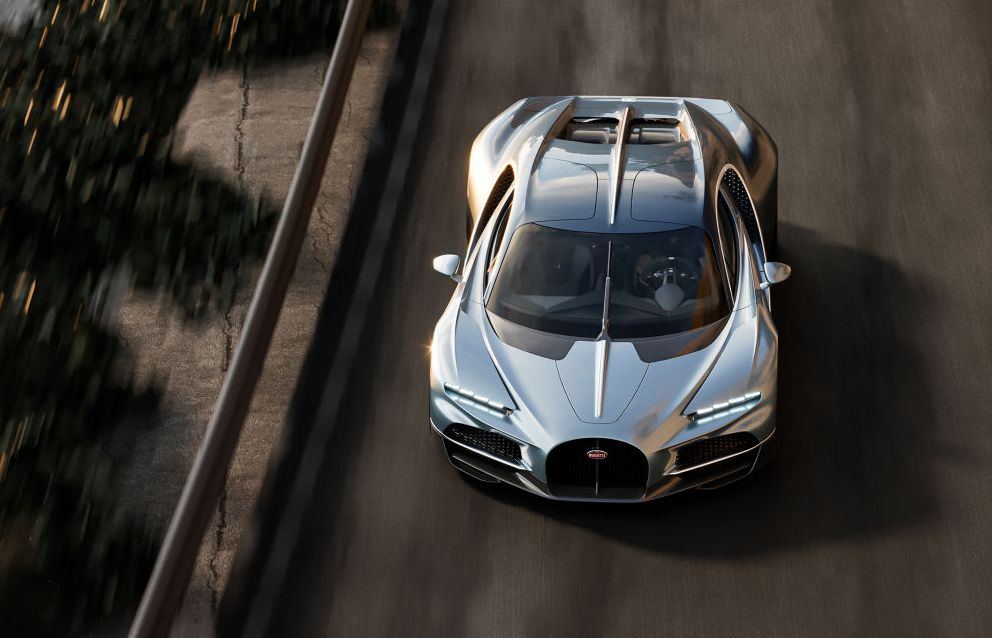












Tourbillon is Bugatti’s latest creation, sporting an entirely new powertrain and platform.
The Tourbillon will undergo a testing phase, with prototypes already on the road. Production is set for 2026, with only 250 units to be built, each priced at €3.8 million (RM19.2mil).
Hand-assembly will take place at the Bugatti hub in Molsheim, France. The Tourbillon follows the final W16-powered models, Bolide and W16 Mistral.
The Tourbillon is the company’s first model in over 20 years without the iconic W16 engine. Named after a French watchmaking invention, the Tourbillon emphasises mechanical timelessness, employing design and engineering techniques that ensure lasting relevance.
It features an entirely analog instrument cluster crafted by Swiss watchmakers, aiming to create a car that will remain ageless.
The Tourbillon embodies Bugatti’s philosophy of being “shaped by speed”, capable of exceeding 400kph. Its design includes the horseshoe grille, the Bugatti Line, the central ridge, and a dual-color split.

Bugatti’s design head Frank Heyl said inspiration from historic models like the Bugatti Type 35 and Type 57SC Atlantic helped shaped the final products. These influences guide the Tourbillon’s aerodynamic and aesthetic choices, aiming for a timeless and ready-to-pounce posture.
The Tourbillon’s rear wing, designed for aerodynamic balance, remains submerged at top speeds and functions as an airbrake at lower speeds. The diffuser, integrated with a new crash concept, rises behind the passenger cabin to maintain balance. Advanced dihedral doors, actuated electrically, provide easy entry and add a dramatic touch.
Bugatti’s interior design avoids rapidly outdated digital screens, focusing instead on timeless, analog features.
The centrepiece is a 600-part instrument cluster made by Swiss watchmakers, fixed in place within the steering wheel. The center console, made of crystal glass and aluminum, reveals the intricate workings of the switches and the engine start lever. An unobtrusive high-definition digital screen deploys for vehicle data and mobile connectivity.
Seats are fixed to the floor for minimal weight and maximum comfort, with an adjustable pedal box for optimal driving positions. The interior also features an advanced audio system using interior panels as speakers, providing a lighter and more efficient setup.

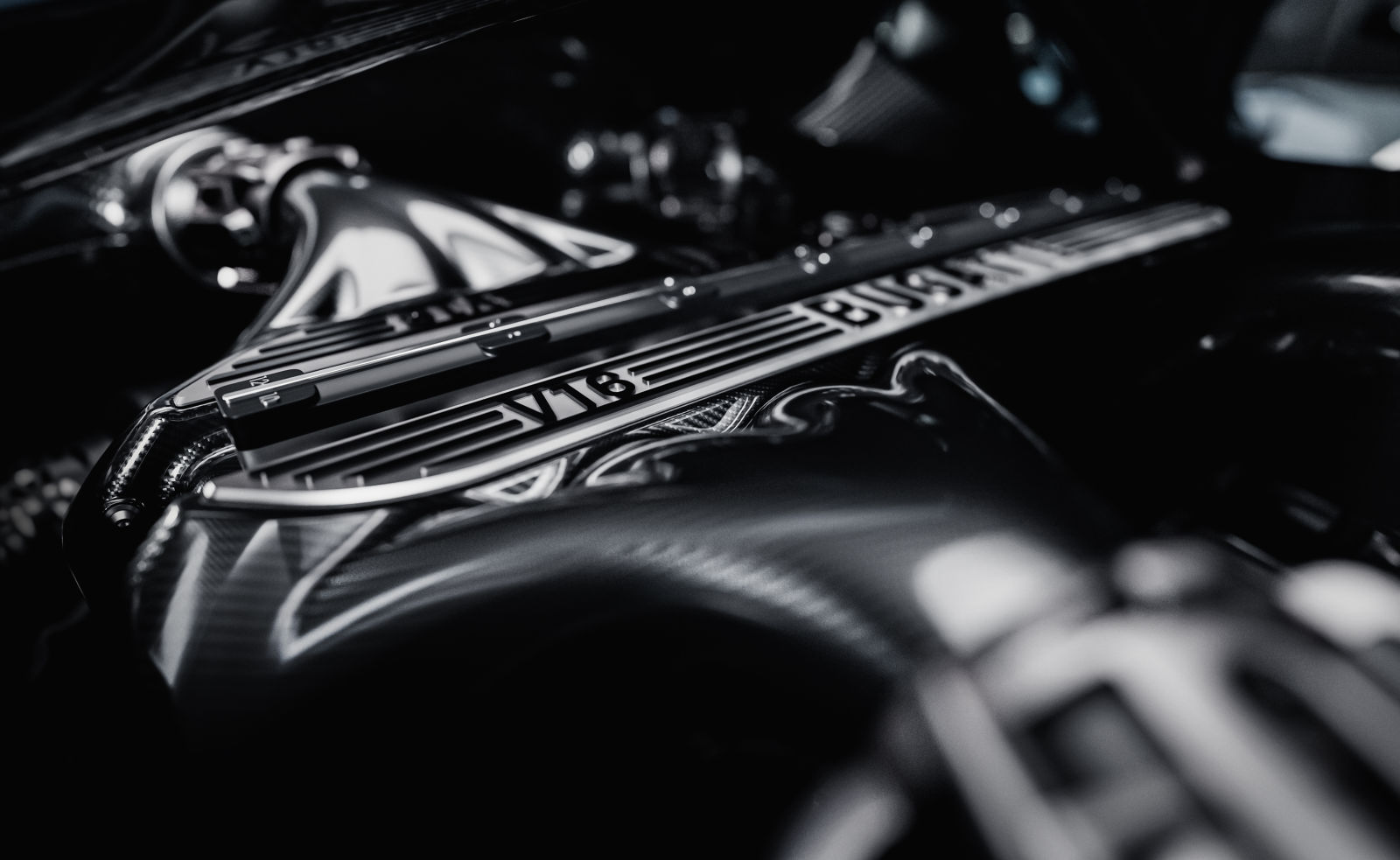
The Tourbillon is powered by an 8.3-litre naturally aspirated V16 engine, developed with Cosworth, paired with a front e-Axle housing two electric motors and a rear-mounted electric motor.
Together, these produce 1,800hp—1,000 from the combustion engine and 800 from the electric motors. The 25 kWh oil-cooled 800V battery provides over 60km of all-electric range. Despite the additional hybrid powertrain, the Tourbillon is lighter than its predecessor, the Chiron, due to advanced materials and engineering.
The Tourbillon features a new chassis made from next-generation T800 carbon composite, incorporating weight-saving innovations like integrating the battery as a structural part.
The new chassis includes multi-link suspension, 3D-printed aluminum components, and advanced carboceramic brakes. The ultra-compact front e-axle fits within the same space as the Chiron’s setup, offering more storage and luggage capacity.

Michelin Pilot Cup Sport 2 tyres – 285/35 R20 at the front and 345/30 R21 at the rear – are a bespoke development for the Tourbillon.
Bugatti Rimac CEO Mate Rimac said: “The development of the Bugatti Tourbillon¹ was guided at every step by the 115 years of Bugatti history and the words of Ettore Bugatti himself. His mantras ‘if comparable it is no longer Bugatti’ and ‘nothing is too beautiful’ were a guiding path for me personally, as well as the design and engineering teams looking to create the next exciting era in the Bugatti hyper sports car story.”