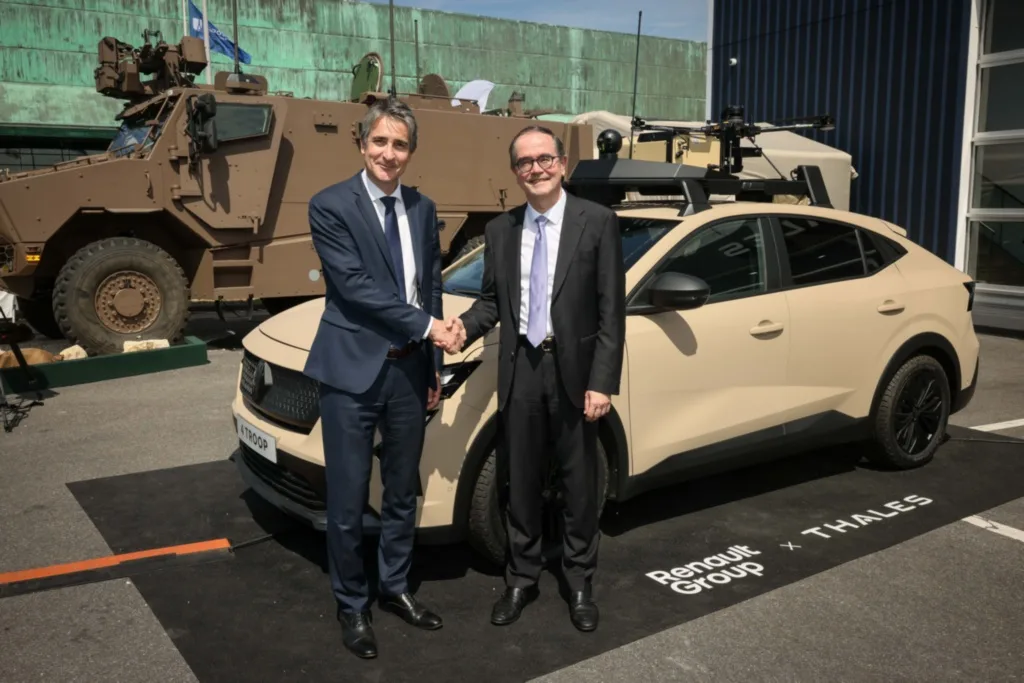








Renault’s 4 TROOP is interesting less because it is a military vehicle, and more because it shows how civilian vehicle platforms, hybrid drivetrains, onboard power supply and software architecture are being adapted for defence work.
Shown at Eurosatory 2026 near Paris, the prototype has been developed with Thales as a multi-role civil vehicle for land forces.
Renault brings the vehicle platform, electronic architecture, industrial know-how and after-sales support. Thales adds secure communications, tactical connectivity, operational coordination and decision-support systems.
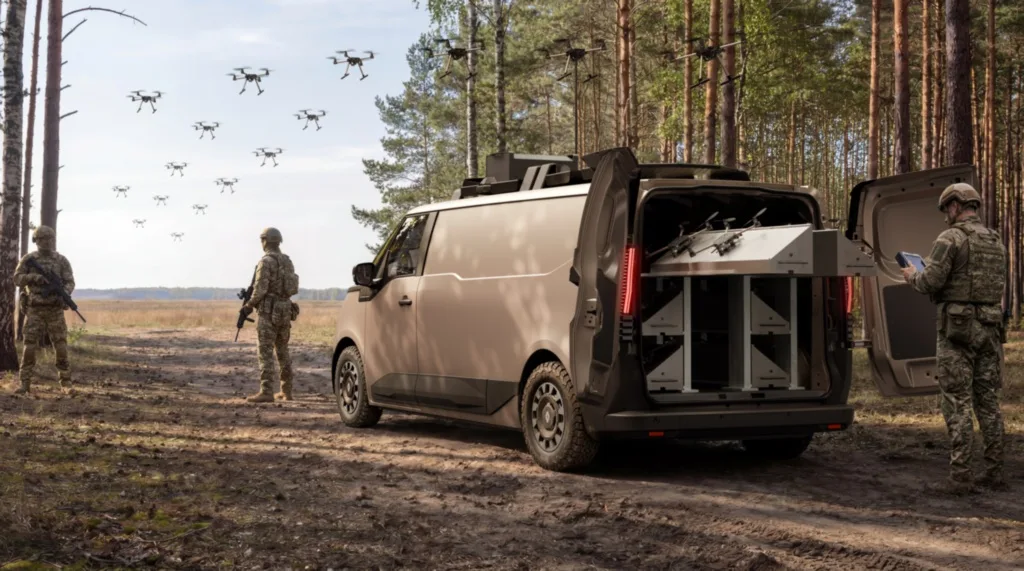
The result is a hybrid 4×4 designed to act as a mobile command centre. It can process large amounts of data, coordinate unmanned aerial vehicles and unmanned ground vehicles, and support missions such as reconnaissance, escort work, troop coordination, logistics and site surveillance.
There is also a familiar EV-era feature: Vehicle-to-Load. In this application, V2L allows the vehicle to power selected electrical equipment in the field.
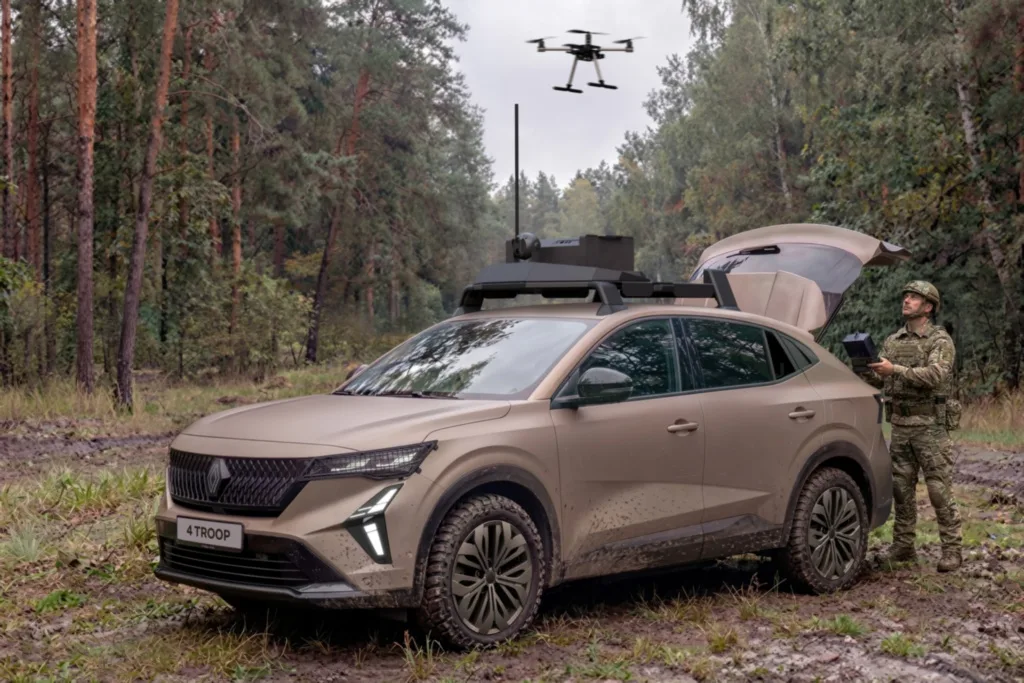
Renault said the solution can be adapted to several vehicles in its range, including SUVs and utility vehicles. Rather than building everything from scratch, Renault and Thales are leaning on existing vehicle platforms and production capacity to create a vehicle that could be deployed faster and at lower cost.
Reuters reported that Renault could respond to a production order from early 2027, depending on demand and final specifications.
What Renault is doing is another sign that electrified drivetrains, onboard power supply and vehicle software are moving beyond passenger cars into tougher, more specialised work.