







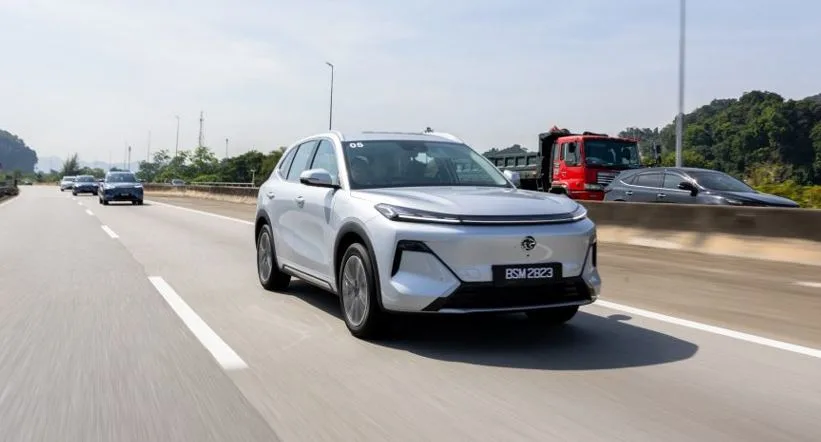
Proton is moving quickly to capitalise on rising fuel-cost concerns, using the e.MAS 7 PHEV’s early booking momentum to strengthen its case for plug-in hybrids.
The national carmaker’s new energy vehicle arm, Pro-NET, said the PHEV has gathered more than 6,500 bookings since its launch in February 2026.
The timing works in Proton’s favour as Malaysian households take a closer look at fuel bills following changes to the BUDI95 subsidy quota and wider concerns over running costs.
According to PRO-NET data, 75% of e.MAS 7 PHEV buyers are family men, mostly aged above 36.
The company said many use the SUV for weekday commuting and weekend trips, which is exactly where a plug-in hybrid pitch tends to work best: electric driving for shorter routes, petrol assistance for longer journeys.
Pro-NET CEO Zhang Qiang said the model is arriving “at the right moment” for Malaysians looking at fuel savings, electric-first driving and petrol-assisted range.
That is a fair description of the car’s market role, although its real-world appeal will still depend heavily on charging access, home charging habits and actual fuel use after the battery runs low.
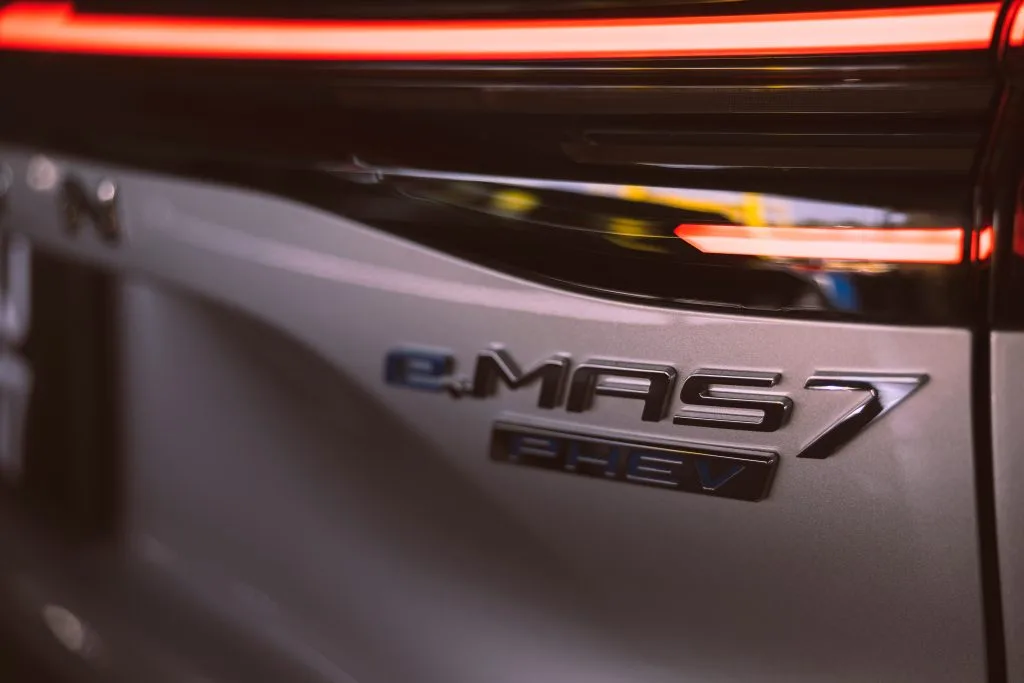
On paper, the figures are competitive. The e.MAS 7 PHEV Prime starts from RM105,800 OTR without insurance in Peninsular Malaysia.
Proton’s official product page lists a 105km EV range, 30kW DC charging and 4.3 litres per 100km fuel consumption in battery-depleted condition for the Prime variant. The Premium Plus pushes the claimed EV range to 170km and combined range to 1,065km.
Proton said 63% of e.MAS 7 PHEV customers are trading in petrol vehicles, including compact SUVs and sedans. That suggests the car is not being treated merely as a second runabout, but as a possible replacement for the main family vehicle.
The PHEV also differs from the fully electric e.MAS 7 through its styling and equipment. Depending on variant, it offers items such as a full-width front light bar, Vehicle-to-Load function, head-up display, wireless charging, 360-degree camera with 3D view and powered ventilated seats.
Still, Proton has to persuade buyers who remain wary of plug-in hybrids. Maintenance cost, battery life and drivetrain complexity remain common concerns.
The e.MAS 7 PHEV’s early bookings show strong interest, but long-term confidence will depend on aftersales support, warranty handling and how the car performs once early adopters put real mileage on it.