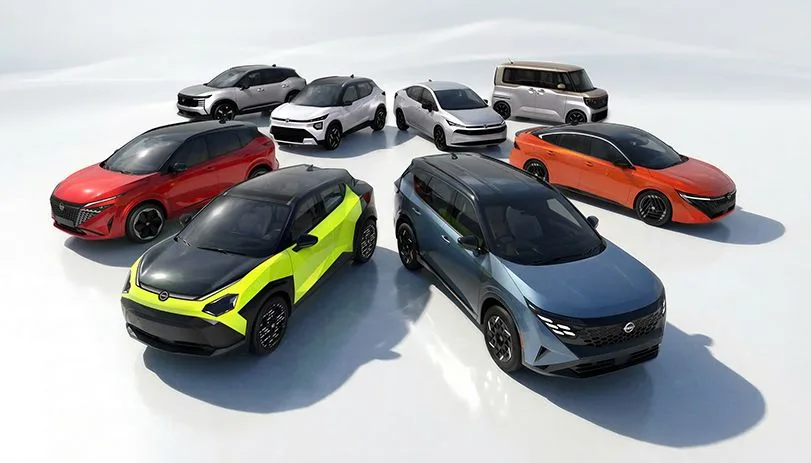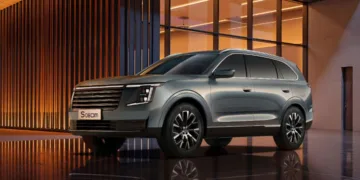




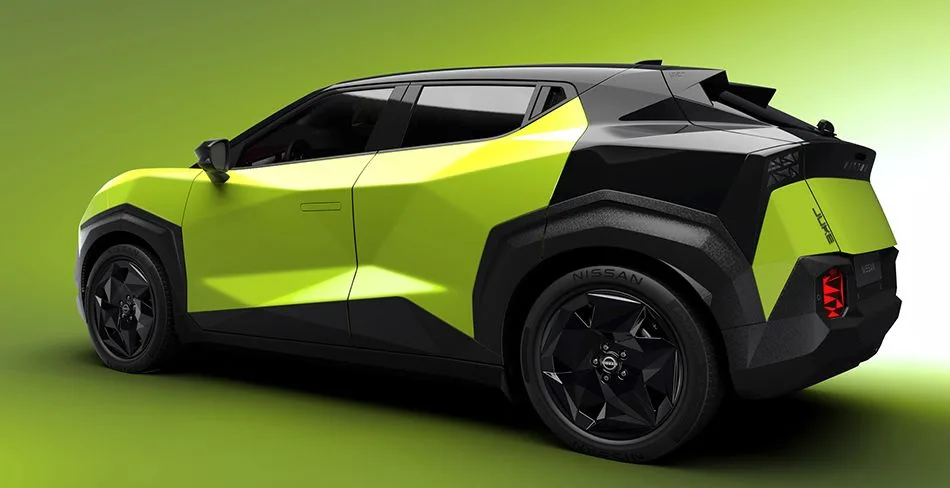
Nissan has taken the wraps off the third-generation Juke, and this time the small crossover goes fully electric.
The new model made its debut at the company’s Vision event in Yokohama today, where Nissan used it to sketch out the next phase of its product and technology direction.
That is a significant move for a nameplate that has become one of Nissan’s better-known European success stories. The company said more than 1.5 million Jukes have been sold in Europe since the original model arrived in 2010, so this is no side project.
Nissan is now trying to carry one of its more distinctive badges into the battery-electric age without losing the quirky character that helped the Juke stand apart in the first place.
The carmaker said the all-electric Juke will go on sale in Europe in spring 2027 and will be built at its Sunderland plant in the UK, further underlining the factory’s role in Nissan’s European EV push.
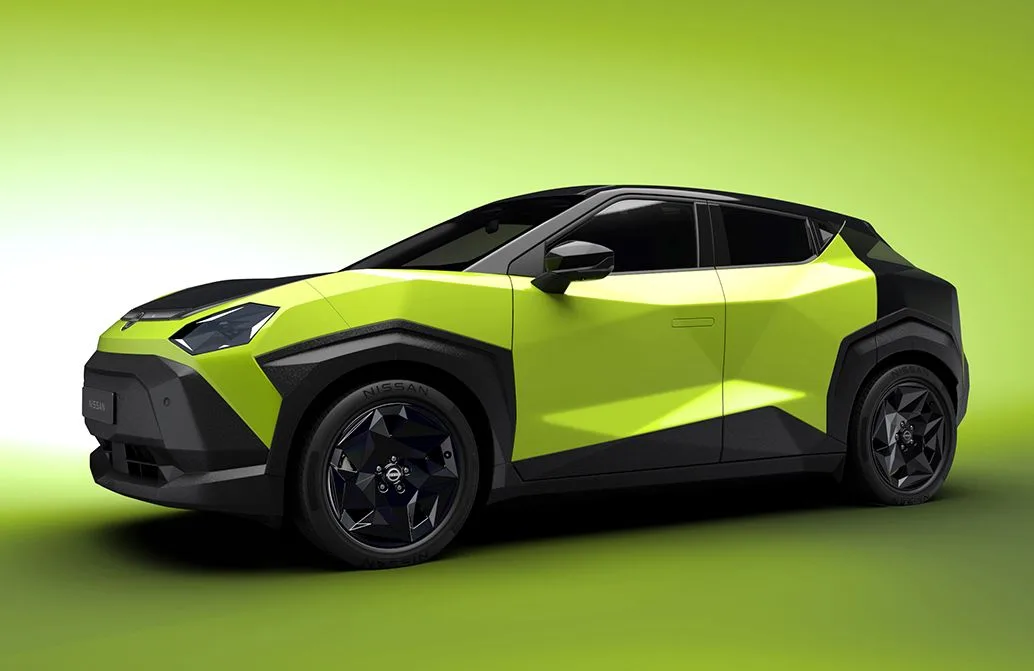
The new Juke EV is widely reported to be related to the Leaf and may share CMF-EV underpinnings, but Nissan has not yet published a full technical confirmation of any shared powertrain hardware.
What Nissan has made clear is where the Juke fits in the broader line-up. In Europe, it joins a growing EV range that already includes the new Micra, third-generation Leaf, Ariya and Townstar, with another A-segment EV still to come.
Nissan also said the Juke EV will offer vehicle-to-grid capability, following the new LEAF in being able to send stored energy back into the grid.
Outside Europe, Nissan used the same strategy update to signal more regional export plans. As part of its refreshed long-term approach for Asean, the company confirmed that the N7, NX8 and Frontier Pro PHEV will be exported to the region.
Just as notable is what Nissan is not doing. It is not abandoning hybrids overnight. The company said e-Power and other electrified options will remain part of the mix, with models such as the Qashqai e-Power and Juke HEV continuing to serve buyers who are not ready to move straight into a full EV.
That looks like a pragmatic call in a market where demand is rising, but price pressure, charging access and policy uncertainty still differ sharply from one country to another.