








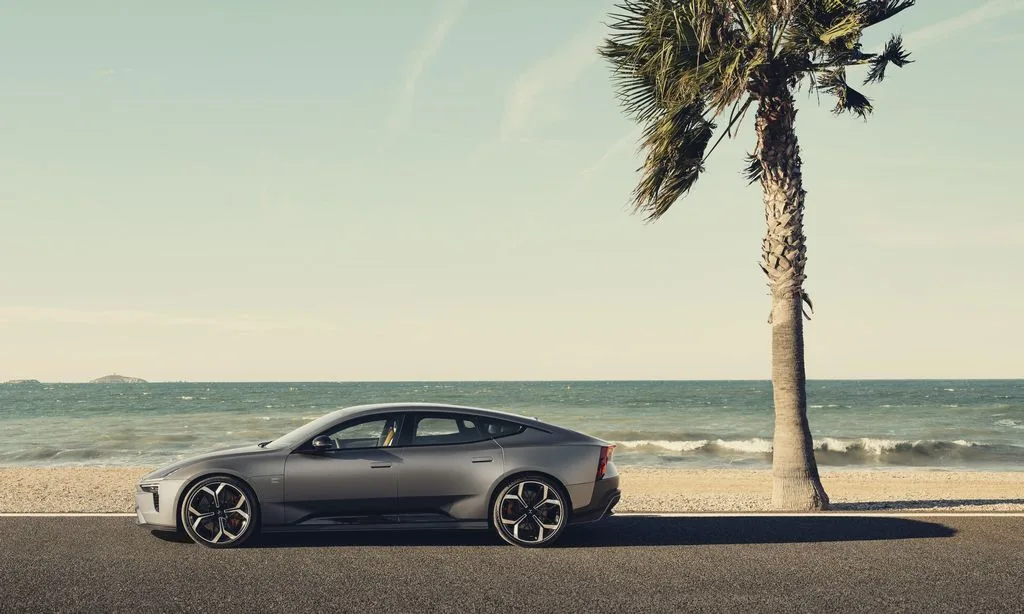
Polestar has published the full life-cycle assessment for the Polestar 5, extending a practice it says has covered every model in its line-up since 2020.
The company is pitching that as a transparency move, and to be fair, few carmakers have gone this far in putting cradle-to-gate emissions figures into the open.
Polestar said the Polestar 5 comes in at 23.8 tonnes of CO2 equivalent, covering raw material extraction, manufacturing and delivery to the customer.
What stands out more is what the car is made from. Aluminium is one of the dirtiest parts of carmaking, especially in EVs, and Polestar said it has changed how the Polestar 5 sourced it.
According to the company, 13% of the aluminium used is recycled, while 83% comes from smelters powered by renewable electricity. Polestar says that cuts more than 14 tonnes of CO2 equivalent per car compared with conventional aluminium sourcing.
Renewable electricity is also used in facilities producing the car, its battery cell modules and other key battery materials, Polestar said.
Inside, the firm pointed to lower-impact materials such as flax-based natural fibre composites from Bcomp, Econyl carpets made from discarded fishing nets, and recycled PET textiles. Even the front luggage compartment uses a mono-material PET construction aimed at easier recycling later on.
None of that turns the Polestar 5 into a zero-impact car, and Polestar does not pretend otherwise. What it does do is make the footprint easier to see, which is more useful than the usual vague sustainability talk.
The Polestar 5 itself remains a high-performance four-door GT.
Polestar quotes up to 650kW and 1,015Nm, with 800-volt architecture and DC charging at up to 350kW.
The latest Polestar release says range is up to 678km WLTP, although current market specification pages do not appear to show the same figure across all versions, so that claim should be read in configuration context.