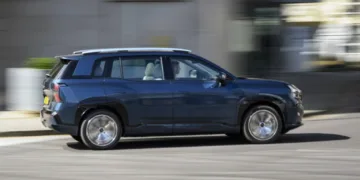



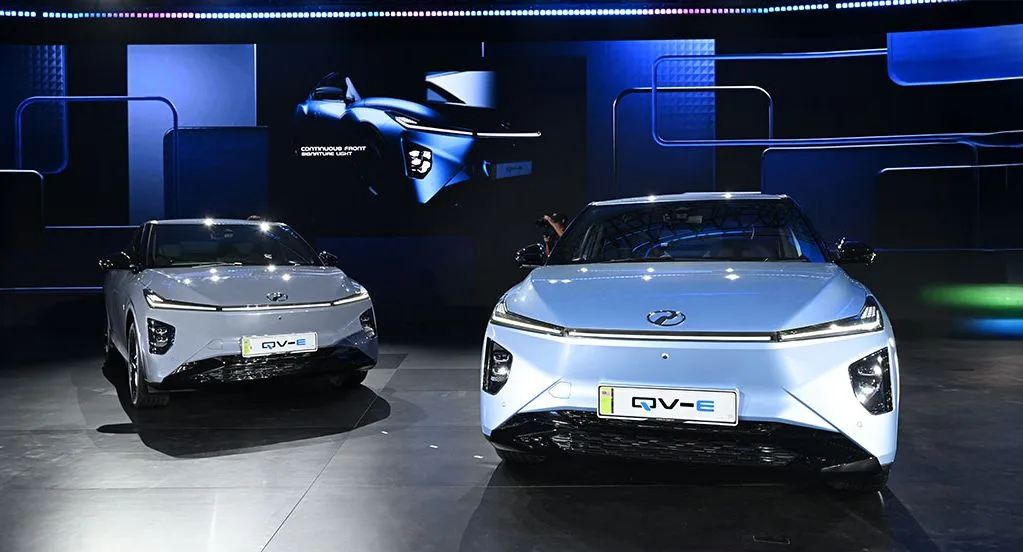
Perodua says it is treating the QV-E as more than just its first electric car launch, with the project now serving as a wider test bed for pricing, ownership models and future EV infrastructure options, including battery swapping.
In a recent Malay-language podcast interview, Perodua president and CEO Datuk Sri Zainal Abidin Ahmad told Careta’s Hezeri Samsuri that the company had received 205 QV-E bookings, with around 40 units registered.
He said Perodua had deliberately held back a stronger sales push after launch because it was still tightening quality control on parts from new suppliers, including some from China.
On the battery leasing scheme, Zainal said Perodua knew the approach was unusual, but viewed it as part of a larger experiment tied to future EV products, not only the QV-E.
He said the company was studying battery swapping as a possible long-term solution, especially for apartment and flat residents who may struggle with home charging.
He also confirmed Perodua would not invest in swapping stations itself, but would instead look for partners to develop the network.
Zainal said although Perodua had spent about RM800 million on the QV-E project, part of the tooling and platform work would carry over into future models.
He described the EV platform as a base for multiple products and said one of the biggest gains so far had been in software engineering and vehicle integration, including a clearer path towards software-defined vehicle functions and OTA capability.
On future products, Zainal said Perodua’s planned RM2 billion five-year investment covered factory upgrades and model development, including a new Myvi and two more EVs.
He said the next-generation Myvi would remain a Malaysia-focused model, and hinted it could include a hybrid version besides the usual petrol series.
Much of what we know about the hybrid Myvi so far remains speculative.
According to local motoring news site Funtasticko, Perodua could choose between Daihatsu’s e-Smart Hybrid system adopted by the Ativa Hybrid or Toyota’s hybrid setup as seen in the Yaris Cross Hybrid.
The current 1.3-litre naturally aspirated petrol and a 1.5-litre naturally aspirated petrol engines could be carried over, with the hybrid Myvi pairing a 1.5-litre mill with an electric motor, similar to how the Yaris Cross Hybrid is set up.
The fourth-generation Myvi is reportedly based on the Daihatsu New Global Architecture (DNGA) platform, and is expected to launch in mid-2027.