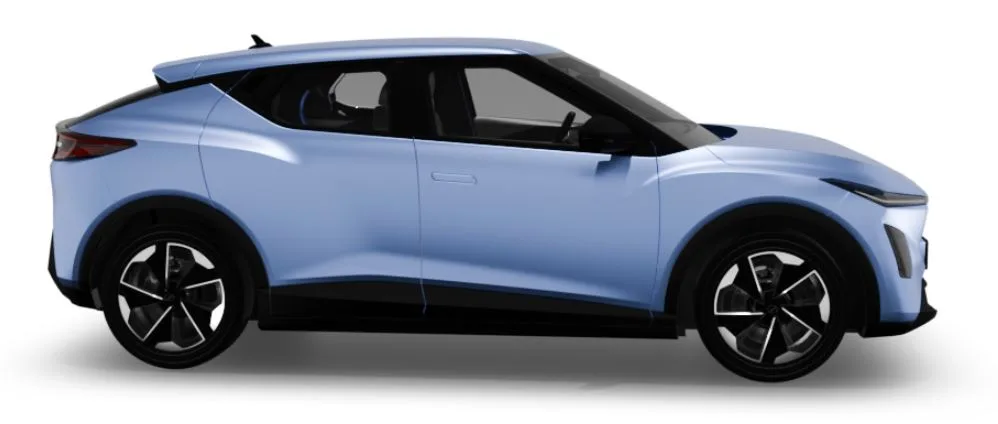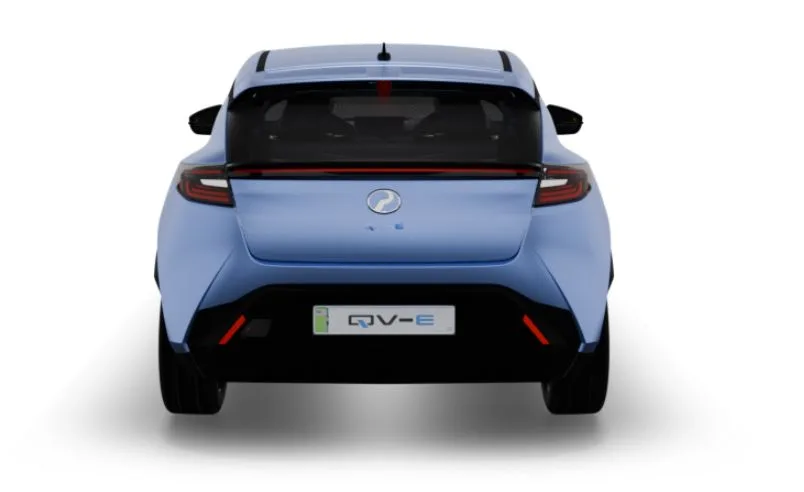

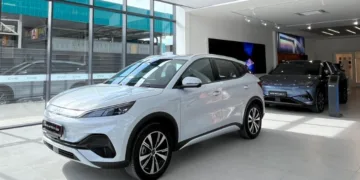



Perodua is testing a bold new ownership model with the QV-E, an electric hatchback sold without its battery, which is instead leased monthly – and happens to be the carmaker’s first fully electric vehicle.
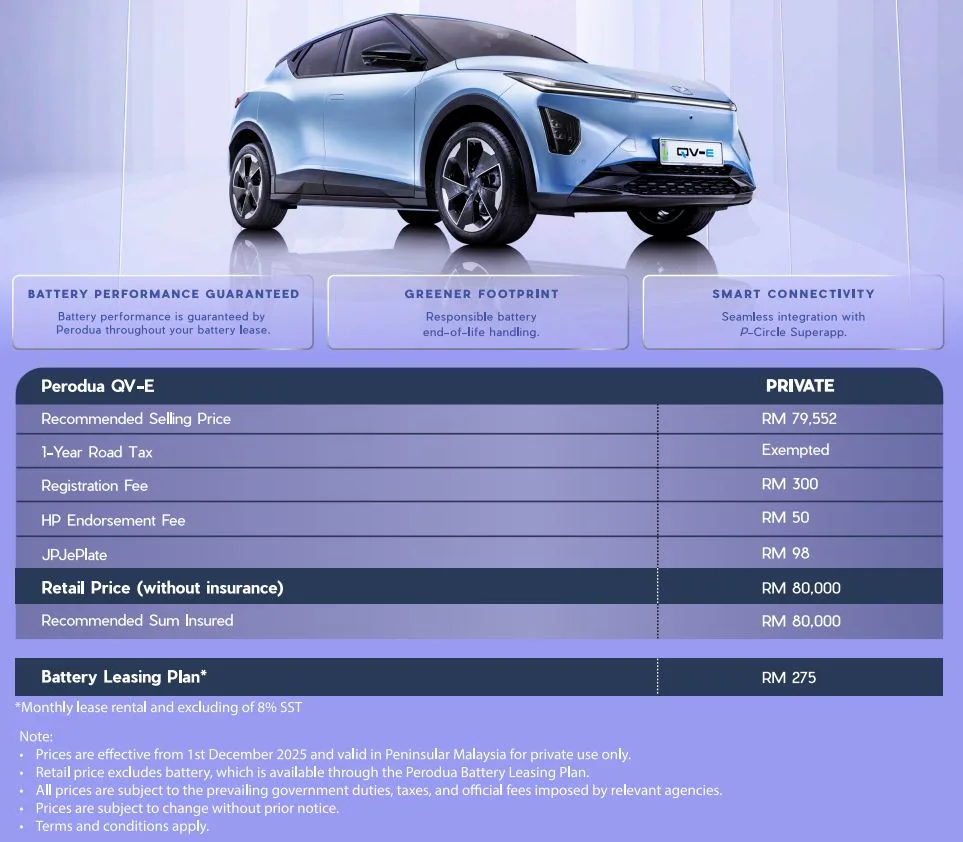
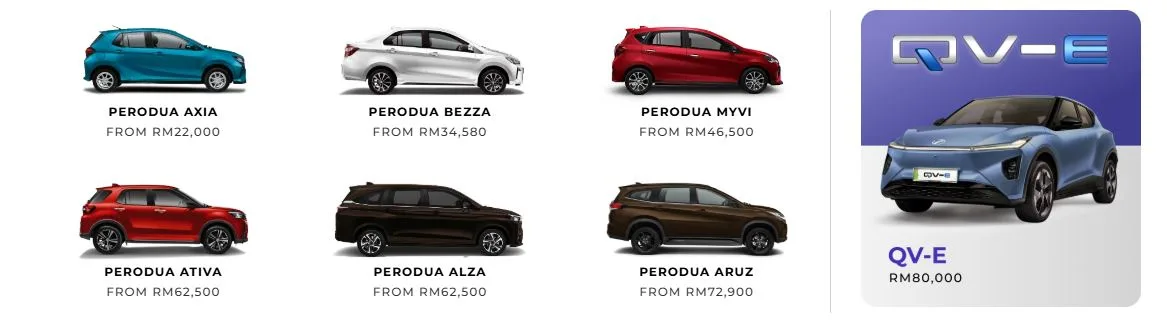
The national “homegrown” EV, launched today, starts at RM80,000 without insurance and without the battery, which is leased separately.
The car is the centrepiece of Perodua’s mandate to help build a local EV ecosystem under the New Industrial Master Plan 2030.
Developed at a cost of RM800 million, the QV-E is built at the car maker’s Smart Mobility Plant in Rawang, with some processes supported by Tan Chong’s Serendah facility nearby.
Perodua president and CEO Datuk Sri Zainal Abidin Ahmad said current capacity is 500 units a month, rising to 3,000 units by the third quarter of 2026 as localisation levels increase and more vendors come on stream.
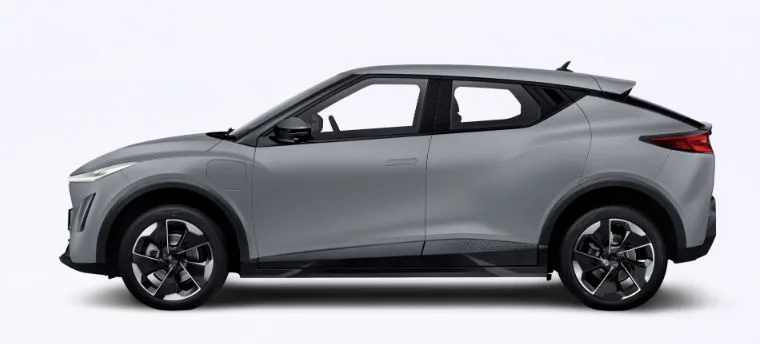
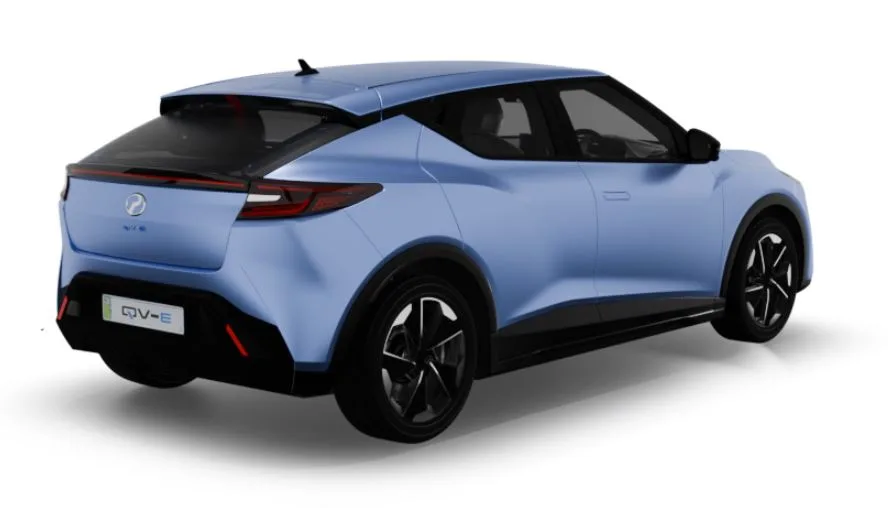
The QV-E features a sportback styling with flush, pop-out door handles.
Under the skin sits an all-new P01A modular platform, co-developed with Magna Steyr but owned outright by Perodua.
The architecture is designed to handle not only full EVs but also hybrids and range-extended EVs in future, with wheelbases from 2,550mm to 2,700mm and overall lengths from about 3,910mm to 4,685mm, allowing it to underpin A- to B-segment models and even edge into the C-segment.
For the QV-E, Perodua has chosen to go for performance as a calling card.
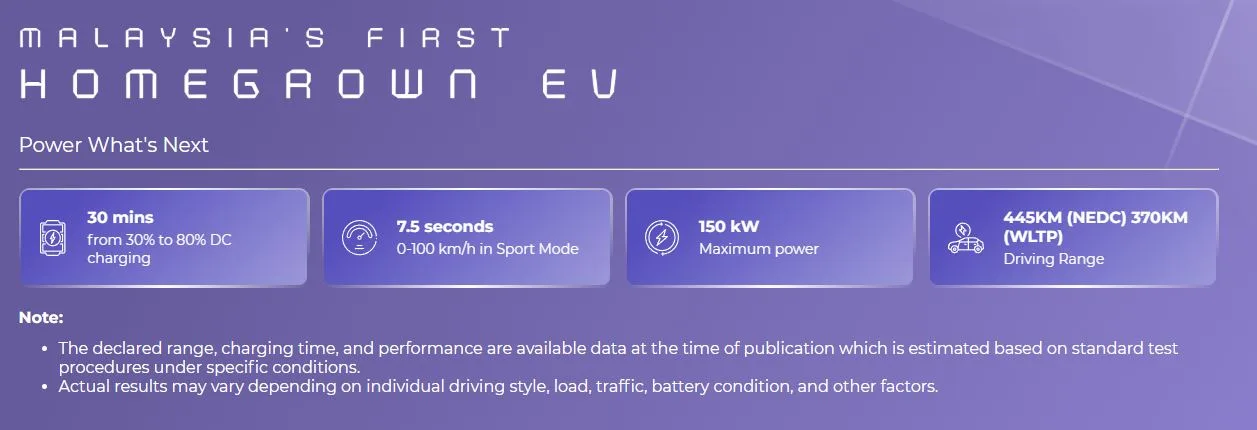
Benchmarked against the BYD Dolphin, the QV-E has a front-mounted motor that delivers 150kW (201hp) and 285Nm, making this the most powerful and quickest accelerating Perodua yet, with a quoted 0–100kph time of 7.5 seconds and a 165kph top speed.
Energy comes from a CATL-supplied 52.5kWh lithium iron phosphate pack mounted under the floor.
The IP69-rated, liquid-cooled battery weighs about 406kg and contributes to a 1,600kg kerb weight.
Official range is 445km on the older NEDC cycle, which independent estimates suggest would translate to roughly 370km on the more realistic WLTP standard.
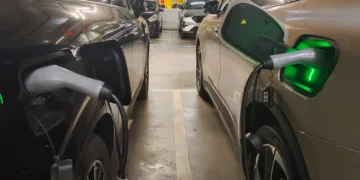
AC home charging at 6.6kW takes around eight hours from empty to full, while DC fast charging at up to 60kW brings the battery from 30% to 80% in about 30 minutes.
The battery is swappable in 30 mins should there be a need to change it, according to QV-E chief engineer Chok Jia Jiunn.
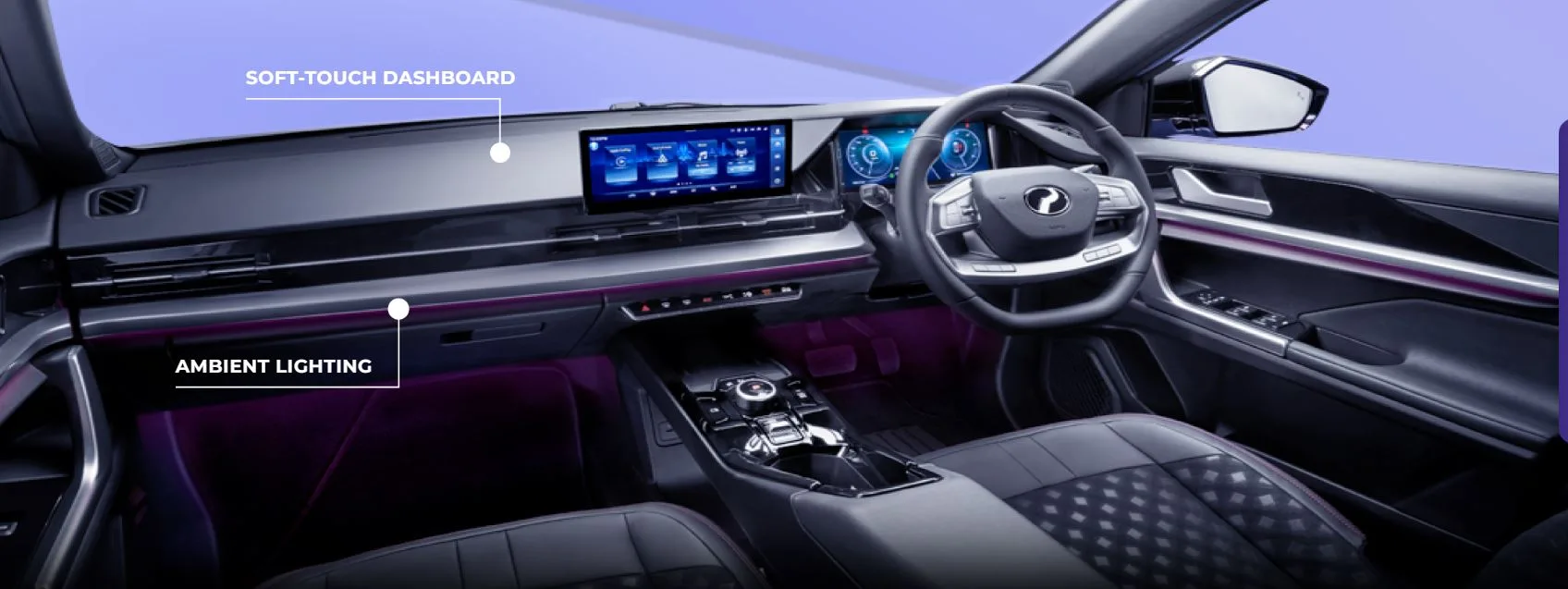
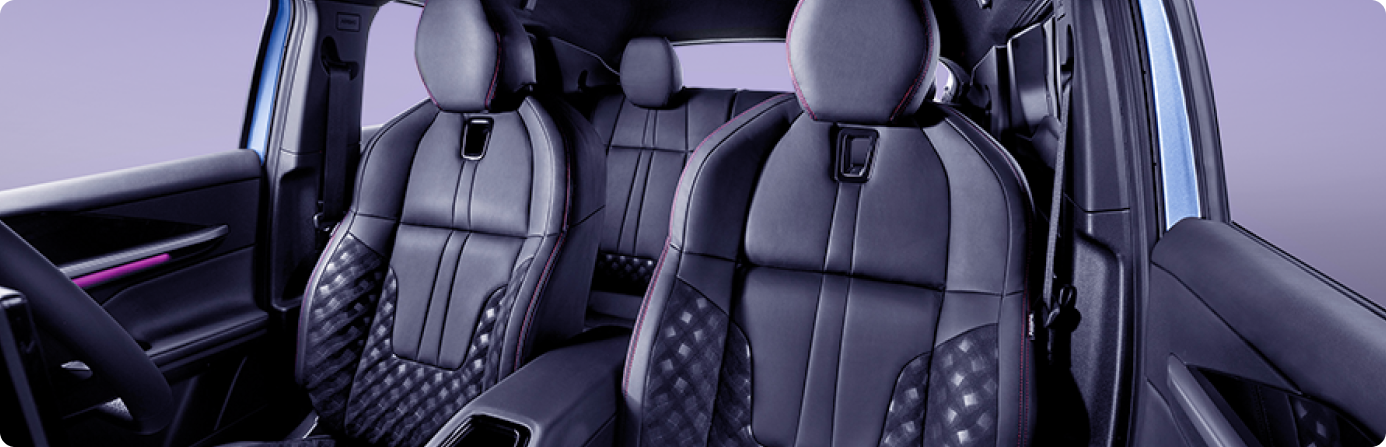
The cabin arrives loaded with Perodua-first features.
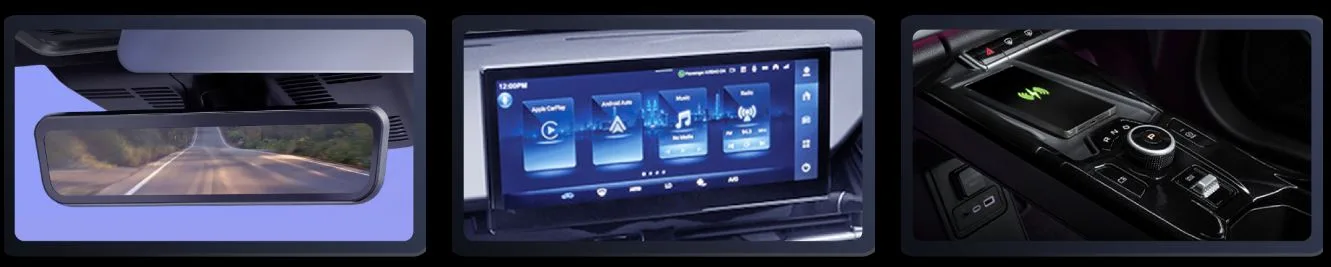
There is a digital rear-view mirror, powered driver’s seat, ambient lighting, a 10.25-inch infotainment screen with wireless Apple CarPlay and Android Auto, wireless phone charging, a 360-degree monitor, driving video recorder and tyre pressure monitoring.
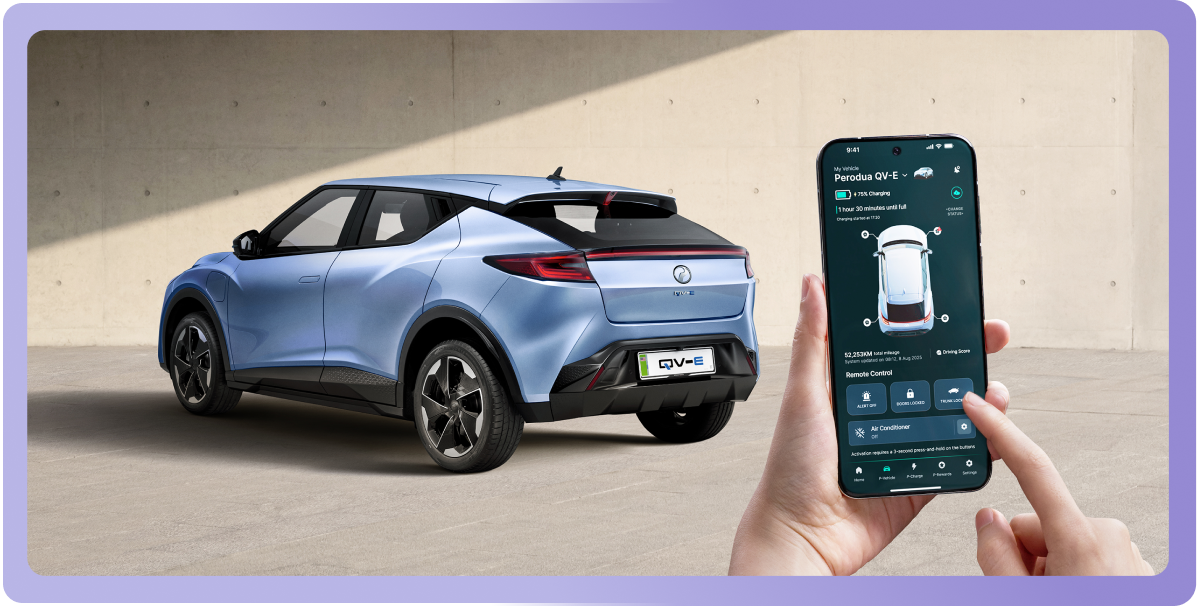
The QV-E also uses the P-Circle connected app so owners can check vehicle status and manage some functions remotely.
Safety has been pushed hard. Beyond a full suite of driver assistance features, the headline is a Child Presence Detection system that uses millimetre-wave sensors to pick up movement and breathing in the second row, even if a child or pet is covered by fabric.
If it detects someone after the car is switched off, it will trigger the horn and lights, then escalate to app and SMS alerts. Asean NCAP has awarded the QV-E a five-star rating with a total score of 88.36 points.
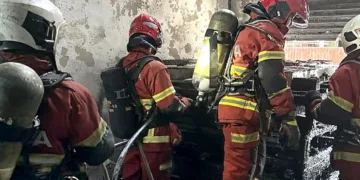
However, what Perodua omitted to mention is that hidden front door handles in the QV-E could pose a safety risk in an accident, as rescue crews may struggle to open the doors if the car loses power or the mechanism jams.
China’s regulators are proposing to ban fully hidden/retractable powered handles without mechanical backup from 2027, after tests by the China Insurance Automotive Safety Index (C-IASI) found electrically operated handles were far less likely to pop out after a crash and could slow emergency access compared with conventional mechanical handles.
While front doors get hidden handles, the rear doors are fitted with so-called “quarter rear door handles.” They are essentially the same vertically mounted, semi-hidden rear handles popularised by the Alfa Romeo 156 and later the Honda HR-V, tucked into the window frame to give the QV-E a coupé-like profile
What sets this EV apart financially is the compulsory Battery as a Service scheme.
Buyers pay RM80,000 for the car body, then sign a nine-year battery lease at RM275 a month (RM297 after SST).
The fee is bundled into a single monthly payment alongside the hire-purchase instalment. Road tax, based on the electric motor output and payable from 2026, is RM160 per annum.
Perodua keeps ownership of the pack, insures it, tracks it via a “battery passport” and promises a replacement if state of health drops below 70%, effectively turning the battery into a lifetime-warranty component while also taking responsibility for proper end-of-life disposal.
Resale is tightly controlled. Because the battery contract must move with the car, used QV-Es will be transacted through Perodua’s pre-owned arm so the lease can be reassigned and the battery history kept intact.
If the vehicle loan has been fully settled but the lease is still running, owners pay the monthly fee directly via the P-Circle app.
Perodua openly positions the QV-E at M40 and above buyers, typically as a second or replacement car for young families, rather than its traditional B40 base.
Early production will be channelled through a limited EV network in Peninsular Malaysia that includes outlets in the Klang Valley, Penang, Ipoh, Senawang, Johor Baru, Kota Baru and Kuantan.
Online reaction has been mixed.
On Perodua’s social channels and in comment sections, many Malaysians zoom straight in on the RM275 battery fee, arguing that over nine years it erodes the perceived affordability and in some cases exceeds what they currently spend on fuel for hybrids or small ICE cars.
Others said the structure is confusing and worry about what happens if a payment is missed or if the car changes hands.
Some, however, welcome the attempt to tackle long-term battery risk and like the idea of a guaranteed pack plus strong performance in a national-brand EV, even if they feel the first effort is more lifestyle statement than people’s car.
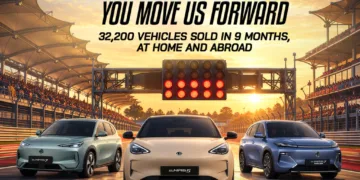
That, in a way, is Perodua’s own admission: the QV-E is not just a product, it is the opening shot in a broader EV play that aims for 50% local content by early 2026 and 70% by 2030, with 52 local vendors already involved and more to come.