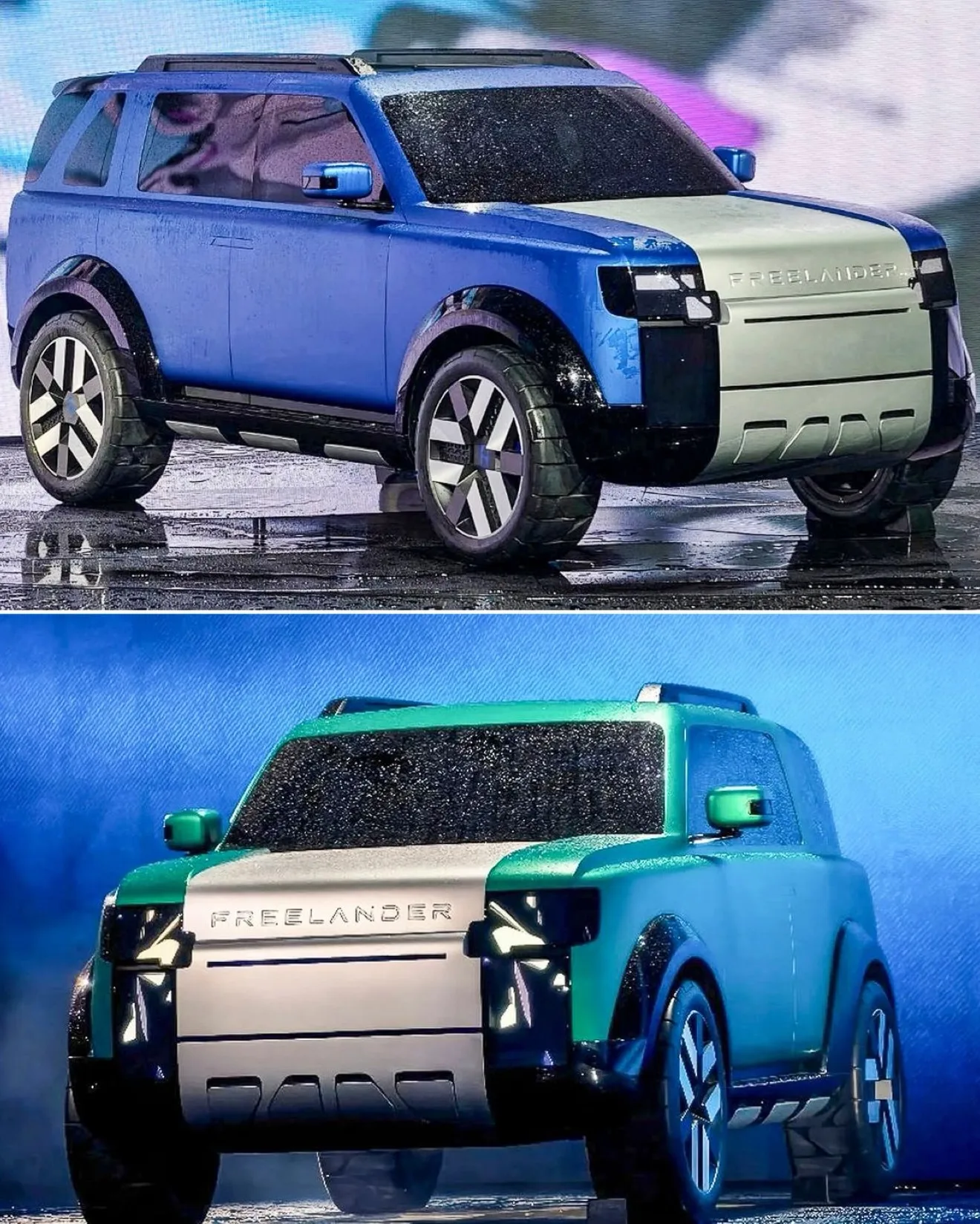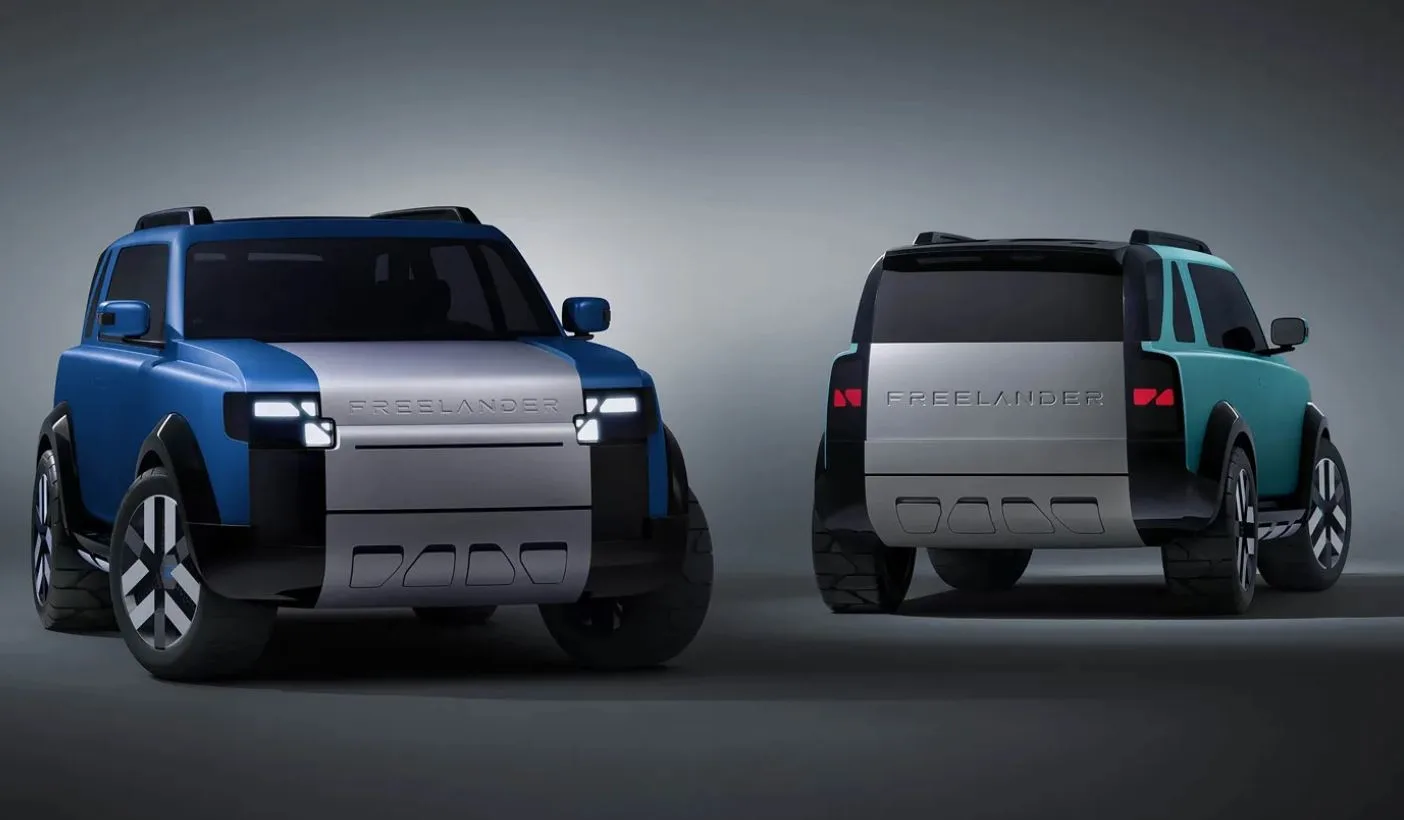





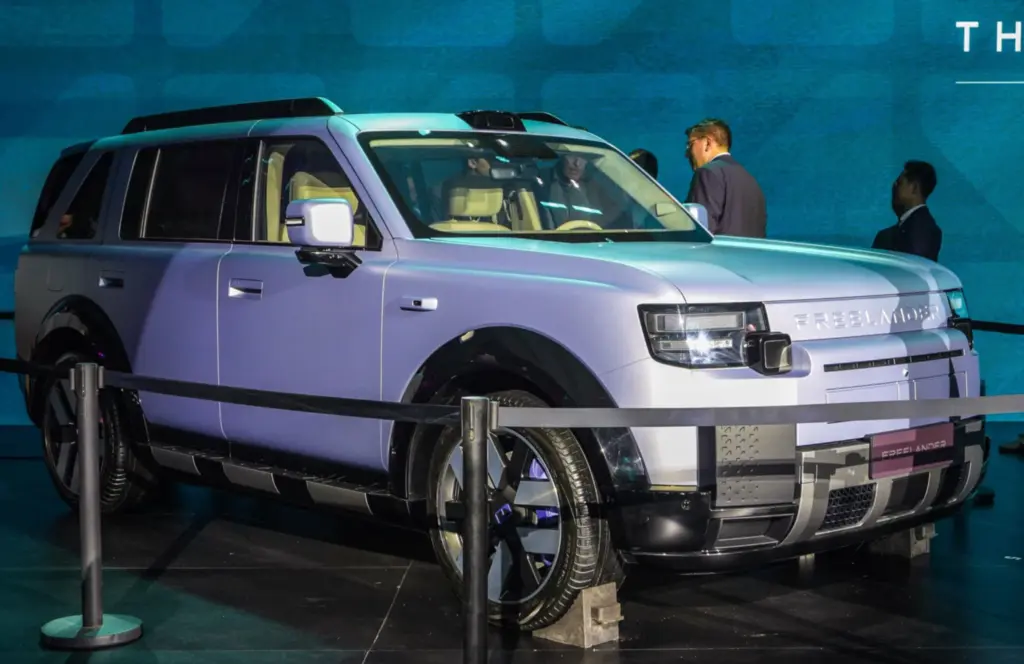
Freelander is back. Not as a Land Rover, though — the name has resurfaced as a standalone brand under the Chery Jaguar Land Rover joint venture, and the Freelander 8 is its first production-ready car.
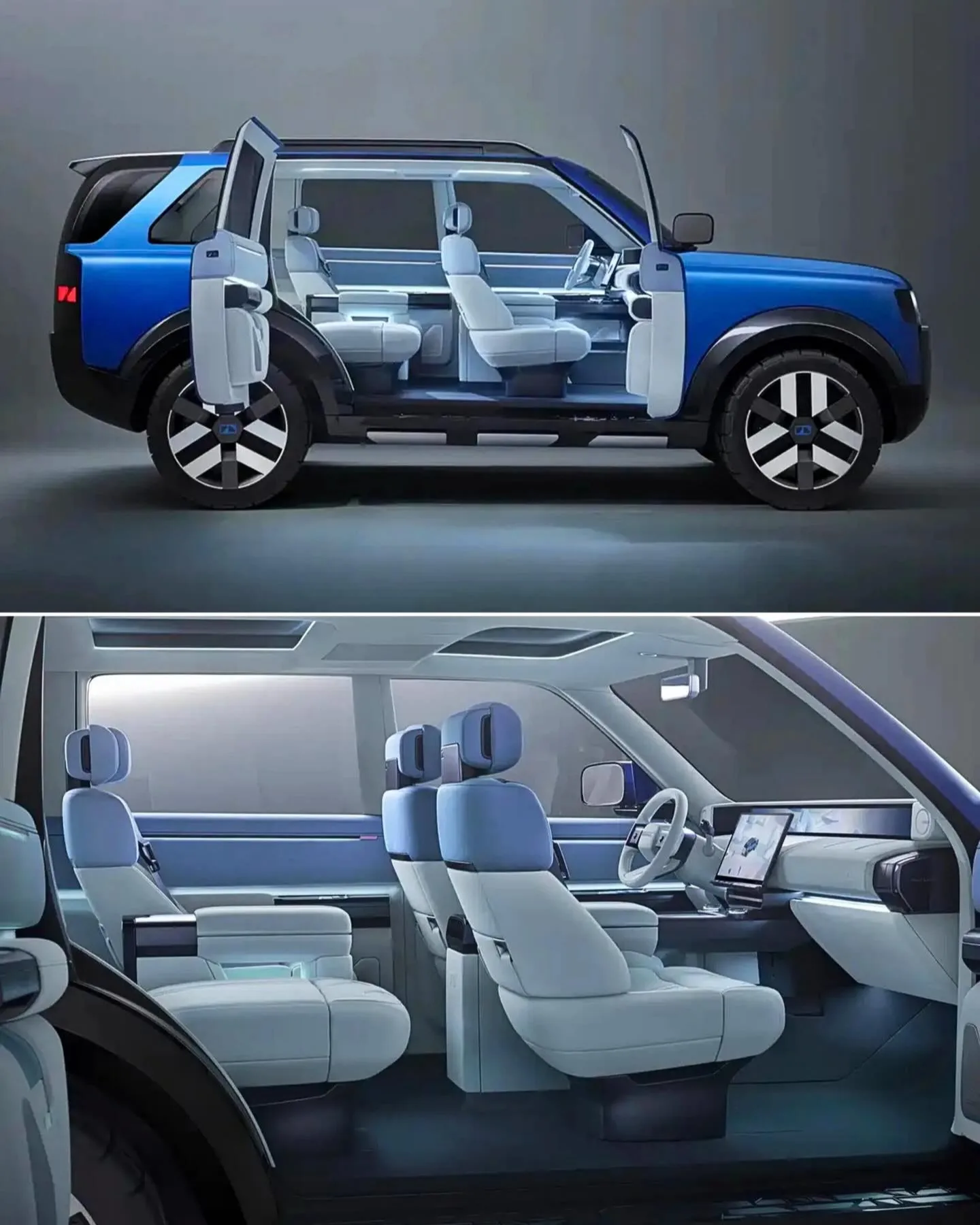
Shown in Beijing at the sidelines of Auto China, it tracks closely with the Concept 97 unveiled in Shanghai just weeks earlier: a big, six-seat, three-row SUV built for China, with more markets already in the works.
None of which is how most nameplate revivals go.
The original Freelander launched in 1997 as Land Rover’s smallest and most affordable model; this one sits entirely outside JLR’s current portfolio.
Chery leads the engineering and supply chain, while JLR contributes design direction and whatever goodwill the Freelander name still carries — enough to open doors in markets where a straight Chery badge might not.
Whether that’s enough to compete with a market already full of well-funded Chinese electric alternatives is a different question, and one only sales figures will answer.
The production car is close to what the concept showed. Squared-off proportions, a strong shoulder line, a flat upright nose that makes no pretence at aerodynamic compromise — it reads as off-road intent before you’ve read a single spec sheet.
Chinese auto media report that the interior centres on a large curved digital display, and the brand has confirmed partnerships with Qualcomm, Huawei Qiankun and CATL across its core technology stack.
MORE IMAGES: CarExpert
On the hardware side, the China-spec launch model runs on an 800V range-extender platform.
The Snapdragon 8295P — Qualcomm’s high-performance cockpit chip, a generation behind the firm’s newest 8397 but still the platform of choice across many premium Chinese EVs — handles infotainment and L2+ driver assistance.
CATL supplies a battery pack engineered for fast-charging under rough conditions, and Huawei Qiankun covers the driver-assistance stack, including lidar-based all-terrain management.
Six models in five years is the declared plan, with the Freelander 8 going on sale in China during the second half of 2026.
To support that, the brand is targeting 100 retail points across 60 Chinese cities by the end of the year — a fast rollout by any measure.
The brand has been clear from day one that this isn’t a China-only play.
Asean has been mooted as an early export destination, right-hand-drive prototypes have already turned laps on Australian roads, and the Middle East is confirmed as the first launch market.
The global push is more immediate than the slow regional rollout most Chinese brands attempt.
But ambition and logistics are the easy part. A famous name only gets you so far — after that, the car has to speak for itself.
Concept 97