

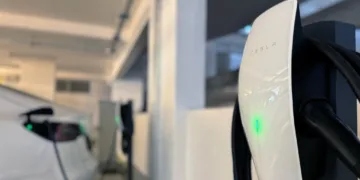
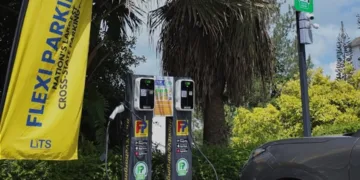




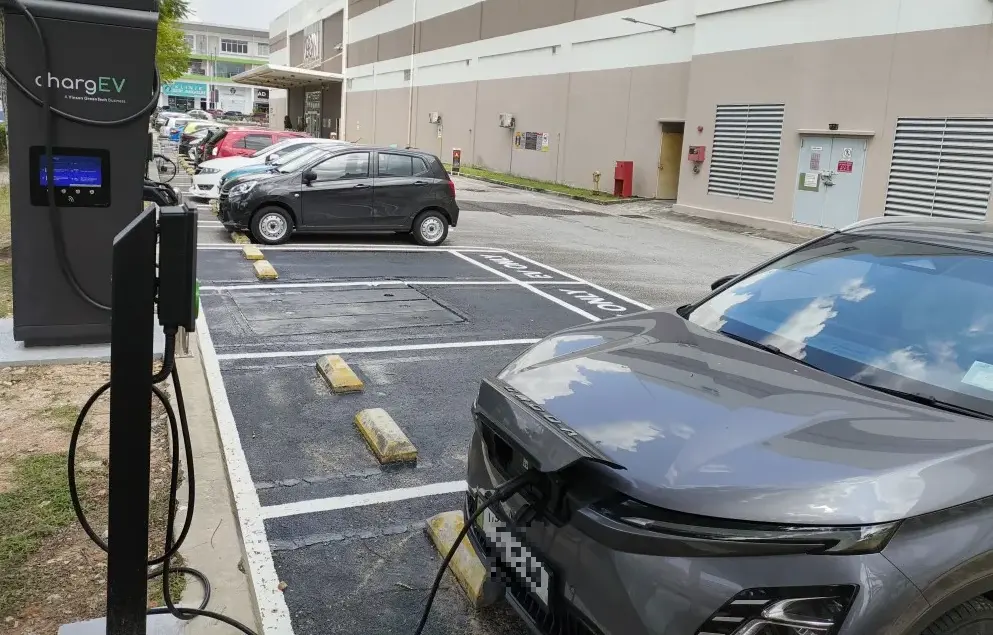
Malaysia’s public electric vehicle (EV) charging network has passed a key milestone, with 5,149 chargers installed nationwide as of Sept 30, according to the Ministry of Investment, Trade and Industry.
The mix skews towards everyday top-ups, with 3,440 alternating current (AC) units supporting workplaces, malls and neighbourhood sites.
Crucially for long trips, direct current (DC) fast chargers now number 1,709 — exceeding the government’s 1,500-unit target by 14%.
The ministry said the overshoot reflects a clear shift in driver behaviour as more owners favour rapid charging on highways and inter-city routes.
The ministry’s update came in written replies to Parliament. Responding to Azli Yusof (PH–Shah Alam), the ministry said the current ratio of public chargers to battery electric vehicles (BEVs) stands at roughly 1:8, enough to serve about 42,000 registered passenger BEVs on the road today.
While the overall 10,000-charger target for end-2025 has yet to be met, officials argued that the accelerated rollout of DC units is strengthening confidence for longer journeys and helping first-time EV buyers overcome range anxiety.
A separate reply to Jimmy Puah Wee Tse (PH–Tebrau) set out the policy horizon for ownership costs.
The existing EV road-tax exemption ends on Dec 31, 2025. From next year, EVs will be taxed under a new schedule based on electric motor power (kilowatt output).
The ministry said the revised rates have been set to remain lower than those applied to internal-combustion vehicles, positioning electrified models as the more cost-effective choice over the medium term.
Beyond chargers and tax, the government wants the EV push to translate into real jobs and industry at home.
The ministry said government policy still backs energy-efficient and electric cars, with a clear emphasis on assembling them in Malaysia and growing local suppliers for key parts such as batteries.
The goal, it said, was to retain more value in the country, create skilled work, deepen the supply chain and build exports as EV take-up grows.
For drivers, this would mean a denser, faster public charging network is coming, and the post-exemption road-tax rules are here to stay.
Together, they sketch the operating reality for EV ownership in 2026, when affordable electric models are expected to set the pace and mainstream buyers would judge the technology on daily convenience as much as price.