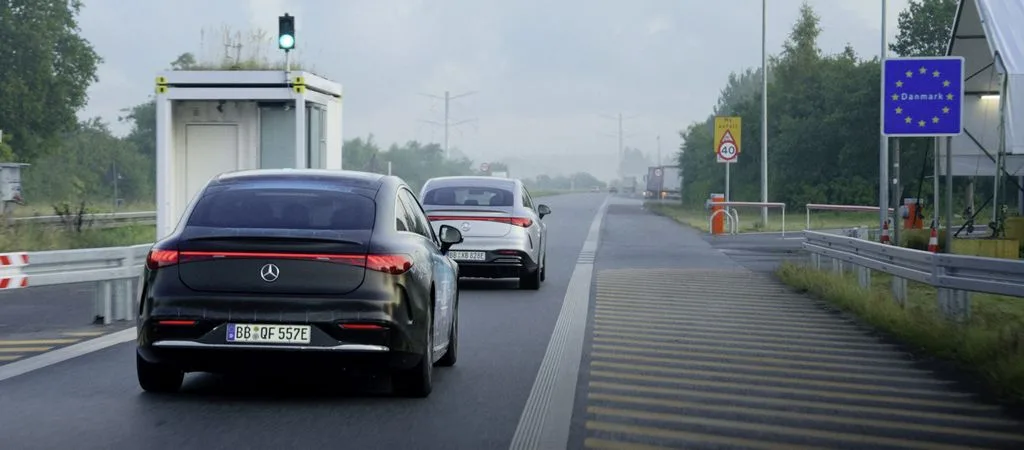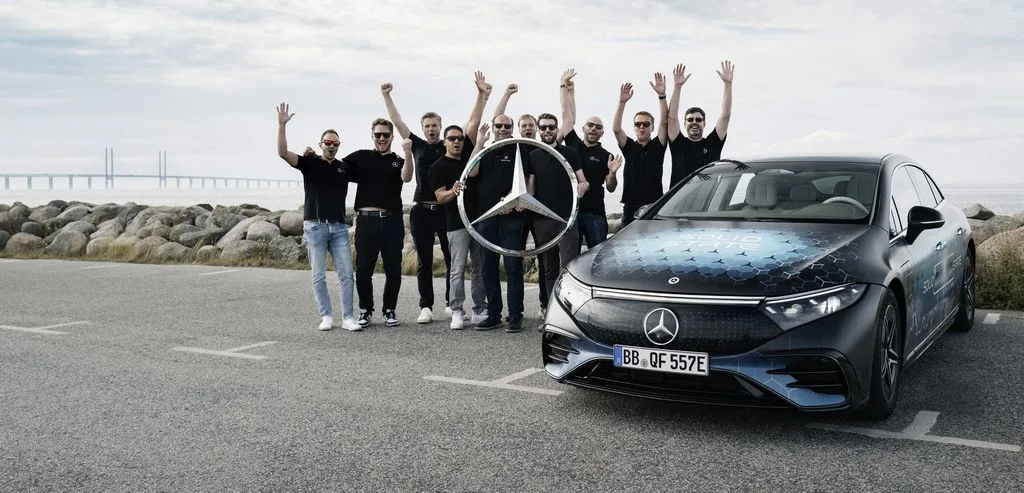






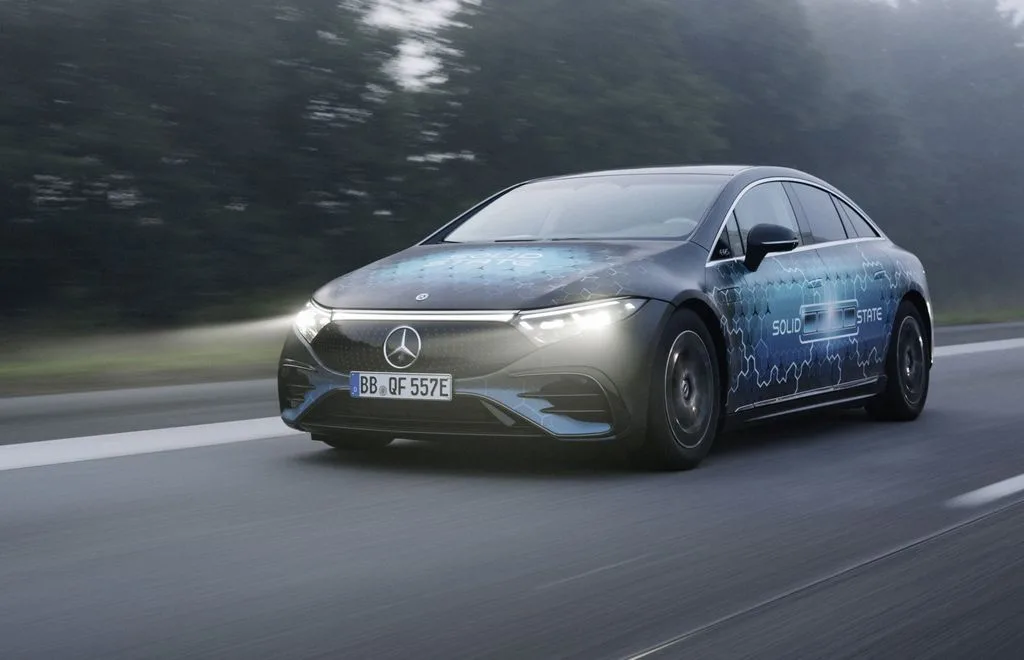
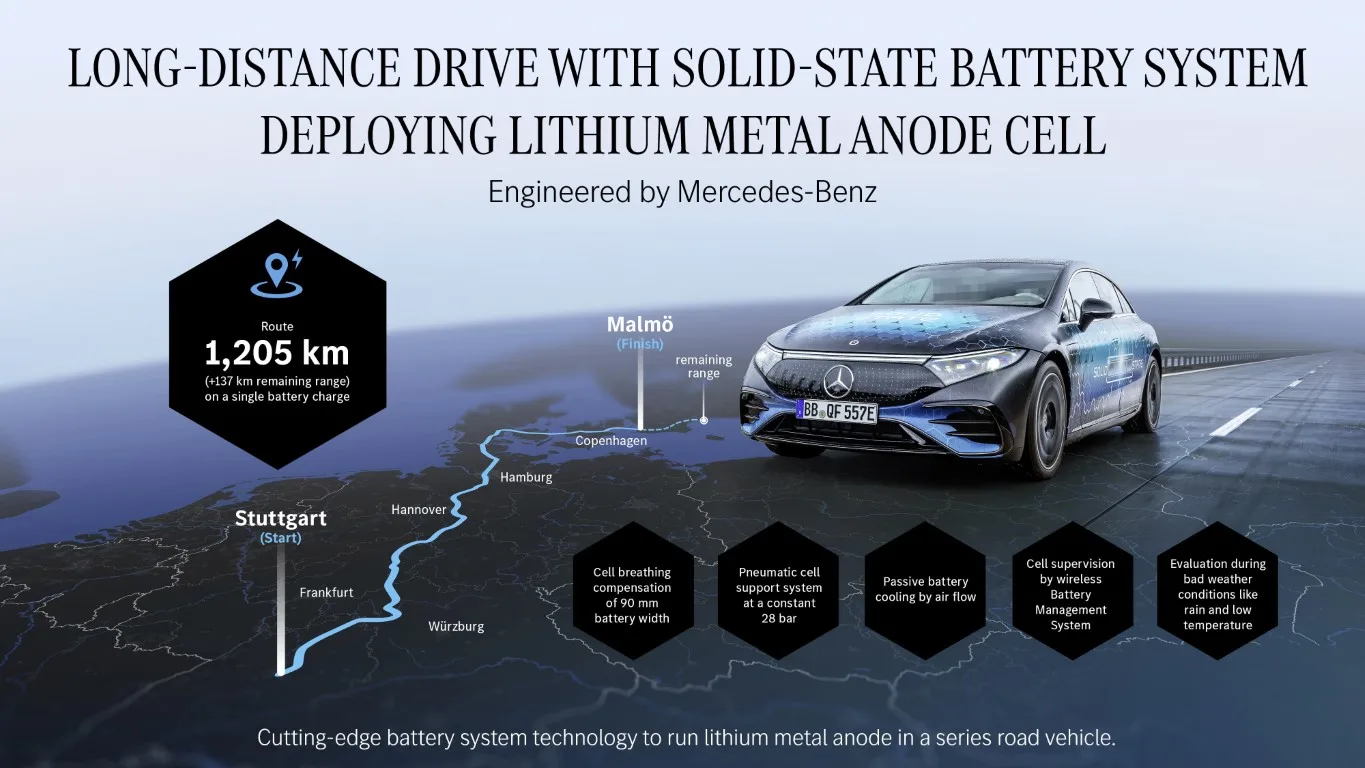
Mercedes-Benz recently drove a lightly modified EQS test car from Stuttgart, Germany, to Malmö, Sweden, covering 1,205km without stopping to recharge. The car was equipped with a lithium-metal solid-state battery.
This late-August journey was part of Mercedes’ efforts to test the battery technology under real conditions and showed it works well outside the lab. The car still had around 137 km of range left when it arrived.
This trip slightly beat the distance covered by the Vision EQXX—another very efficient car—which previously made the Stuttgart to Silverstone journey by 3 km. Unlike the Vision EQXX, which was focused purely on efficiency, this run used an EQS with a near-production battery to demonstrate how the technology could be practical for daily driving.
Mercedes-Benz shared that the route mainly followed the A7 and E20 highways through Germany and Denmark to Malmö, purposely avoiding ferries. The car’s navigation system, called “Electric Intelligence,” planned the route by considering things like hills, traffic, temperature, and how much energy would be needed for heating or cooling the cabin.
This drive is one part of a bigger testing program started earlier in the year, involving computer simulations, controlled lab tests in Stuttgart, and driving on public roads in different weather and terrains. The aim is to speed up progress so this technology can be ready for production cars.
Chief technology officer Markus Schäfer said: “The solid-state battery is a true gamechanger for electric mobility. With the successful long-distance drive of the EQS, we show that this technology delivers not only in the lab but also on the road. Our goal is to bring innovations like this into series production by the end of the decade and offer our customers a new level of range and comfort.”
The battery system was made in collaboration with Mercedes-AMG High Performance Powertrains, their Formula 1 tech center in Brixworth. The lithium-metal cells were supplied by Factorial Energy, who uses their FEST technology.
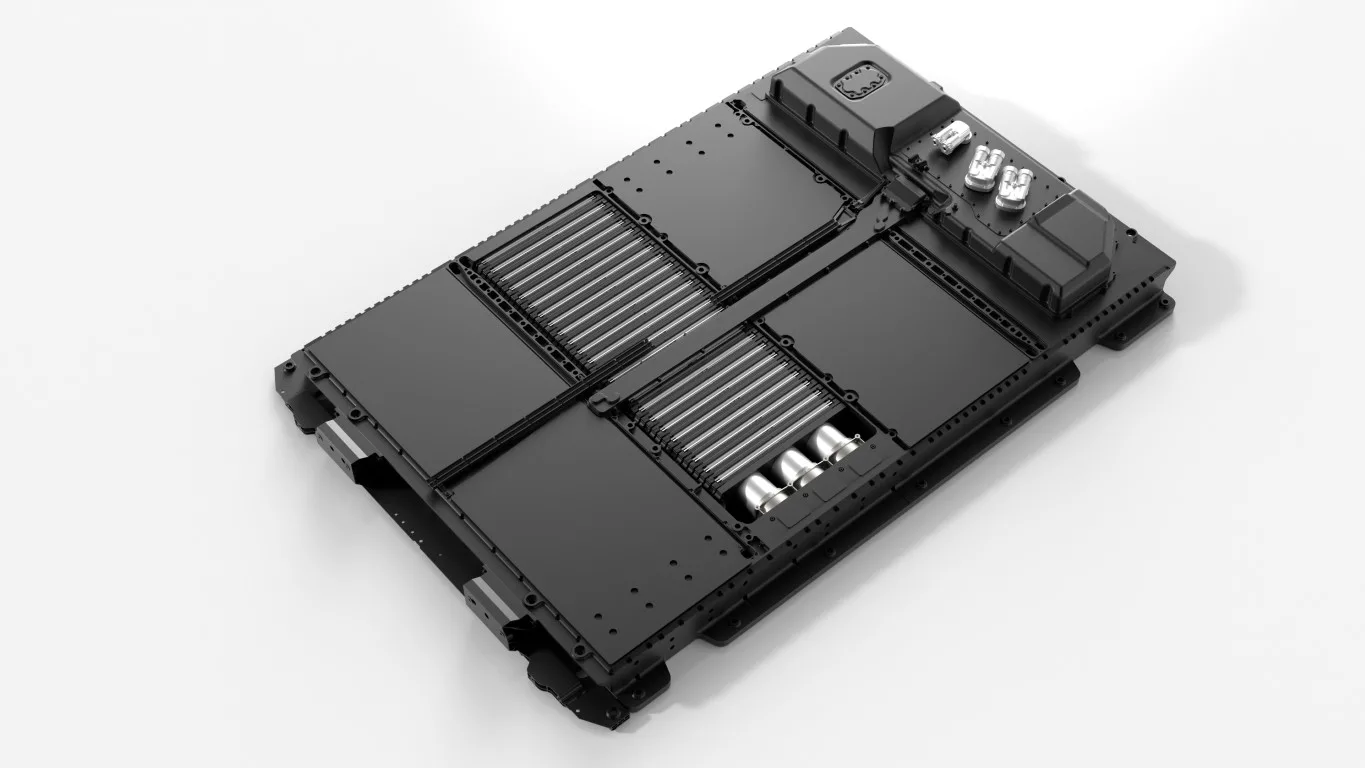
To handle the expansion and shrinking of the cells as they charge and discharge, the battery pack uses special air-powered actuators that keep the cells pressed firmly for better durability and reliability.
Compared to the standard EQS battery, Mercedes said their solid-state pack offers 25% more usable energy, while keeping about the same size and weight. They also used passive airflow cooling instead of heavier active cooling systems, which helped save weight and boost efficiency.