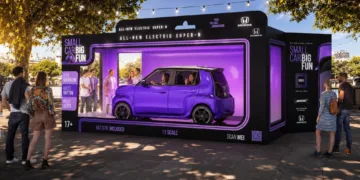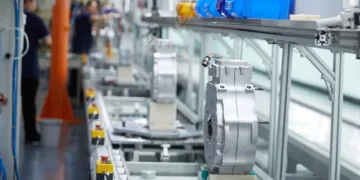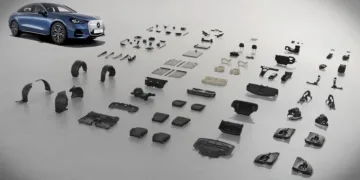


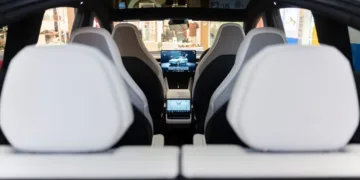



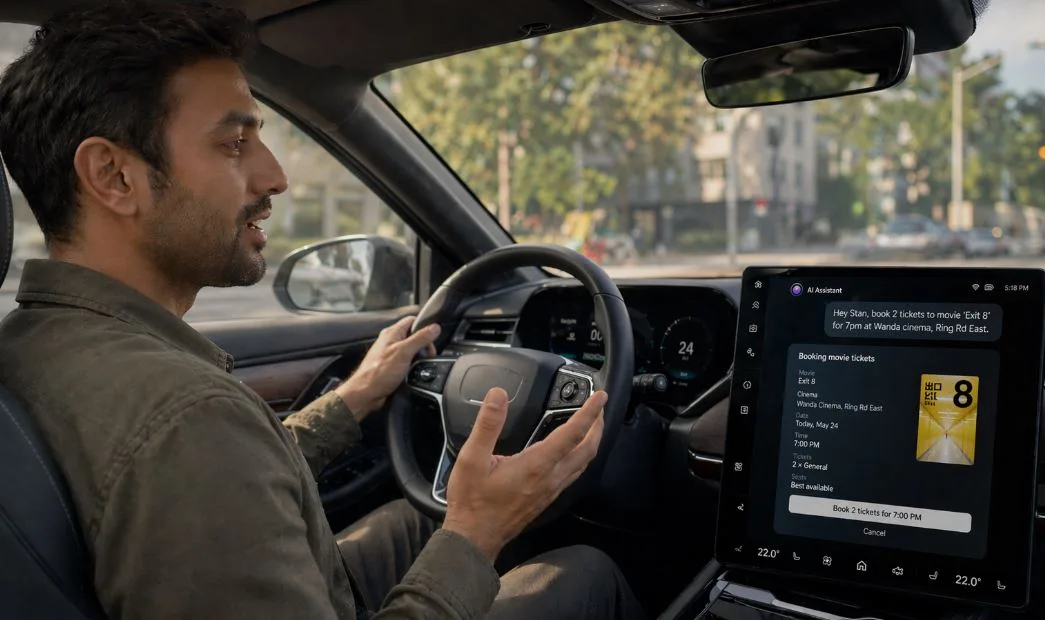
China’s car industry is rushing to build AI into more parts of the car, from smart cockpits and driver-assistance systems to in-house chips and voice agents.
Beijing’s “AI Plus” policy push has encouraged wider use of artificial intelligence across major industries, and the car sector has moved fast.
Reuters reported that the trend was clear at Auto China 2026 in Beijing, where brands and suppliers showed vehicles that can talk, park, read driver behaviour and handle more cabin functions with less input from the person behind the wheel.
This is not only about talking dashboards.
Chinese EV makers are also trying to reduce their reliance on foreign chips and software.
South China Morning Post reported that companies including XPeng, Nio and lidar supplier Hesai used the show to talk up chip development and smarter vehicle systems, as local firms try to gain more control over the technology sitting inside their cars.
Huawei shows how serious the race has become. The tech group plans to spend heavily on smart-driving research and computing power, with over US$10 billion in investment over five years. Huawei has also been expanding its Qiankun smart-driving and cockpit systems across more China-market models.
Foreign brands are being pulled in too. Volkswagen has announced an “agentic AI” roadmap for China as part of a wider product offensive, including more China-developed electric models.
For global carmakers, a competitive EV in China now needs more than range, price and build quality. It needs local software, local intelligence and short development cycles.
Tencent is coming from the software side, with an automotive AI agent platform covering commuting, travel, ordering and entertainment. That suggests the AI race is spreading from assisted driving to the small things people do inside the car every day.