
Electric vehicle owners could soon earn money by selling electricity stored in their parked cars back to the power grid, under a new pilot programme announced by General Motors (GM) in California.
GM Energy is working with energy software company WeaveGrid and utility Southern California Edison (SCE) to allow selected customers to send power from their EVs through their homes and into the grid.
The vehicle-to-grid (V2G) programme would also let participants receive payments during eligible grid-support events, although GM has not specified how much they could earn.
There are financial incentives to help get the equipment installed.
Eligible SCE customers participating in the utility’s Emergency Load Reduction Program could receive up to US$8,000 (RM32,901) towards a GM Energy vehicle-to-home (V2H) system and another US$8,099 (RM33,308) for qualifying installation and grid connection costs.
The combined assistance of up to US$16,099 (RM66,209) is conditional and separate from any payments for electricity supplied.
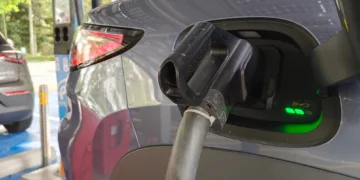
V2H already allows compatible GM electric cars to supply backup electricity to properly equipped homes during power cuts. V2G goes further by sending energy into the public grid when authorised.
GM said the pilot would examine the entire process, from customer registration and equipment installation to utility approval and participation in grid-support events.
The company is also working on making bidirectional charging less expensive and complicated.
Its existing home energy system uses direct-current (DC) technology and a wall-mounted inverter to convert battery electricity into alternating current (AC) for household use.
GM is exploring AC-based alternatives and joining CharIN’s North American AC V2G task force to address technical standards, certification and grid connection requirements.
The longer-term aim is to make it easier and cheaper for EV owners to put their vehicle batteries to work beyond driving.