




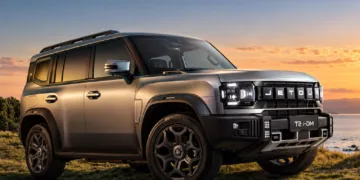




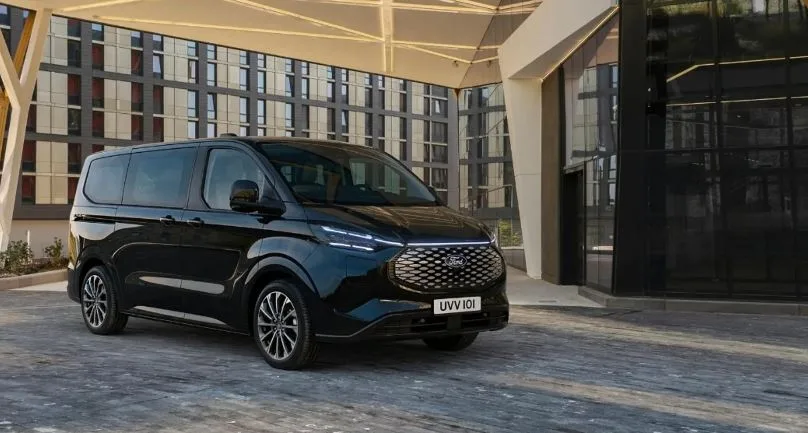
Britain’s people-carrier market is growing again, but the comeback looks very different from the MPV boom of the 2000s.
Vehicle Data Global (VDG) said registrations of what it classifies as true MPVs rose from 41,610 in 2022 to 56,717 in 2025, an increase of about 36% over three years. That follows a much longer collapse in demand for familiar MPV nameplates as buyers shifted towards SUVs.
VDG said registrations across the traditional MPV names it tracked had fallen by 98% from 2014 levels by 2025. The body style may have lost favour, but demand for the underlying formula — a tall cabin, flexible seating and generous load space — did not disappear with it.
The recovery is instead being led by vehicles that often avoid the MPV label altogether. Van-derived passenger models and crossover-style seven-seaters are taking business once handled by cars such as the Ford Galaxy, Renault Espace and SEAT Alhambra.
Ford’s Tourneo range recorded 7,574 UK registrations in 2025, according to VDG. The larger Tourneo Custom accounted for 4,893 of them, while the Tourneo Connect contributed 2,466.
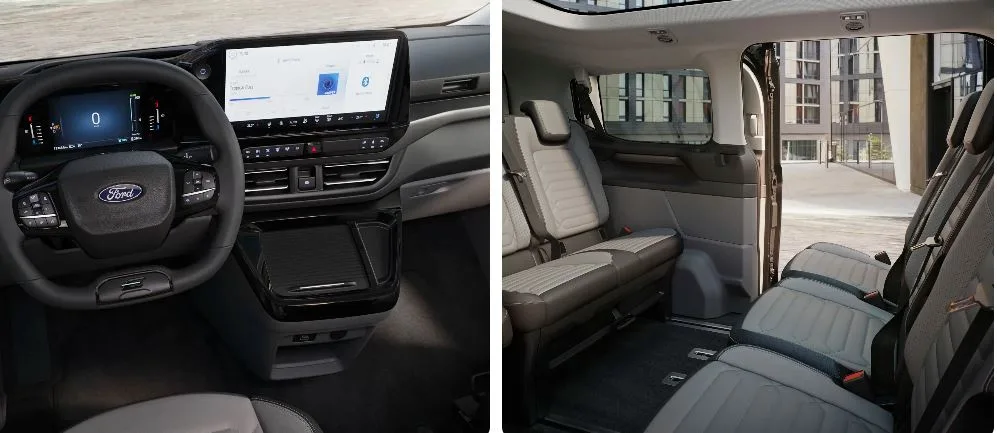
Peugeot’s Rifter and the Vauxhall Combo Life also each passed 2,000 registrations. Both are closely related to commercial vehicles, but their passenger versions deliver the space-efficient shape and seating flexibility long associated with an MPV.
The Dacia Jogger offers another route into the segment. The seven-seater reached 10,224 registrations in 2024, VDG said, despite being marketed more as an affordable family crossover than a conventional people carrier.
In 2025, their combined registrations were more than nine times the total recorded for 13 older MPV nameplates in VDG’s comparison.
VDG also tried to separate genuine people carriers from SUVs that can be inconsistently classified in registration data. Its analysis excluded models including the Tesla Model Y, BYD Seal U and Sealion ranges, and Citroën C3 Aircross before calculating the underlying MPV trend.
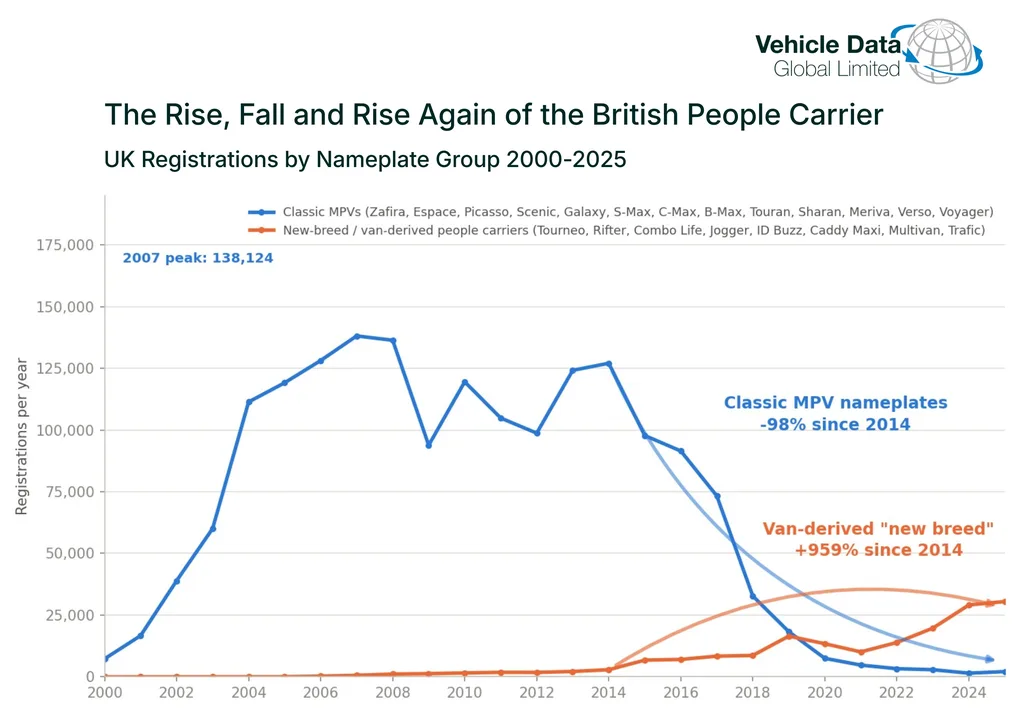
Several once-common MPVs have also disappeared from new-car line-ups. Citroën ended Grand C4 SpaceTourer production in 2022, explicitly citing changing customer expectations and a move away from the MPV market. Ford ended production of the Galaxy and S-Max in 2023.
VDG operations director Ben Hermer said buyers appear to have lost interest in the people-carrier image rather than the packaging itself. Renault design chief Gilles Vidal made a related point in 2024, telling Auto Express that the traditional “monobox” layout was “out of fashion” while discussing the transformation of the Scenic into an electric crossover.
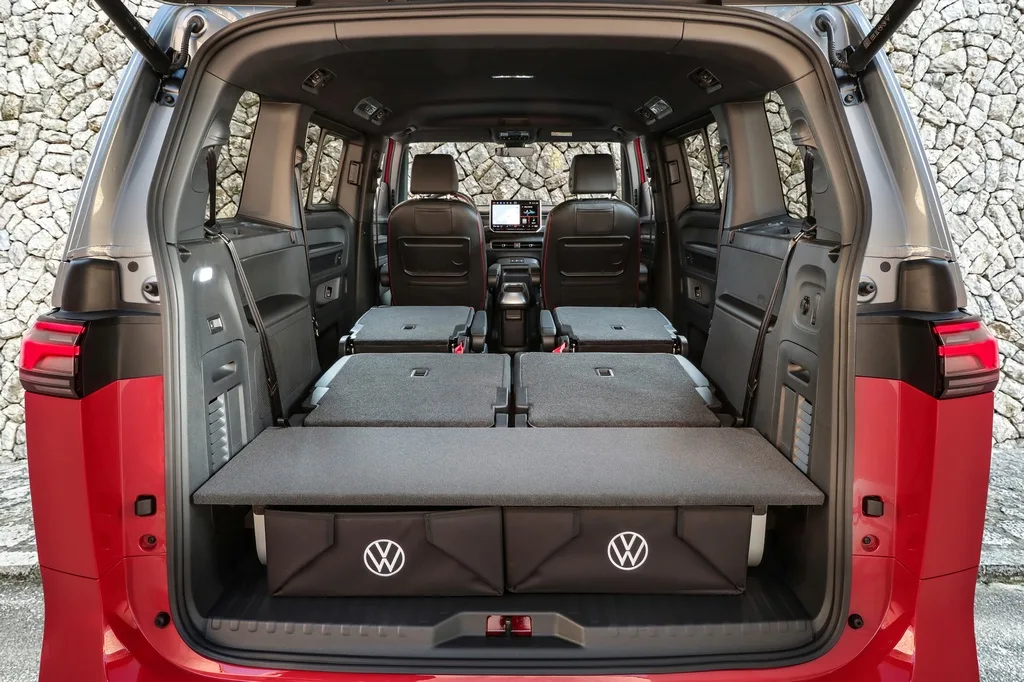
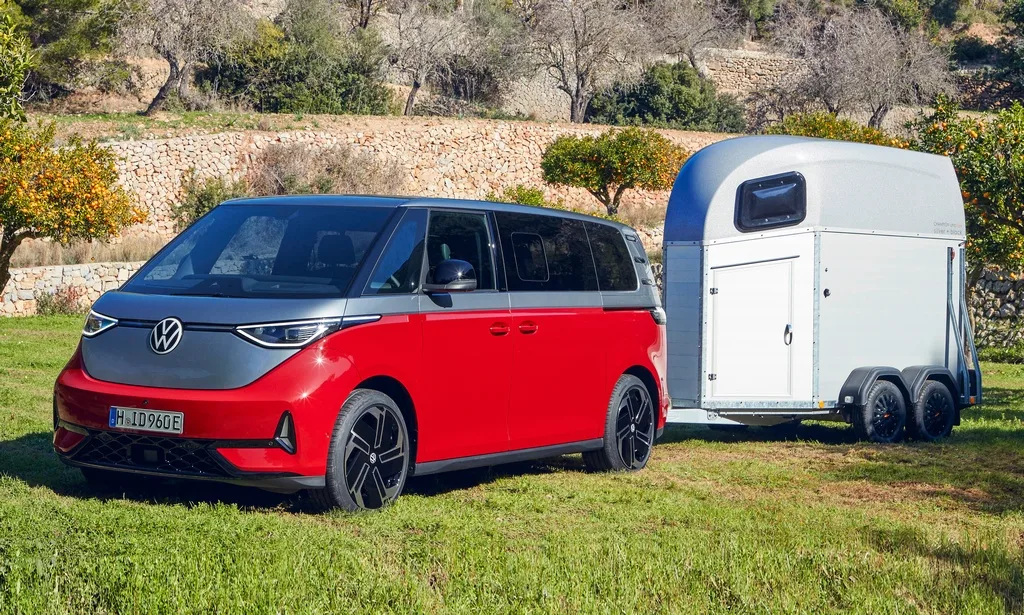
Electrification is now part of this reshaped people-carrier market. Volkswagen’s ID. Buzz combines battery-electric drive with an overtly boxy body and seating for up to seven.
Ford offers the Tourneo Custom with battery-electric and plug-in hybrid powertrains; the E-Tourneo Custom has an official range of up to 341km. The Vauxhall Combo Life Electric uses a 52kWh battery and can be specified as a seven-seat XL.
The same basic idea is now sold as a passenger van, crossover or electric family vehicle, depending on the badge. The styling and drivetrains vary. The priority does not: make the cabin as useful as possible for passengers and luggage.
The terminology has changed more than the requirement. A measurable group of UK buyers still wants maximum cabin space and seating flexibility, and manufacturers are finding new ways to provide it without reviving the old MPV image.