





Ferrari pulled back the curtain on its first electric car this week — sort of.
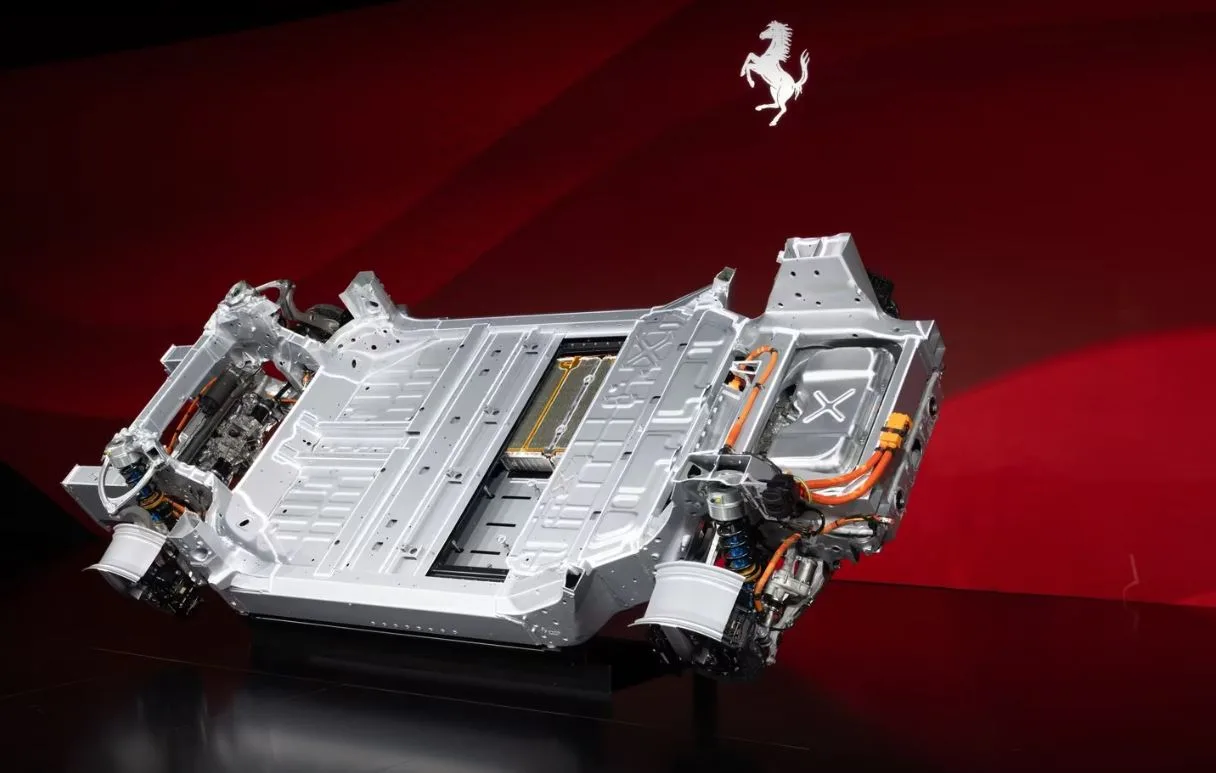
At Maranello, the company showed off the Elettrica’s rolling chassis, battery pack, and homegrown electric motors, but kept the actual body hidden.
We’ll see the interior early next year, with the full car arriving in spring 2026.
Ferrari has released a YouTube shorts on the Elettrica, which you can view here.
The battery pack is mounted flat in the floor, dropping the car’s centre of gravity. Ferrari says roughly three-quarters of the chassis uses recycled aluminum, which should cut each car’s lifetime carbon footprint by around 6.7 tonnes.
The platform features over 60 patents, all focused on one thing: making sure this EV still drives like a Ferrari.
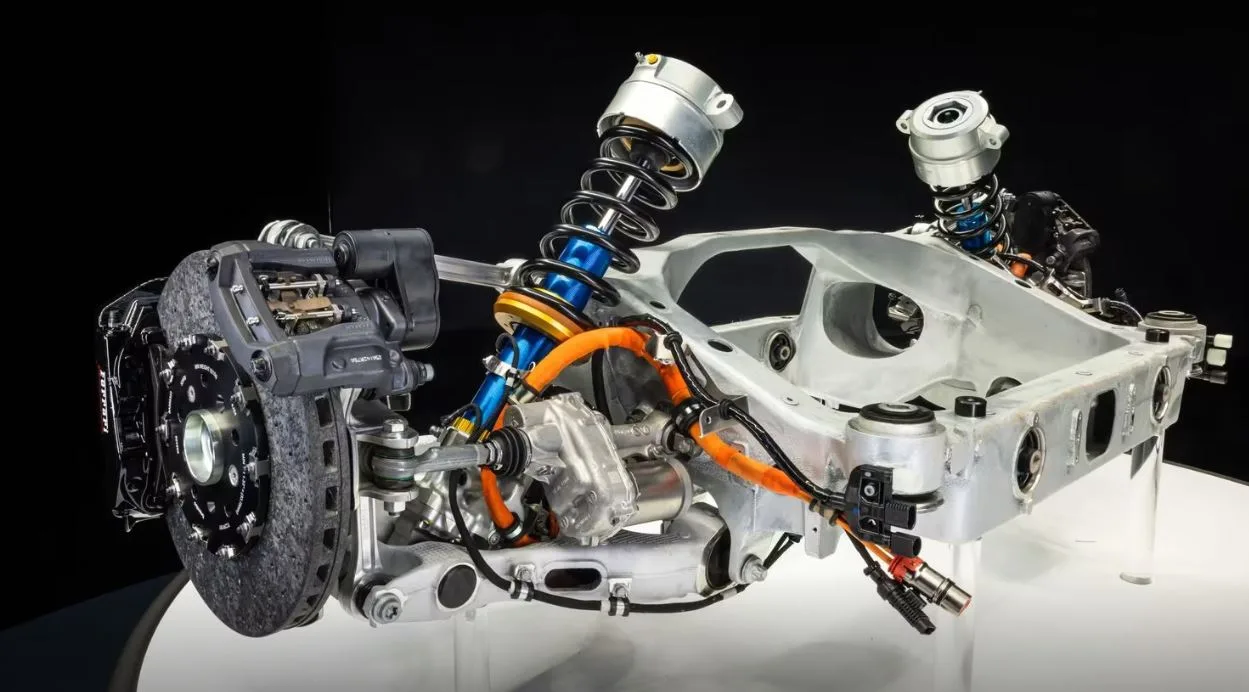
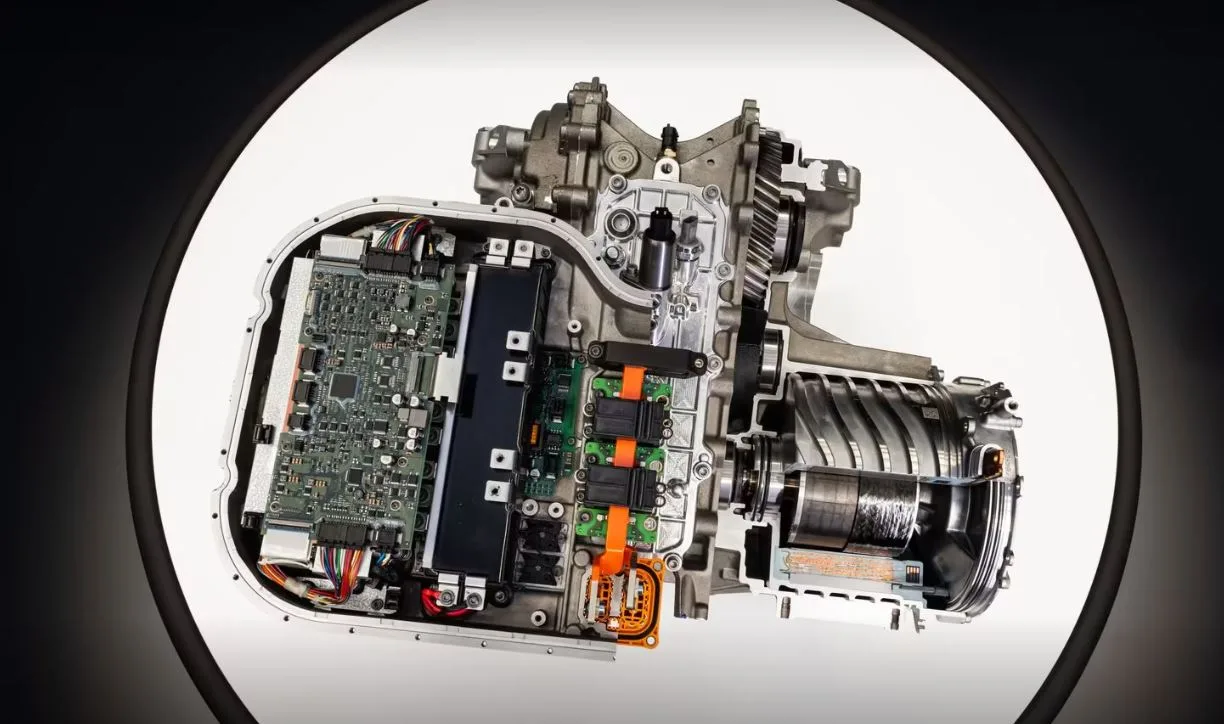
Everything critical is built in-house at Maranello. Each axle gets two permanent-magnet motors — four motors total — for all-wheel drive and individual control of each wheel’s power.
Ferrari claims the e-axles hit 93% efficiency.
At highway speeds, the front motors can disengage to stretch range. A new 48-volt active suspension adjusts in real time for handling and comfort.
Ferrari didn’t want the Elettrica sounding like a spaceship, so they skipped the fake engine noise.
Instead, sensors pick up actual vibrations from the motors and amplify them through the chassis — the sound changes naturally with speed and throttle.
Drivers get Range, Tour, and Performance modes, plus five levels of power delivery controlled by the steering-wheel paddles.
The company confirmed a four-seat, four-door setup and roughly 1,000hp.
Battery size, charging specs, and performance numbers will come later.
But here’s the bigger news: Ferrari just rewrote its 2030 roadmap.
The new target is 40% gasoline, 40% hybrid, and only 20% fully electric. That’s a sharp pullback from the 2022 plan, which had EVs at 40% and pure gas at just 20%.
Executives say ultra-wealthy buyers simply aren’t demanding EVs at the rate Ferrari expected. A second electric model is still planned, probably after 2027.
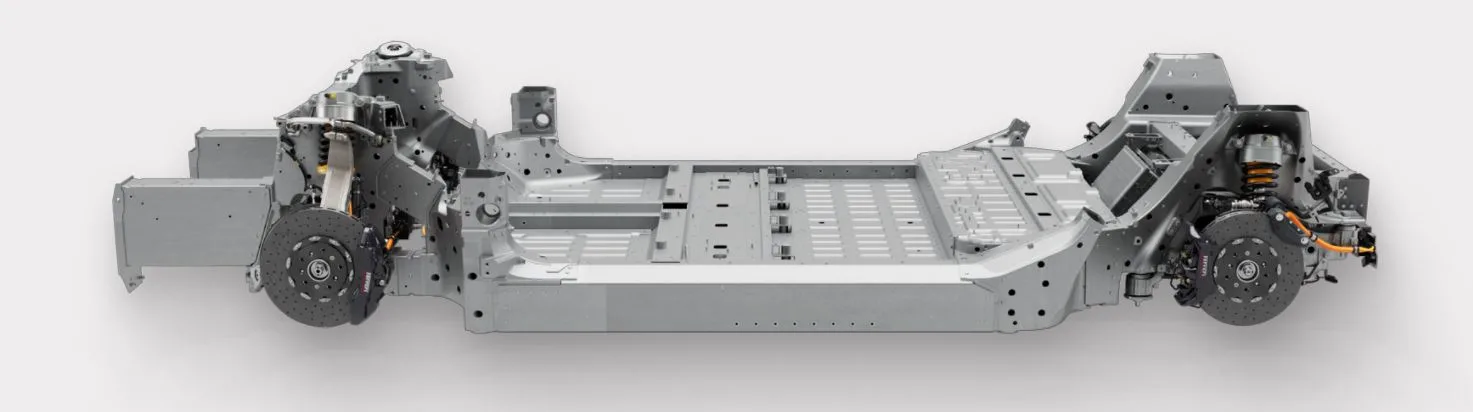
To keep control over software and hardware, Ferrari is building batteries, motors, and inverters in a new facility at Maranello. Between 2026 and 2030, the plan is to launch four new models every year to keep orders flowing.
The tech reveal came alongside a Capital Markets Day update that spooked investors a bit. Management set a 2030 revenue target of €9 billion but made it clear they’d rather protect margins and exclusivity than chase volume.
To round off, Ferrari’s going electric, but slowly. It’s building the hard stuff itself, obsessing over how it drives, and letting hybrids do most of the heavy lifting while it figures out what EV buyers actually want.